PCOS To PMOS? Why Experts Want A New Name For Women’s Hormonal Disorder
Doctors Say The New Name Reflects The Full Impact Of The Condition Beyond The Ovaries

 The Impressive Times
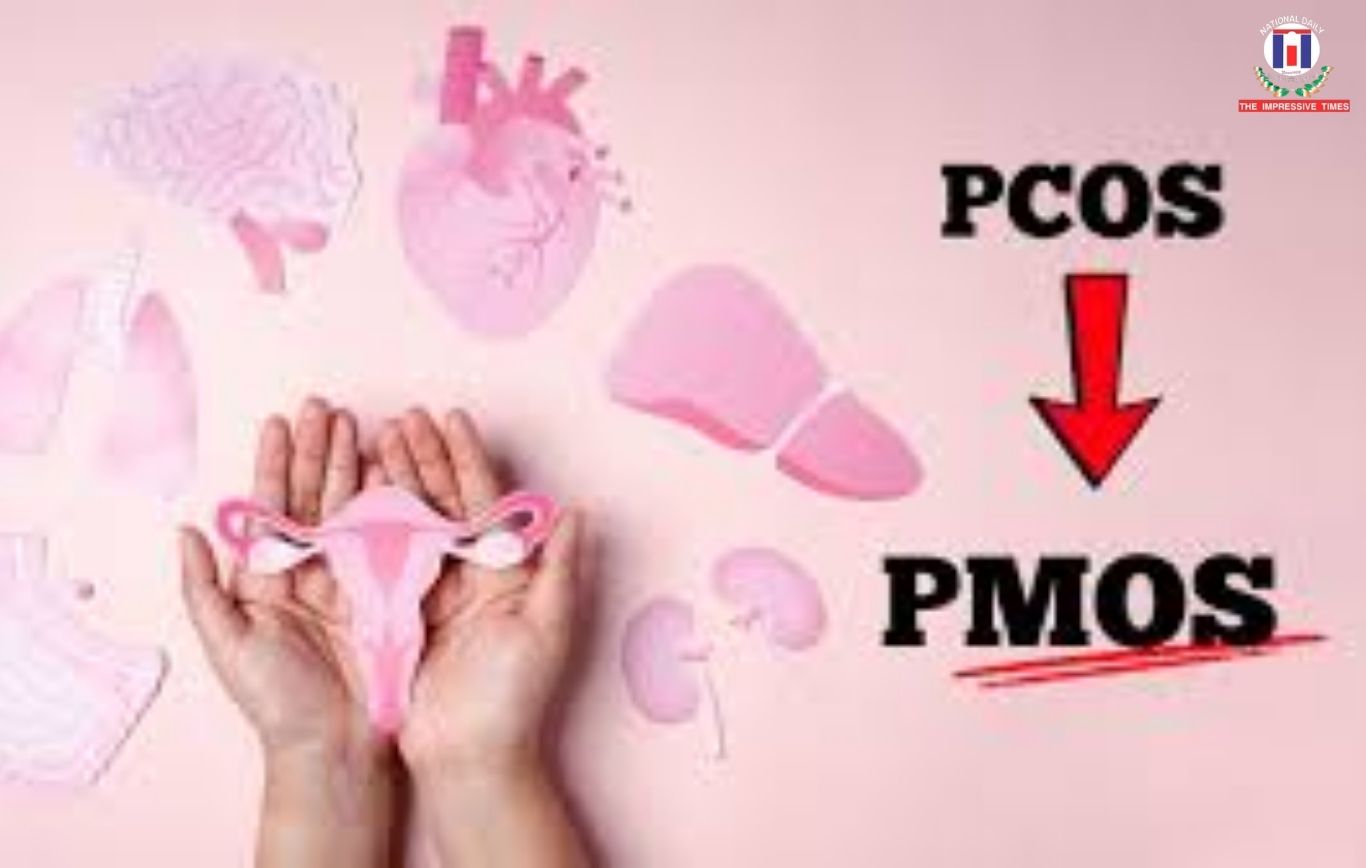
A major shift is being discussed in the medical world regarding one of the most common hormonal disorders affecting women. The condition widely known as PCOS may soon be referred to as PMOS, as experts believe the older term does not fully explain the seriousness and complexity of the disorder.
For years, Polycystic Ovary Syndrome (PCOS) has been associated mainly with ovarian cysts and irregular periods. However, specialists now say the condition affects much more than reproductive health. It can influence metabolism, mental wellbeing, heart health, hormones, fertility, skin and weight management.
According to doctors, including specialists from All India Institute of Medical Sciences, the proposed term PMOS is intended to give a broader understanding of the disorder and help patients recognise its long-term health risks.
Medical experts explain that the word “polycystic” often creates confusion. Many women diagnosed with the condition do not actually have ovarian cysts. Instead, ultrasounds usually show immature follicles that stop developing midway during the ovulation process.
Under normal circumstances, several follicles develop every month and one matures fully to release an egg. In women with this disorder, those follicles fail to mature properly, appearing as tiny circular structures during scans.
Doctors believe the older terminology focused too heavily on ovaries, while the condition is actually linked to hormonal imbalance and metabolic dysfunction throughout the body. The proposed name PMOS aims to better represent these wider health complications.
The disorder can affect women in different ways, but some of the most frequently reported symptoms include:
Experts say symptoms may appear gradually, causing many women to ignore the condition during its early stages.
Doctors warn that untreated hormonal imbalance can increase the risk of several serious health complications over time. These include:
Mental health concerns such as depression, low self-esteem and eating disorders are also commonly associated with the condition.
Medical professionals say the immediate treatment process is unlikely to change with the new terminology. However, the shift in name could encourage a more comprehensive approach to diagnosis and care.
Instead of focusing only on fertility or menstrual irregularities, doctors may increasingly monitor blood sugar, cholesterol, blood pressure and other metabolic indicators as part of long-term management.
Experts stress that lifestyle improvement, healthy eating, regular exercise and early diagnosis remain key in controlling symptoms and reducing future health risks.
































![UEFA Champions League: 10-men United fall 2-0 to Atleti; Viking hold Bayern to 3-3 draw ANI | Updated: Oct 14, 2026 09:08 IST Madrid [Spain], October 14 (ANI): Manchester United’s 2026/27 season is turning out to be a disaster after the club showed promise following Michael Carrick taking the helm of the club in January, as it faced another loss on Tuesday (local time). In its first away fixture for this season’s UEFA Champions League at the Estadio Metropolitano stadium, the Red Devils were handed a 2-0 defeat by Atletico Madrid, causing the club more misery as it also struggles domestically. Pablo Barrios scored inside the opening minute for Atletico before substitute Ademola Lookman sealed the victory late in the second half. Barrios capitalised on an early lapse in Manchester United’s defence to put Atletico ahead within the first 60 seconds of the match. Despite the initial shock of conceding so early, United pushed for an equaliser, with Bryan Mbeumo leading the attack on most occasions without any significant result. The hosts controlled much of the first half with their high-intensity pressing and possession. Alejandro Grimaldo came close to extending the lead with a free kick that struck the woodwork. Manchester United looked to respond after the break but struggled to create any clear chances against Atletico’s defence. Bruno Fernandes came close to equalising in the 70th minute, rattling the crossbar with an effort from distance. ‹› United’s task became more difficult in the 74th minute when defender Leny Yoro received a red card over a reckless challenge on Jonathan David. Atletico made their numerical advantage count five minutes later. Lookman, who had come on as a substitute, reacted quickest after goalkeeper Senne Lammens parried Jonathan David’s initial shot and found the back of the net in the 79th minute to seal the victory. Both teams have now recorded one win and one defeat in the opening stages of the Champions League league phase. Elsewhere, Norwegian side Viking FK held Bayern Munich to a dramatic 3-3 draw in the league phase. Viking mounted a late comeback to earn a draw after Bayern had overturned a two-goal deficit. At the Viking Stadion in Stavanger, Norwegian side Viking FK held Bayern Munich to a 3-3 draw, scoring a dramatic late equaliser after the German side had overturned a two-goal deficit. Gianni Stensness gave Viking an early lead in the second minute with a header from a corner before Peter Christiansen doubled their advantage in the 38th minute. Bayern responded after the break, with Harry Kane scoring twice in the 54th and 60th minutes to level the score. Luis Diaz put the visitors ahead in the 71st minute. However, Bayern were reduced to 10 men three minutes later after Michael Olise received his second yellow card. Viking capitalised on the advantage as Herman Haugen scored in the 90th minute to secure a 3-3 draw. With one win and one draw, Bayern are placed fourth with four points, while Viking are 26th with a draw and a loss. (ANI)](https://impressivetimes.com/wp-content/uploads/2026/10/TIT-Website-Image-4-5.jpg)











No Comments: