Why B. R. Ambedkar Chose Buddhism Over Islam, Christianity, or Sikhism
After two decades of studying major religions, Ambedkar embraced Buddhism for its emphasis on equality, rationality, and social justice

 The Impressive Times
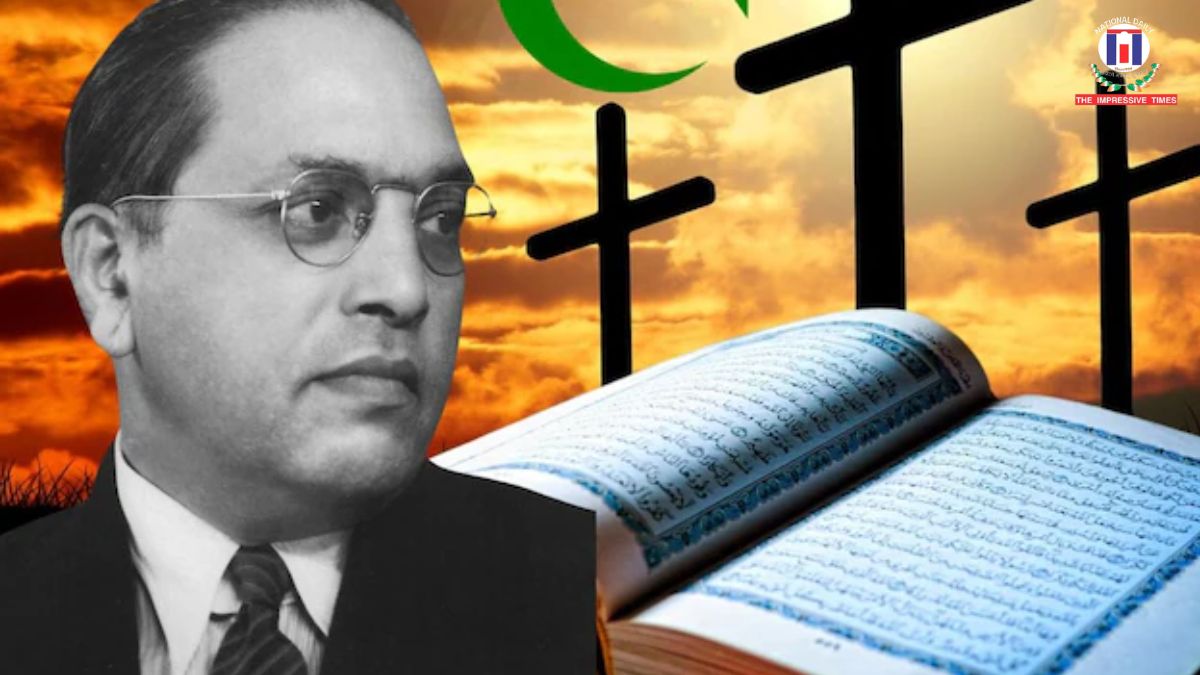
New Delhi: The decision of B. R. Ambedkar to renounce Hinduism and eventually adopt Buddhism in 1956 was the result of a long intellectual and social journey. Over a period of more than 20 years, he examined multiple religions—including Islam, Christianity, and Sikhism—before making his final choice.
Ambedkar studied Islam closely but found certain social realities in the Indian subcontinent troubling. He argued that, despite its theoretical message of equality, social hierarchies persisted among Indian Muslims, often reflected in divisions such as Ashraf, Ajlaf, and Arzal.
He was primarily focused on achieving complete social equality for Dalits, and he felt that conversion alone would not automatically eliminate discrimination. He also believed that religious identity in Islam was deeply tied to theological structures centered on God and prophecy, which did not align with his rational and reformist outlook.
Ambedkar also examined Christianity in depth. While appreciating its global presence and institutional structure, he observed that caste-like distinctions existed among Indian Christians, including the marginalization of Dalit converts.
Additionally, he was cautious about adopting a religion that he felt was historically linked with colonial influence in India. Like Islam, Christianity’s strong emphasis on a supreme God and divine authority did not fully match his vision of a rational, socially transformative religion.
At one stage, Ambedkar seriously considered embracing Sikhism. He admired its teachings on equality and its opposition to caste discrimination. However, practical and political concerns played a role in his hesitation.
He was unsure whether large-scale conversion of Dalits into Sikhism would be socially and institutionally accommodated without creating new forms of hierarchy. There were also concerns about how such a move might affect the existing structure of the Sikh community.
Ultimately, Ambedkar chose Buddhism because he saw it as the most compatible with his ideals of liberty, equality, and fraternity—principles he deeply admired from modern democratic thought.
He was drawn to Buddhism because:
By embracing Buddhism, Ambedkar also reinterpreted it in a modern context, often referred to as Navayana Buddhism, focusing on social justice and human dignity.
Ambedkar’s decision was not a rejection based on a single factor but the result of a careful comparison of religions against his core mission—ending caste oppression and ensuring dignity for all. In Buddhism, he found a path that aligned most closely with his vision for an equal and just society.

















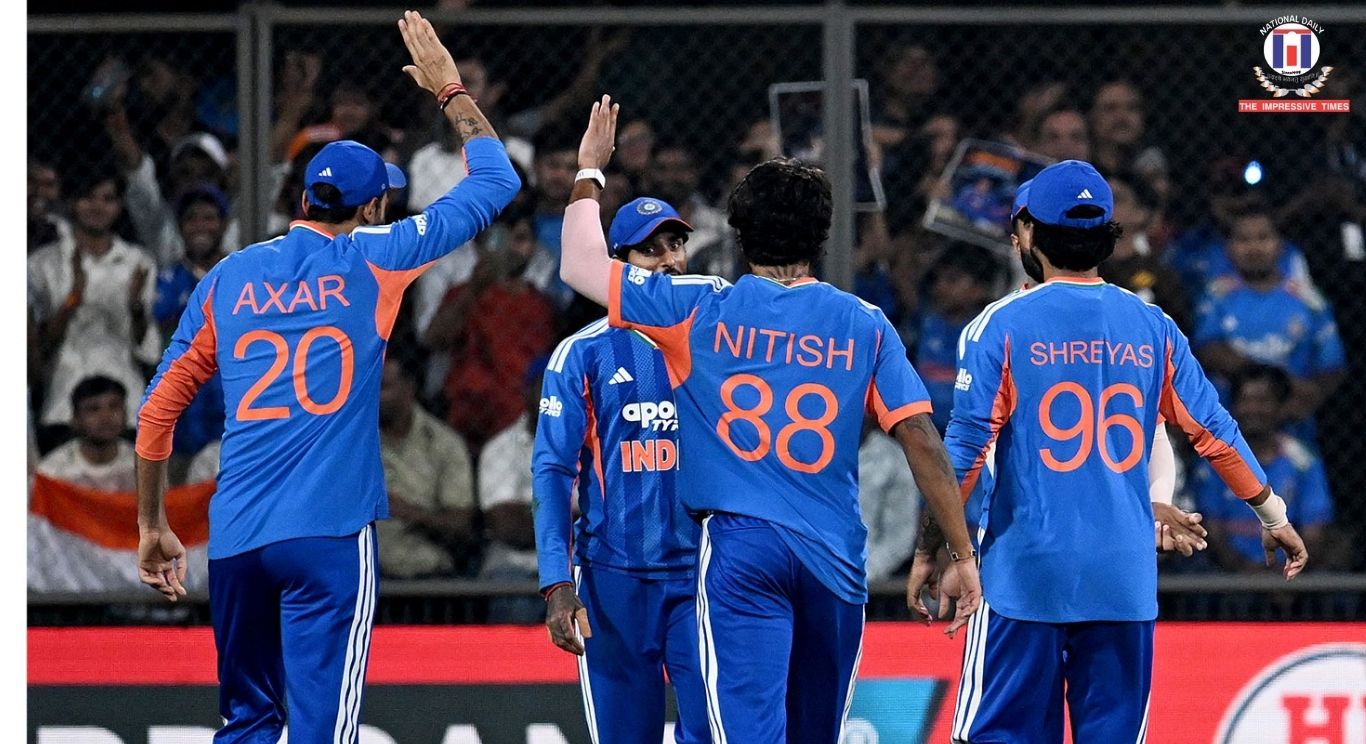
![UEFA Champions League: 10-men United fall 2-0 to Atleti; Viking hold Bayern to 3-3 draw ANI | Updated: Oct 14, 2026 09:08 IST Madrid [Spain], October 14 (ANI): Manchester United’s 2026/27 season is turning out to be a disaster after the club showed promise following Michael Carrick taking the helm of the club in January, as it faced another loss on Tuesday (local time). In its first away fixture for this season’s UEFA Champions League at the Estadio Metropolitano stadium, the Red Devils were handed a 2-0 defeat by Atletico Madrid, causing the club more misery as it also struggles domestically. Pablo Barrios scored inside the opening minute for Atletico before substitute Ademola Lookman sealed the victory late in the second half. Barrios capitalised on an early lapse in Manchester United’s defence to put Atletico ahead within the first 60 seconds of the match. Despite the initial shock of conceding so early, United pushed for an equaliser, with Bryan Mbeumo leading the attack on most occasions without any significant result. The hosts controlled much of the first half with their high-intensity pressing and possession. Alejandro Grimaldo came close to extending the lead with a free kick that struck the woodwork. Manchester United looked to respond after the break but struggled to create any clear chances against Atletico’s defence. Bruno Fernandes came close to equalising in the 70th minute, rattling the crossbar with an effort from distance. ‹› United’s task became more difficult in the 74th minute when defender Leny Yoro received a red card over a reckless challenge on Jonathan David. Atletico made their numerical advantage count five minutes later. Lookman, who had come on as a substitute, reacted quickest after goalkeeper Senne Lammens parried Jonathan David’s initial shot and found the back of the net in the 79th minute to seal the victory. Both teams have now recorded one win and one defeat in the opening stages of the Champions League league phase. Elsewhere, Norwegian side Viking FK held Bayern Munich to a dramatic 3-3 draw in the league phase. Viking mounted a late comeback to earn a draw after Bayern had overturned a two-goal deficit. At the Viking Stadion in Stavanger, Norwegian side Viking FK held Bayern Munich to a 3-3 draw, scoring a dramatic late equaliser after the German side had overturned a two-goal deficit. Gianni Stensness gave Viking an early lead in the second minute with a header from a corner before Peter Christiansen doubled their advantage in the 38th minute. Bayern responded after the break, with Harry Kane scoring twice in the 54th and 60th minutes to level the score. Luis Diaz put the visitors ahead in the 71st minute. However, Bayern were reduced to 10 men three minutes later after Michael Olise received his second yellow card. Viking capitalised on the advantage as Herman Haugen scored in the 90th minute to secure a 3-3 draw. With one win and one draw, Bayern are placed fourth with four points, while Viking are 26th with a draw and a loss. (ANI)](https://impressivetimes.com/wp-content/uploads/2026/10/TIT-Website-Image-4-5.jpg)





















No Comments: