Vaibhav Sooryavanshi’s Fearless Rise Reflects a New IPL Generation
The league has effectively compressed cricketing timelines, turning teenagers into headline-makers within weeks. In that environment, adaptability matters as much as technique.
New Delhi : At just 15 years of age, Vaibhav Sooryavanshi is already speaking the language of modern cricket with remarkable clarity. His story is no longer just about records, age milestones, or explosive batting numbers; it is about how a new generation of cricketers is entering the professional game without the hesitation or hierarchy that once defined Indian cricket’s developmental journey.
The young batter’s recollection of receiving his first congratulatory call from Rajasthan Royals team manager Romi Bhinder after being picked in the IPL auction offers more than a feel-good anecdote. It captures the emotional threshold between aspiration and arrival. For many teenage cricketers, the IPL exists as a distant dream shaped by television screens and stadium lights. For Sooryavanshi, that transition happened in real time in Dubai, where a brief two-to-three-minute conversation confirmed that he was no longer just a promising talent but part of one of cricket’s most competitive ecosystems.
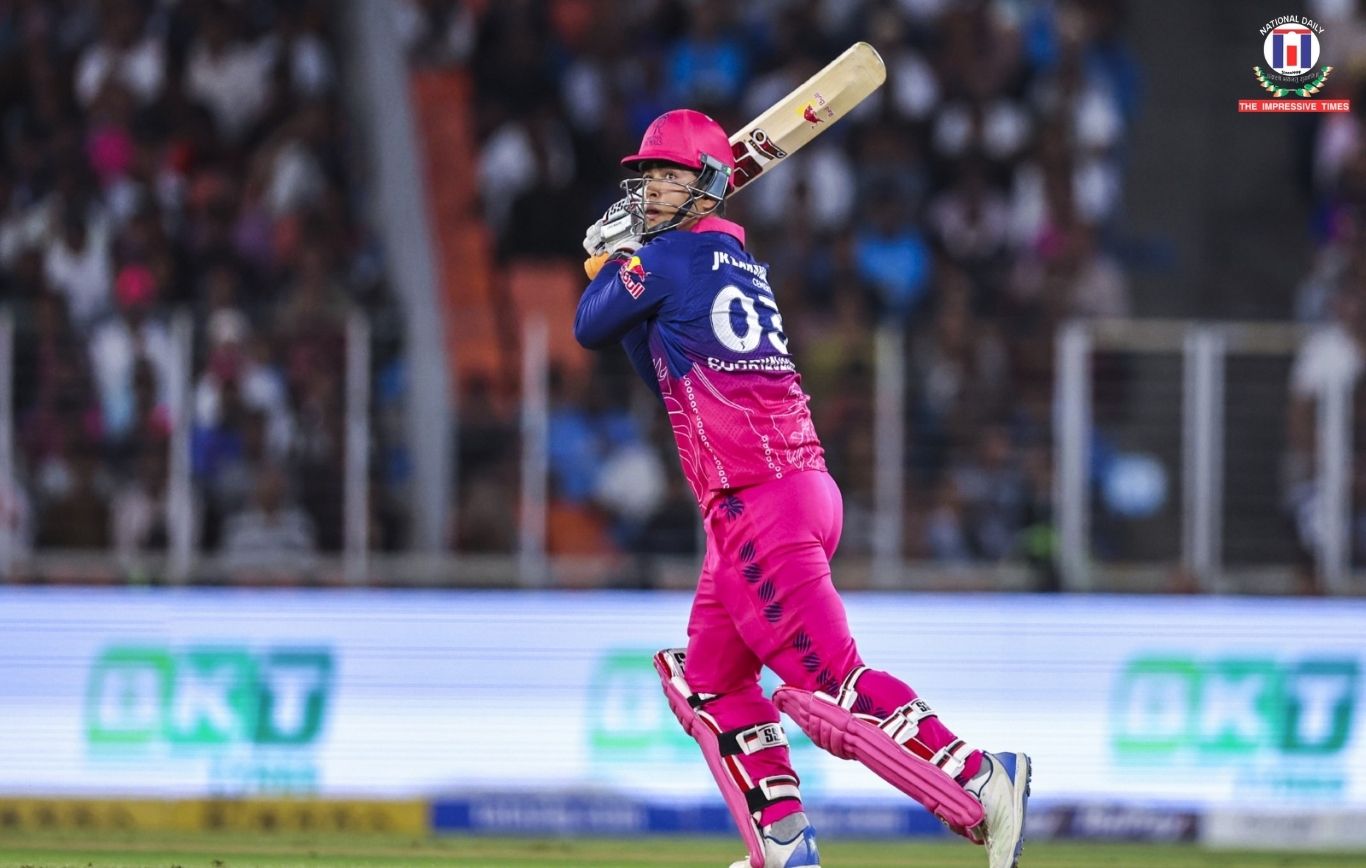
What followed was even more extraordinary. Making his IPL debut at 14 against Lucknow Super Giants, he announced himself by smashing a six off the very first ball he faced. It was the kind of moment modern T20 cricket thrives on—bold, instinctive, and instantly viral. Yet the significance of that shot extended beyond entertainment value. It reflected the confidence with which younger players now approach elite cricket, unburdened by the traditional fear of reputation or occasion.
This shift is perhaps the most defining characteristic of the IPL era. Earlier generations of cricketers often spent years navigating domestic circuits before earning opportunities at the highest level. Today, exceptional talent is identified earlier, exposed sooner, and expected to perform immediately. The league has effectively compressed cricketing timelines, turning teenagers into headline-makers within weeks. In that environment, adaptability matters as much as technique.
Sooryavanshi’s rapid rise through the season, culminating in a 35-ball century against Gujarat Titans, further reinforced this transformation. Records such as the fastest IPL hundred by an Indian and becoming the youngest centurion in league history naturally attract attention, but the deeper story lies in the mindset behind those achievements. His batting reflects a generation raised entirely within the T20 revolution, where aggression is not treated as risk but as default intent.
Yet what stands out even more than the statistics is his emphasis on team success over personal milestones. The values he attributes to his father—that runs hold meaning only if they contribute to victories—introduce an important counterbalance to the hyper-individualized culture of franchise cricket. In a tournament increasingly driven by personal branding, strike rates, and viral highlights, his comments restore focus to cricket’s collective dimension.
This perspective is particularly striking because it comes from a player at the very beginning of his career. Young athletes are often expected to prioritize visibility and numbers to secure future opportunities. Instead, Sooryavanshi frames his ambitions within the broader journey of the team, recognizing that deeper playoff runs create more meaningful opportunities than isolated personal records. It is a mature understanding of competitive sport, where sustained relevance often matters more than momentary brilliance.
His current form in IPL 2026 has only amplified expectations. Scoring 680 runs at a strike rate exceeding 240 is extraordinary by any standard, let alone for a teenager. The sheer volume of boundaries and sixes reflects not just attacking intent but an ability to dominate bowling attacks consistently under pressure. More importantly, his performances have become central to Rajasthan Royals’ campaign, turning him from a promising youngster into a genuine match-winner.
The franchise itself deserves attention for creating an environment where such talent can thrive. Rajasthan Royals has long cultivated a reputation for identifying and backing young players, often trusting potential over established reputation. In Sooryavanshi’s case, that trust appears to have accelerated one of the most remarkable breakout seasons in recent IPL history.
As Rajasthan prepares for Qualifier 2 against Gujarat Titans with a place in the final against Royal Challengers Bengaluru at stake, the spotlight naturally intensifies. Yet even here, Sooryavanshi’s comments reveal composure beyond his years. His emphasis on enjoying the game, avoiding pressure, and backing the team’s strengths suggests a player already aware that mental balance is as important as technical skill in high-stakes tournaments.
There is also a broader symbolic significance to his rise. Coming from Bihar, a region historically underrepresented in elite Indian cricket structures, Sooryavanshi’s emergence reflects the widening geographical spread of opportunity within the sport. Talent identification today is increasingly decentralized, driven by scouting networks, analytics, and franchise systems that search aggressively beyond traditional cricketing strongholds.
Ultimately, Vaibhav Sooryavanshi’s journey is not simply the story of a prodigy. It is the story of how Indian cricket itself is changing—becoming younger, faster, more fearless, and more open to unconventional trajectories. His six off the first ball of his IPL career symbolized that transition perfectly: no hesitation, no waiting period, just immediate intent.
Whether Rajasthan Royals lift the trophy or not, the season has already introduced Indian cricket to a player who seems determined to redefine expectations at an age when most athletes are still learning to dream.





























![UEFA Champions League: 10-men United fall 2-0 to Atleti; Viking hold Bayern to 3-3 draw ANI | Updated: Oct 14, 2026 09:08 IST Madrid [Spain], October 14 (ANI): Manchester United’s 2026/27 season is turning out to be a disaster after the club showed promise following Michael Carrick taking the helm of the club in January, as it faced another loss on Tuesday (local time). In its first away fixture for this season’s UEFA Champions League at the Estadio Metropolitano stadium, the Red Devils were handed a 2-0 defeat by Atletico Madrid, causing the club more misery as it also struggles domestically. Pablo Barrios scored inside the opening minute for Atletico before substitute Ademola Lookman sealed the victory late in the second half. Barrios capitalised on an early lapse in Manchester United’s defence to put Atletico ahead within the first 60 seconds of the match. Despite the initial shock of conceding so early, United pushed for an equaliser, with Bryan Mbeumo leading the attack on most occasions without any significant result. The hosts controlled much of the first half with their high-intensity pressing and possession. Alejandro Grimaldo came close to extending the lead with a free kick that struck the woodwork. Manchester United looked to respond after the break but struggled to create any clear chances against Atletico’s defence. Bruno Fernandes came close to equalising in the 70th minute, rattling the crossbar with an effort from distance. ‹› United’s task became more difficult in the 74th minute when defender Leny Yoro received a red card over a reckless challenge on Jonathan David. Atletico made their numerical advantage count five minutes later. Lookman, who had come on as a substitute, reacted quickest after goalkeeper Senne Lammens parried Jonathan David’s initial shot and found the back of the net in the 79th minute to seal the victory. Both teams have now recorded one win and one defeat in the opening stages of the Champions League league phase. Elsewhere, Norwegian side Viking FK held Bayern Munich to a dramatic 3-3 draw in the league phase. Viking mounted a late comeback to earn a draw after Bayern had overturned a two-goal deficit. At the Viking Stadion in Stavanger, Norwegian side Viking FK held Bayern Munich to a 3-3 draw, scoring a dramatic late equaliser after the German side had overturned a two-goal deficit. Gianni Stensness gave Viking an early lead in the second minute with a header from a corner before Peter Christiansen doubled their advantage in the 38th minute. Bayern responded after the break, with Harry Kane scoring twice in the 54th and 60th minutes to level the score. Luis Diaz put the visitors ahead in the 71st minute. However, Bayern were reduced to 10 men three minutes later after Michael Olise received his second yellow card. Viking capitalised on the advantage as Herman Haugen scored in the 90th minute to secure a 3-3 draw. With one win and one draw, Bayern are placed fourth with four points, while Viking are 26th with a draw and a loss. (ANI)](https://impressivetimes.com/wp-content/uploads/2026/10/TIT-Website-Image-4-5.jpg)










No Comments: