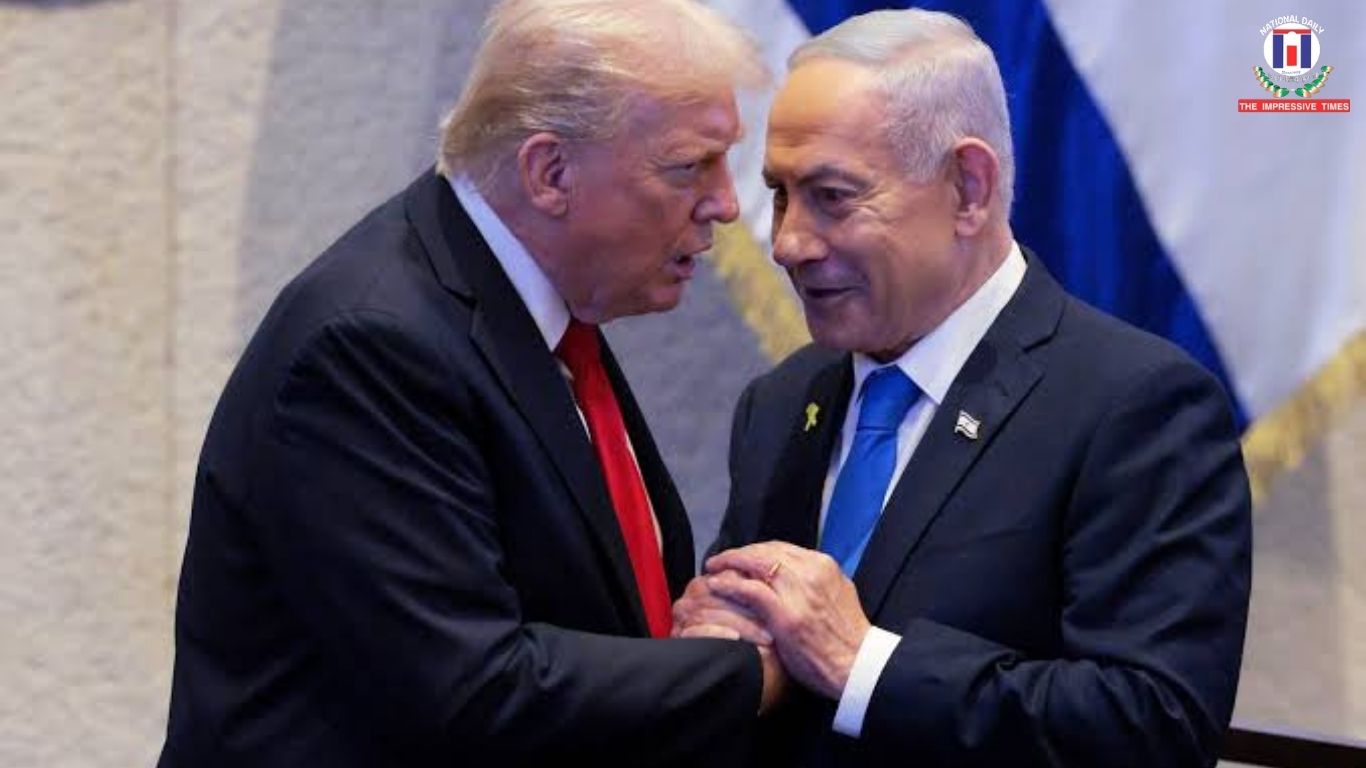
Trump Urges Netanyahu to Consider Troop Withdrawal from Syria and Lebanon Amid Regional Security Talks

Report says US President pushes for military de-escalation as Israel cites ongoing border security concerns
Trump Netanyahu meeting

Washington, July 15, 2026: US President Donald Trump has reportedly asked Israeli Prime Minister Benjamin Netanyahu to begin reducing Israel’s military presence in southern Syria and parts of southern Lebanon, signalling Washington‘s renewed push for easing regional tensions.

“Trump Netanyahu Syria Withdrawal has emerged as a major diplomatic issue after US President Donald Trump reportedly urged Israeli Prime Minister Benjamin Netanyahu to begin withdrawing Israeli troops from southern Syria and Lebanon during a recent phone conversation.”

According to a report by Axios, citing senior American and Israeli officials, Trump conveyed his concerns during a recent phone conversation with Netanyahu. The US President is said to have warned that maintaining Israeli forces inside  territory for an extended period could fuel instability and complicate efforts to improve regional security.


The conversation reportedly took place shortly after Trump’s meeting with Syrian President Ahmed al-Sharaa on the sidelines of the NATO Summit in Turkey. During that engagement, the US administration is believed to have discussed proposals aimed at establishing a new security framework involving Israel and Syria.

While the White House declined to discuss the reported phone call, US officials reiterated that Trump maintains a close working relationship with Netanyahu and continues to view Israel as one of America’s strongest strategic allies.

Israeli officials, however, reportedly expressed reservations about any immediate military withdrawal. Netanyahu is said to have argued that maintaining security buffer zones along Israel’s northern borders remains essential to protecting the country from future threats. His office later emphasised that safeguarding border security continues to be a top priority.

The report stated that the Trump administration has spent several months working on a phased arrangement that would gradually reduce the Israel Defense Forces’ presence in areas of southern Syria occupied after the collapse of Bashar al-Assad’s government in late 2024. However, US officials believe Israel has been reluctant to move forward with the proposed timeline.

The issue has gained greater significance following recent confrontations in southern Syria, where protests against the Israeli military presence reportedly escalated into clashes between local residents and Israeli troops.

Meanwhile, diplomatic efforts involving Israel and Lebanon have also resumed. Officials from both countries met in Rome with American mediators to discuss implementing a previously proposed security arrangement. Under the plan, Israel would withdraw from two designated areas in southern Lebanon, allowing the Lebanese Army to assume responsibility for those locations.

Despite the discussions, Israeli forces have not yet redeployed from the identified sectors. Lebanon has sought a clear schedule for additional withdrawals, while Israeli authorities insist that any further pullback depends on confirmation that Hezbollah no longer maintains military infrastructure in those areas. Lebanese officials have argued that US forces should oversee the verification process.

The negotiations are unfolding against a backdrop of heightened regional tensions. Reports indicate that the United States has reintroduced naval enforcement measures targeting Iranian ports after Tehran allegedly launched attacks on commercial vessels passing through the Strait of Hormuz, adding further complexity to ongoing diplomatic efforts across the Middle East.

The developments also come at a politically sensitive time for Netanyahu, with Israel expected to hold general elections in the coming months. Several members of his governing coalition continue to support retaining strategic control over parts of southern Syria and southern Lebanon, arguing that the deployments are necessary to prevent future cross-border attacks.

No Comments:

Leave a Reply

Your email address will not be published. Required fields are marked *

National News

Education

More News