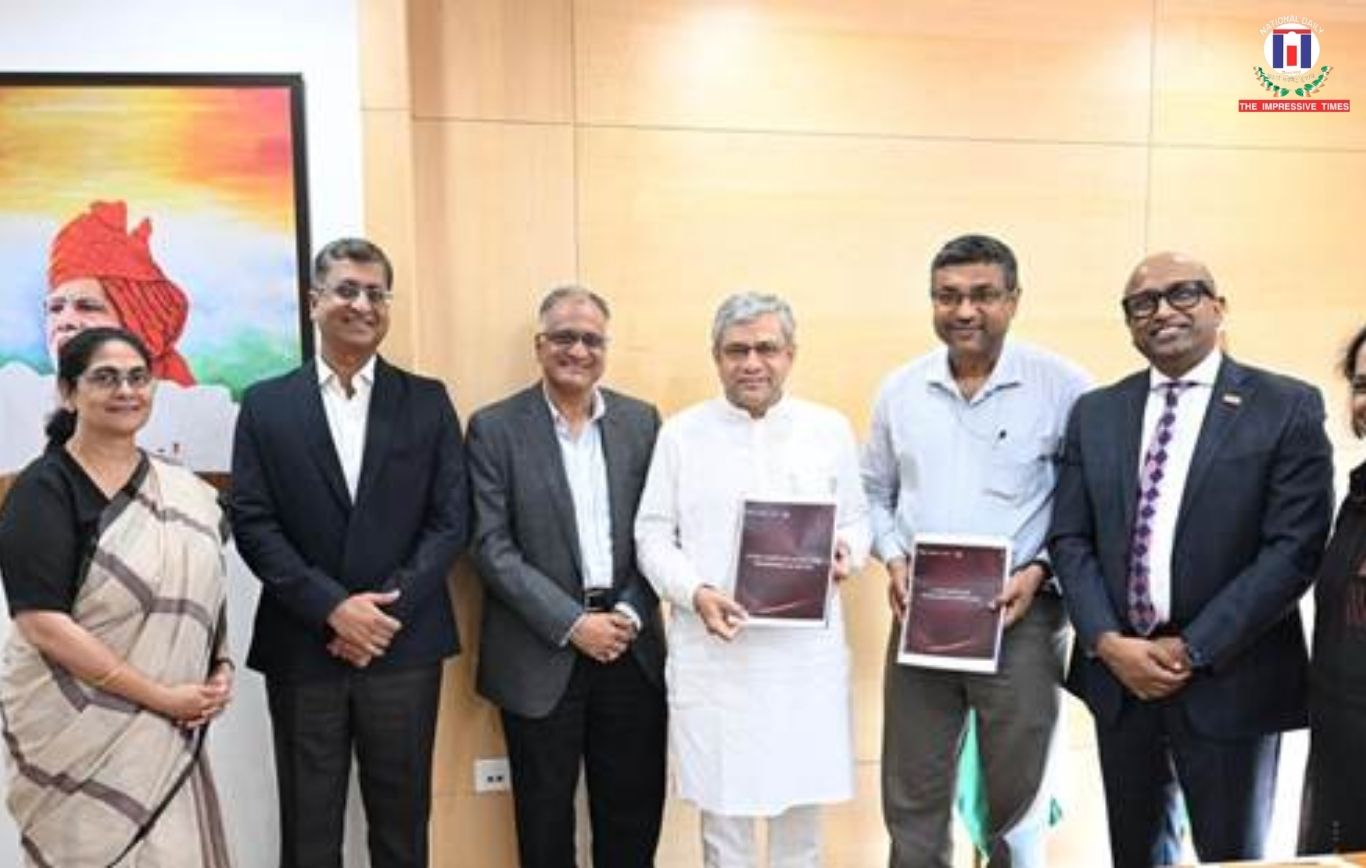
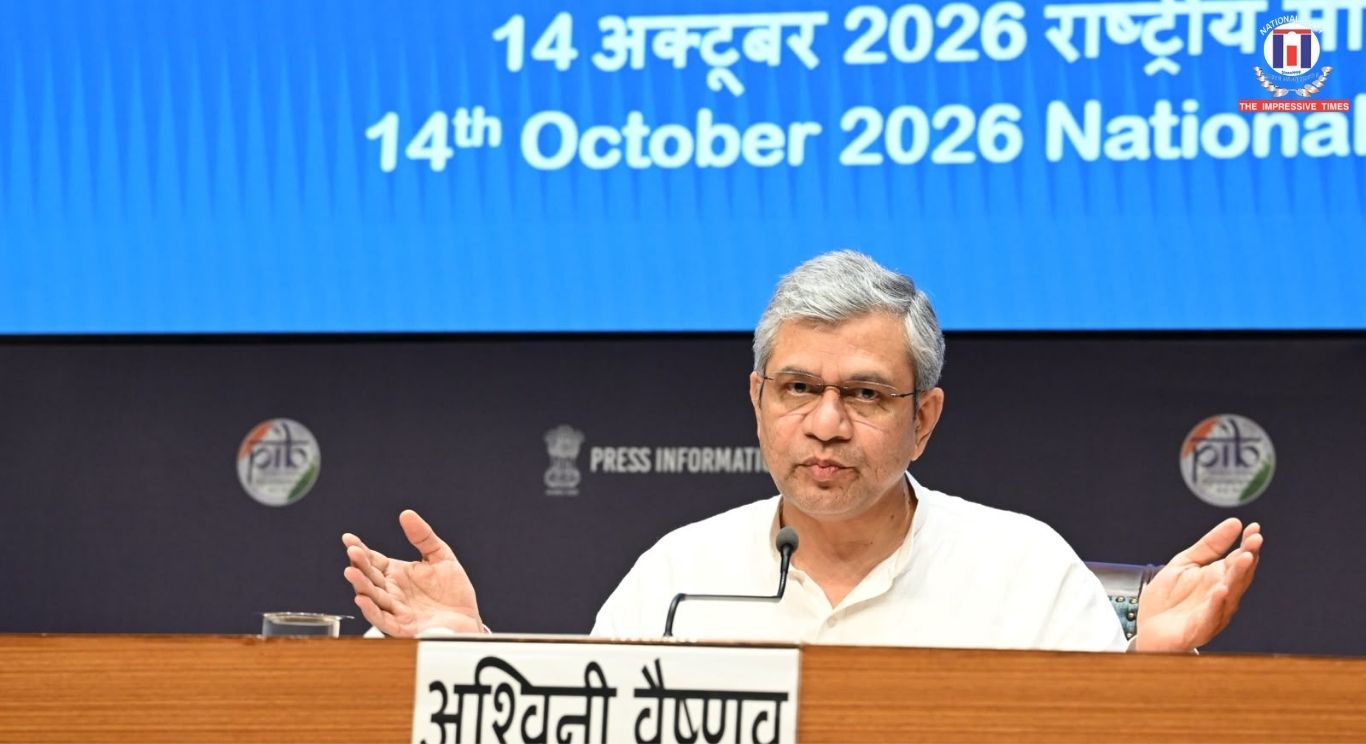
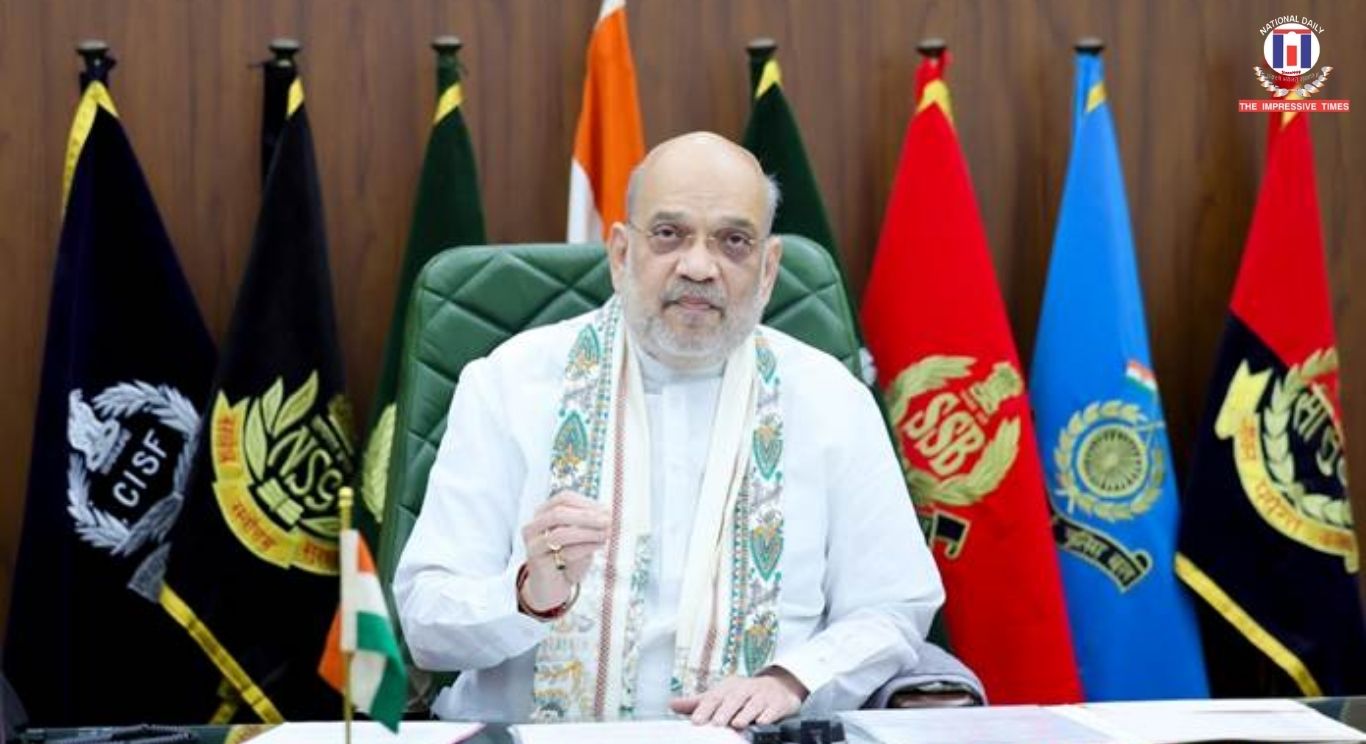
New Delhi, May 28, 2026: Union Minister for Electronics and Information TechnologyAshwini Vaishnaw chaired a high-level meeting with the AI Curriculum Taskforce in New Delhi to discuss a comprehensive revamp of India’s Artificial Intelligence curriculum aimed at aligning education with emerging technological trends and industry requirements.
The initiative is part of the Government of India’s broader effort to build a future-ready workforce equipped with advanced AI capabilities. The consultation focused on enhancing practical exposure, integrating industry-oriented learning, strengthening faculty development, and creating shared technological infrastructure across educational institutions.
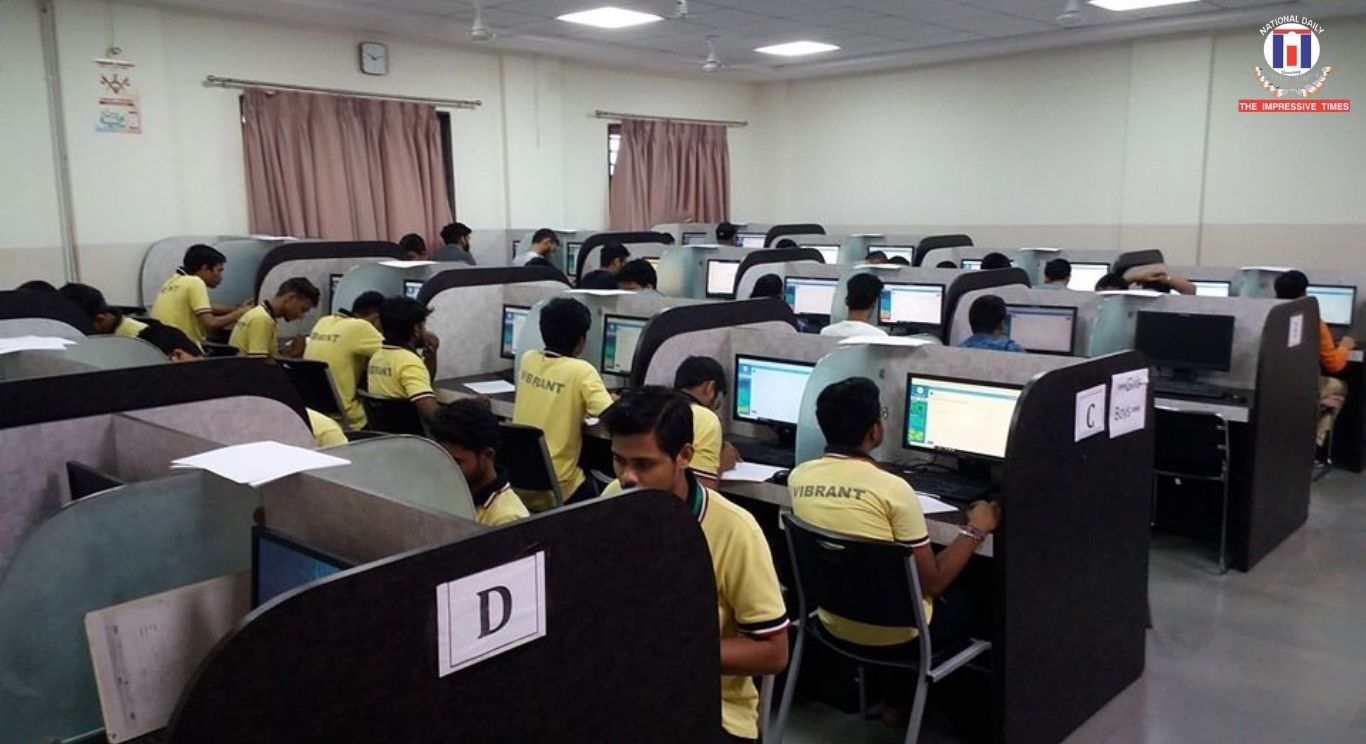
The AI Curriculum Taskforce conducted a detailed baseline study of existing Bachelor of Technology (B.Tech) Computer Science and allied programmes in collaboration with industry experts and the NASSCOM. While the study observed that AI-related subjects have gained prominence in Indian academic curricula, it identified major gaps in pedagogy, infrastructure, and hands-on learning in areas such as Generative AI, Machine Learning Operations (MLOps), and foundational model development.
During the meeting, the taskforce proposed a transition from traditional lecture-based teaching towards application-oriented pedagogy centered on real-world industry use cases from the first semester itself. The recommendations also included embedding AI courses within the formal academic credit structure through a phased semester-wise rollout.
A major emphasis was placed on significantly increasing practical exposure for students. The proposed framework recommends enhancing hands-on training from the current 25–30 percent level to nearly 40–75 percent, depending on the specialization and degree structure. The curriculum aims to integrate industry participation through capstone projects, AI solution engineering, and the use of low-code and no-code development tools.
The discussions further highlighted the importance of incorporating Responsible AI and AI Governance throughout the academic programme rather than limiting them to standalone modules. The taskforce also proposed flexible multiple entry and exit pathways, allowing students to obtain certificates, diplomas, and advanced diplomas at different stages of their academic journey.
Faculty development emerged as another key pillar of the proposed reforms. The roadmap includes structured train-the-trainer programmes, curated teaching content, standardised assessments, and modernised AI laboratories aligned with industry standards and tools. Participants also recommended engaging experienced industry professionals as adjunct faculty to bridge the gap between academia and industry practices.
Another major proposal discussed during the meeting was the creation of a national-level shared AI infrastructure under a collaborative model involving the government, industry, and academic institutions. The initiative aims to provide equitable access to Graphics Processing Unit (GPU) computing resources, edge devices, software platforms, and subscription-based AI tools for colleges and universities across the country.
The consultation concluded with consensus on several immediate action points, including assessment of national infrastructure requirements, collaboration with the All India Council for Technical Education for curriculum adoption, creation of a structured faculty development roadmap, and the launch of a separate AI literacy track for non-STEM disciplines.
The proposed reforms reflect the government’s growing focus on positioning India as a global leader in artificial intelligence, innovation, and digital talent development while ensuring that educational institutions remain aligned with rapidly evolving technological ecosystems.


























![UEFA Champions League: 10-men United fall 2-0 to Atleti; Viking hold Bayern to 3-3 draw ANI | Updated: Oct 14, 2026 09:08 IST Madrid [Spain], October 14 (ANI): Manchester United’s 2026/27 season is turning out to be a disaster after the club showed promise following Michael Carrick taking the helm of the club in January, as it faced another loss on Tuesday (local time). In its first away fixture for this season’s UEFA Champions League at the Estadio Metropolitano stadium, the Red Devils were handed a 2-0 defeat by Atletico Madrid, causing the club more misery as it also struggles domestically. Pablo Barrios scored inside the opening minute for Atletico before substitute Ademola Lookman sealed the victory late in the second half. Barrios capitalised on an early lapse in Manchester United’s defence to put Atletico ahead within the first 60 seconds of the match. Despite the initial shock of conceding so early, United pushed for an equaliser, with Bryan Mbeumo leading the attack on most occasions without any significant result. The hosts controlled much of the first half with their high-intensity pressing and possession. Alejandro Grimaldo came close to extending the lead with a free kick that struck the woodwork. Manchester United looked to respond after the break but struggled to create any clear chances against Atletico’s defence. Bruno Fernandes came close to equalising in the 70th minute, rattling the crossbar with an effort from distance. ‹› United’s task became more difficult in the 74th minute when defender Leny Yoro received a red card over a reckless challenge on Jonathan David. Atletico made their numerical advantage count five minutes later. Lookman, who had come on as a substitute, reacted quickest after goalkeeper Senne Lammens parried Jonathan David’s initial shot and found the back of the net in the 79th minute to seal the victory. Both teams have now recorded one win and one defeat in the opening stages of the Champions League league phase. Elsewhere, Norwegian side Viking FK held Bayern Munich to a dramatic 3-3 draw in the league phase. Viking mounted a late comeback to earn a draw after Bayern had overturned a two-goal deficit. At the Viking Stadion in Stavanger, Norwegian side Viking FK held Bayern Munich to a 3-3 draw, scoring a dramatic late equaliser after the German side had overturned a two-goal deficit. Gianni Stensness gave Viking an early lead in the second minute with a header from a corner before Peter Christiansen doubled their advantage in the 38th minute. Bayern responded after the break, with Harry Kane scoring twice in the 54th and 60th minutes to level the score. Luis Diaz put the visitors ahead in the 71st minute. However, Bayern were reduced to 10 men three minutes later after Michael Olise received his second yellow card. Viking capitalised on the advantage as Herman Haugen scored in the 90th minute to secure a 3-3 draw. With one win and one draw, Bayern are placed fourth with four points, while Viking are 26th with a draw and a loss. (ANI)](https://impressivetimes.com/wp-content/uploads/2026/10/TIT-Website-Image-4-5.jpg)






No Comments: