India Has Transitioned from Technology Adopter to Global Innovation Leader, Says Jitendra Singh
This transformation has fundamentally altered India's position in the global scientific landscape; India Moves from Technology Follower to Technology Leader: Minister
New Delhi, May 31: Union Minister of State (Independent Charge) for Science and Technology, Dr. Jitendra Singh, has said that the technological progress achieved over the past twelve years has laid a strong foundation for India’s vision of becoming a developed nation by 2047. He stated that India has evolved from merely adopting technologies developed elsewhere to becoming an active contributor to global innovation and scientific advancement.
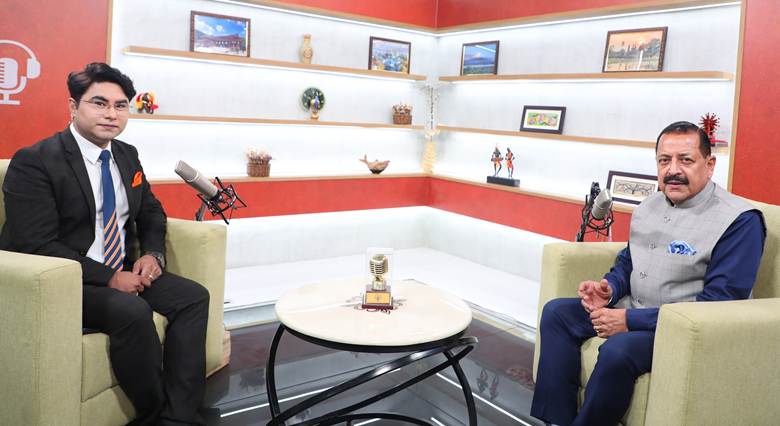
Speaking during a podcast with Doordarshan News, the Minister highlighted the transformation of India’s scientific and technological ecosystem under the leadership of Prime Minister Narendra Modi. According to him, science, research and innovation have become central pillars of national policymaking, helping the country strengthen economic growth, strategic capabilities and citizen-focused governance.
Dr. Singh noted that India is now making significant strides in frontier sectors such as space technology, artificial intelligence, biotechnology, quantum computing, nuclear energy and clean energy. These developments, he said, are creating the technological foundation necessary for achieving the goals of Viksit Bharat by 2047.
Discussing the space sector, the Minister pointed to the rapid expansion of private participation following recent reforms. He said the number of space startups has grown dramatically over the past decade, while India’s space economy is expected to witness substantial growth in the coming years. Space technologies are now playing a vital role in communication, agriculture, disaster management, infrastructure planning and national security, he added.
On the energy front, Dr. Singh described the progress of India’s Prototype Fast Breeder Reactor as a major step toward long-term energy security and self-reliance. He said reforms encouraging private sector participation in the nuclear sector are expected to accelerate innovation and open new opportunities for startups and technology-driven enterprises.
Highlighting achievements under the National Quantum Mission, the Minister said India has already made considerable progress in developing secure quantum communication networks. He emphasized that quantum technologies will strengthen defence capabilities, cybersecurity and future digital infrastructure, placing India among the leading nations in this strategic field.
In the biotechnology sector, Dr. Singh said the government is preparing for a new phase of industrial transformation through the BioE3 Policy. He cited advancements in genome sequencing, rare disease treatment, indigenous drug development and gene therapy as examples of India’s growing scientific capabilities and its potential to become a global biotechnology hub.
The Minister also underscored the growing importance of Artificial Intelligence, describing it as a transformative technology with applications across governance, healthcare, agriculture, research and public service delivery. Through the IndiaAI Mission, the government is investing in computing infrastructure, innovation and digital ecosystems to support future technological leadership.
Dr. Singh further highlighted India’s emergence as one of the world’s leading startup destinations, supported by increasing patent filings, improved global innovation rankings and a rising volume of scientific research publications. He said these achievements reflect India’s growing reputation as a source of original innovation rather than merely a consumer of foreign technologies.
Speaking about sustainable development, the Minister said India is pursuing a diversified clean-energy strategy that includes solar power, green hydrogen, nuclear energy and emerging ocean-based energy technologies. These efforts align with the country’s commitment to achieving net-zero carbon emissions by 2070.
Looking ahead, Dr. Singh identified the blue economy, deep-ocean exploration, Himalayan bio-resources, advanced biotechnology and next-generation manufacturing as key sectors that could drive India’s future growth. He expressed confidence that the scientific capabilities and innovation ecosystem built over the last decade will help India emerge as a leading knowledge economy in the coming decades.
“The progress of the last twelve years is only the beginning of a much larger national transformation,” the Minister said, adding that innovation, research and technology will play a defining role in shaping India’s development journey toward 2047.












































No Comments: