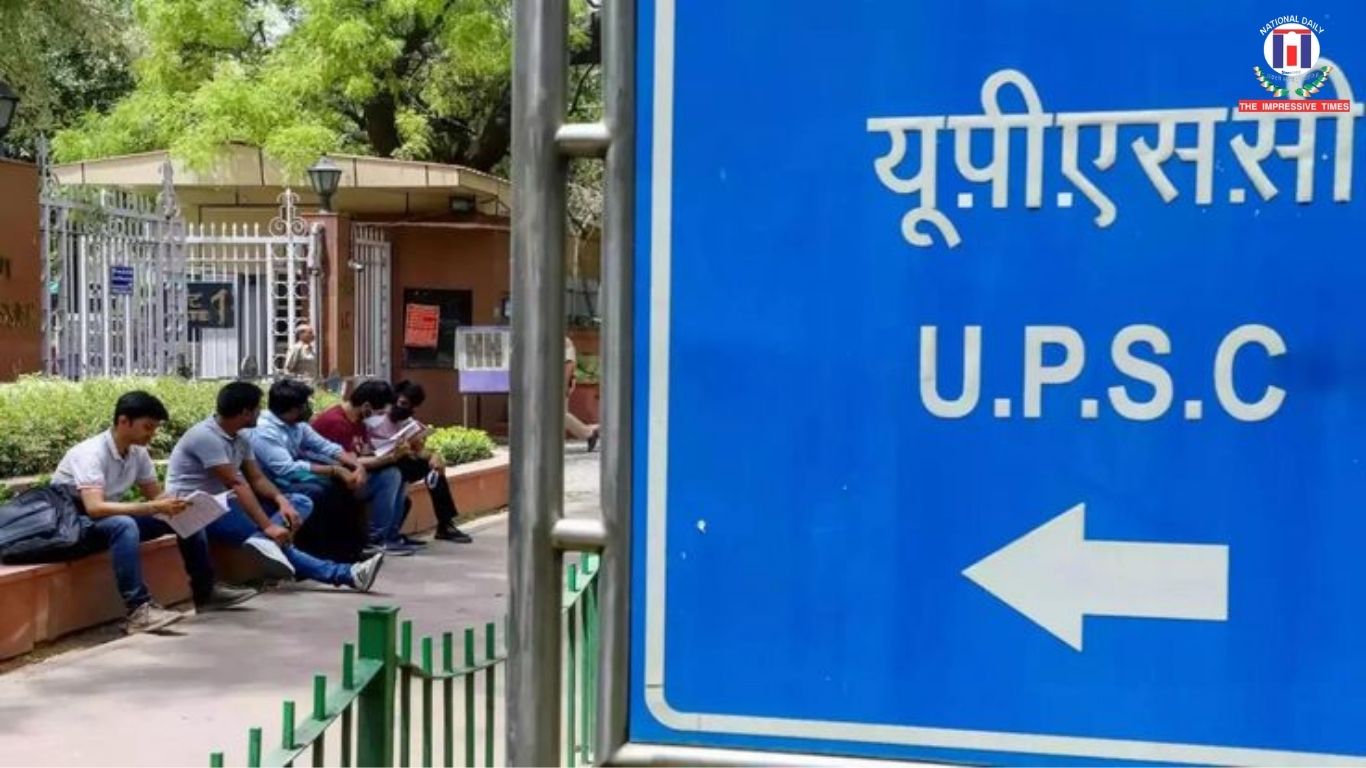
New Delhi, August 23, 2026: The UPSC Civil Services Examination 2026 Essay Paper was largely assessed as moderate in difficulty, with a strong emphasis on philosophy, ethics, human values and leadership. The paper also included an International Relations-based topic, while education and decision-making featured prominently in the second section.
The essay paper required candidates to go beyond factual knowledge and demonstrate interpretation, critical thinking, multidimensional analysis and coherent argumentation. The availability of relatively approachable topics in both sections allowed aspirants from diverse academic backgrounds to make strategic choices.
Section A: Philosophy Dominates, with an IR-Based Choice
Section A largely followed the philosophical orientation seen in recent UPSC essay papers. However, compared with the previous year’s paper, there was somewhat greater thematic variety.
1. “Oxymorons reflect the ironies of life”
This topic required candidates to examine contradictions inherent in human life and society. The essay could be developed through philosophical, social and even everyday examples, showing how apparently opposing ideas may coexist and reveal deeper realities.
2. “A grateful mind is very beautiful”
Among the more accessible topics, this essay offered scope to discuss gratitude as a human value and its relationship with humility, patience, compassion and respect. Candidates could connect individual gratitude with healthier social relationships and responsible citizenship.
3. “A thorn is a changed bud”
This was among the more abstract topics and demanded careful interpretation. The transformation from a bud into a thorn could be used as a metaphor for change, circumstances, growth, adversity and the unintended consequences of development.
4. “When two elephants fight, it is the grass that gets trampled”
The International Relations-oriented topic provided considerable scope for a multidimensional essay. Candidates could examine how conflicts between powerful states affect smaller countries and ordinary populations, covering political, economic, humanitarian and social consequences.
Contemporary global conflicts could also be incorporated to strengthen the analysis without allowing current affairs to dominate the philosophical essence of the topic.
Section B: Education, Ethics and Leadership Take Centre Stage
Section B offered relatively familiar areas, particularly for candidates with a strong foundation in Ethics, Governance and social issues.
5. “Nature is the symbol of the spirit”
This was a deeply philosophical topic requiring candidates to establish a conceptual relationship between nature and the human or spiritual dimension. It demanded abstract thinking and a well-developed philosophical framework.
6. “A well-educated mind will always have more questions than answers”
Considered one of the more manageable choices, this topic focused on curiosity, critical thinking and the role of education in expanding human understanding.
Candidates could draw upon thinkers such as Socrates and Einstein while connecting questioning with scientific discovery, democratic societies and personal development.
7. “Shelving hard decisions is the least ethical choice”
The topic brought decision-making directly into the ethical domain. It allowed candidates to explore procrastination, accountability, moral courage and the consequences of avoiding difficult choices.
The discussion could extend from individual dilemmas to administration, public policy and governance, where delayed decisions can sometimes have wider social consequences.
8. “A good leader is the one who follows the followers”
Leadership emerged as another prominent theme. The statement invited candidates to examine whether effective leadership is about command and authority or about listening, empathy, consultation and responsiveness.
The topic could be linked with public administration, participatory governance, emotional intelligence, accountability and citizen-centric administration.
Overall Difficulty: Moderate, but Interpretation Remained Key
The 2026 Essay Paper was broadly considered moderate, although the difficulty varied significantly between topics.
Most questions were understandable on the surface, but several required candidates to unpack the underlying philosophical meaning before beginning their essays. Thus, the major challenge was not merely generating content but interpreting the statement correctly and maintaining a clear central argument throughout the essay.
The paper also continued the UPSC’s preference for broad, analytical themes rather than narrowly defined factual questions. Direct essays focused exclusively on areas such as economics or women’s issues were not prominent this year.
Major Themes in UPSC Essay Paper 2026
| Theme |
Approximate Presence |
Related GS Areas |
| Philosophy & Ethics |
High |
GS Paper IV, Essay |
| Education & Human Mind |
1 topic |
GS Paper II, Social Issues |
| Leadership & Governance |
1 topic |
GS Paper II & IV |
| International Relations |
1 topic |
GS Paper II |
| Narrow, factual GS themes |
Limited |
— |
The distribution indicates that UPSC continued to favour intersectional topics, requiring candidates to combine philosophical reasoning with examples from society, governance, international affairs and everyday life.
What the 2026 Paper Means for Future Aspirants
The essay paper offers several lessons for candidates preparing for future attempts.
Build philosophical clarity: Aspirants should become comfortable with concepts such as ethics, human values, change, leadership, freedom, responsibility and knowledge.
Strengthen interpretation skills: Before writing, candidates should spend adequate time decoding the statement, identifying its central proposition and deciding the direction of the argument.
Read across disciplines: Philosophy alone is not sufficient. Candidates should connect abstract ideas with history, governance, society, international relations, science, education and contemporary developments.
Develop a strong essay structure: A compelling introduction, logical progression of arguments, relevant examples, counterarguments and a balanced conclusion remain essential.
Use current affairs selectively: Contemporary examples can add depth, but they should support the central argument rather than turn a philosophical essay into a GS answer.
Practise diverse topics: Regular practice with philosophical, ethical, social, governance and international themes can help candidates handle unexpected questions with greater confidence.
The UPSC Mains Essay Paper 2026 continued the examination’s emphasis on thought, interpretation and balanced reasoning. With philosophy and ethics forming the dominant backdrop, the paper also gave candidates opportunities to explore education, leadership and international relations.
For future aspirants, the key takeaway is clear: strong essay writing requires more than information—it requires the ability to interpret an idea, examine it from multiple perspectives and present a coherent argument in a structured manner.

























No Comments: