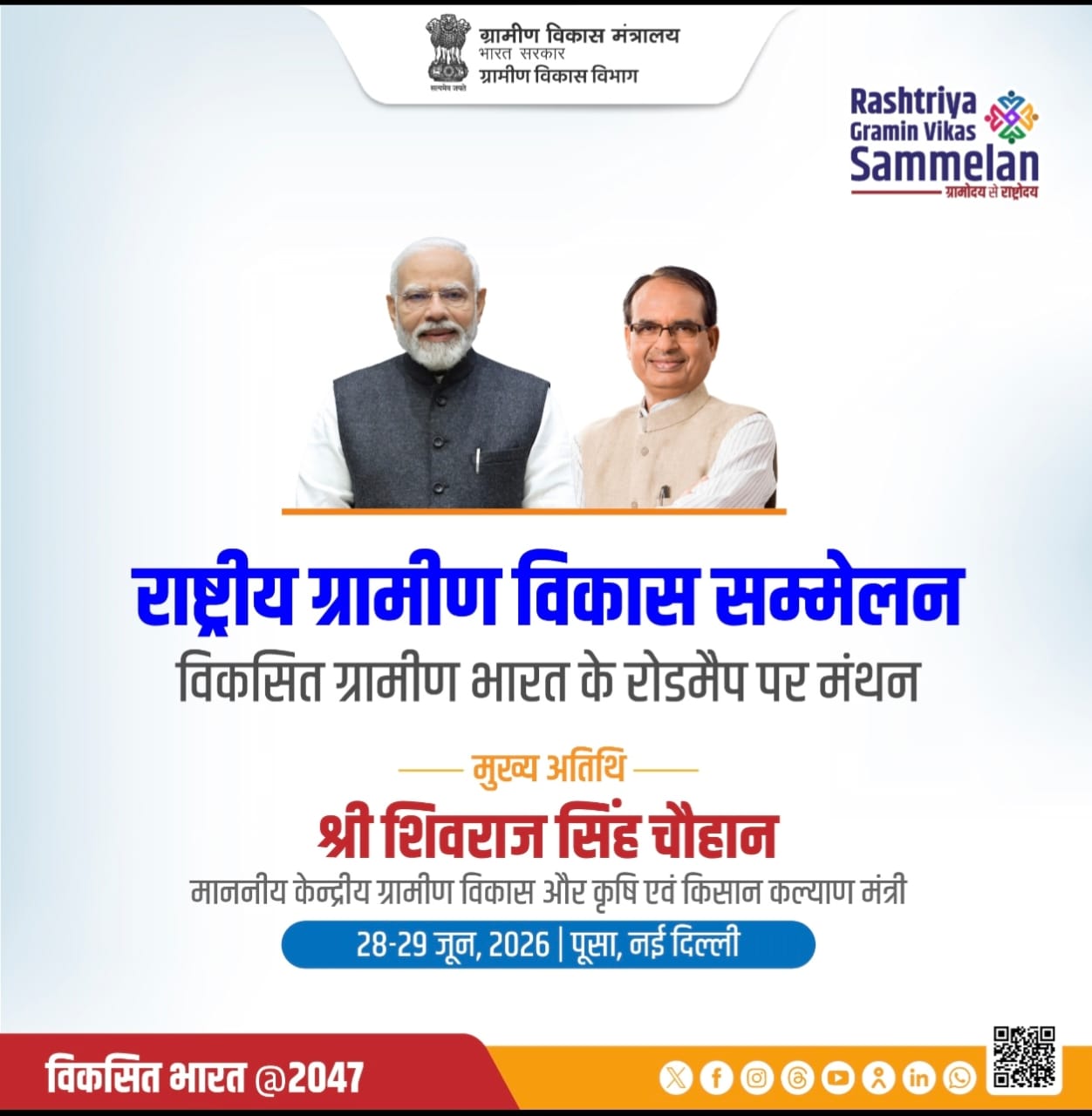
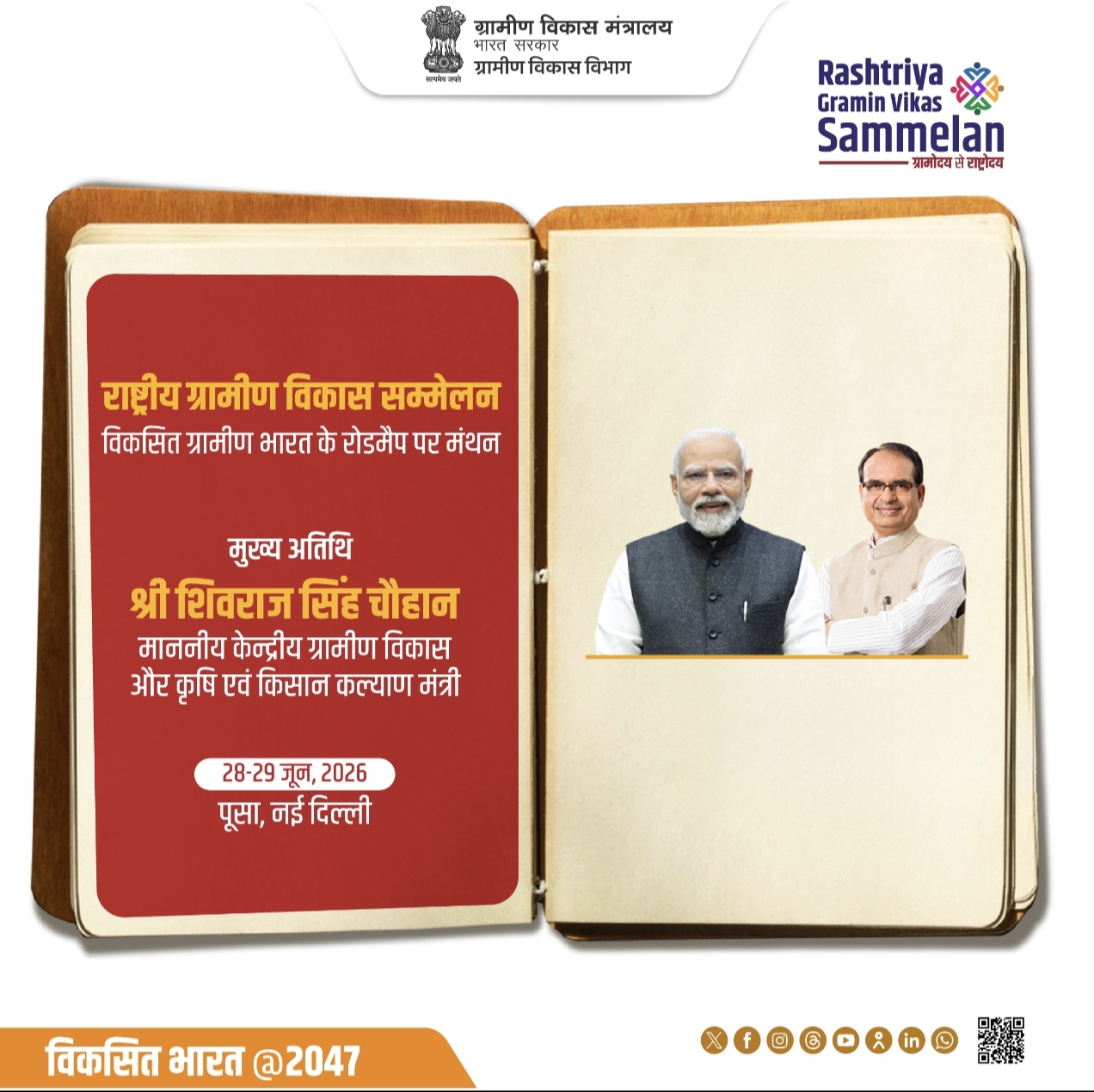
New Delhi, June 26, 2026: The Centre is set to organise the first-ever National Rural Development Conference on June 28–29 in New Delhi, bringing together Rural Development Ministers, senior officials and experts from across States and Union Territories to create a coordinated strategy for transforming India’s villages.
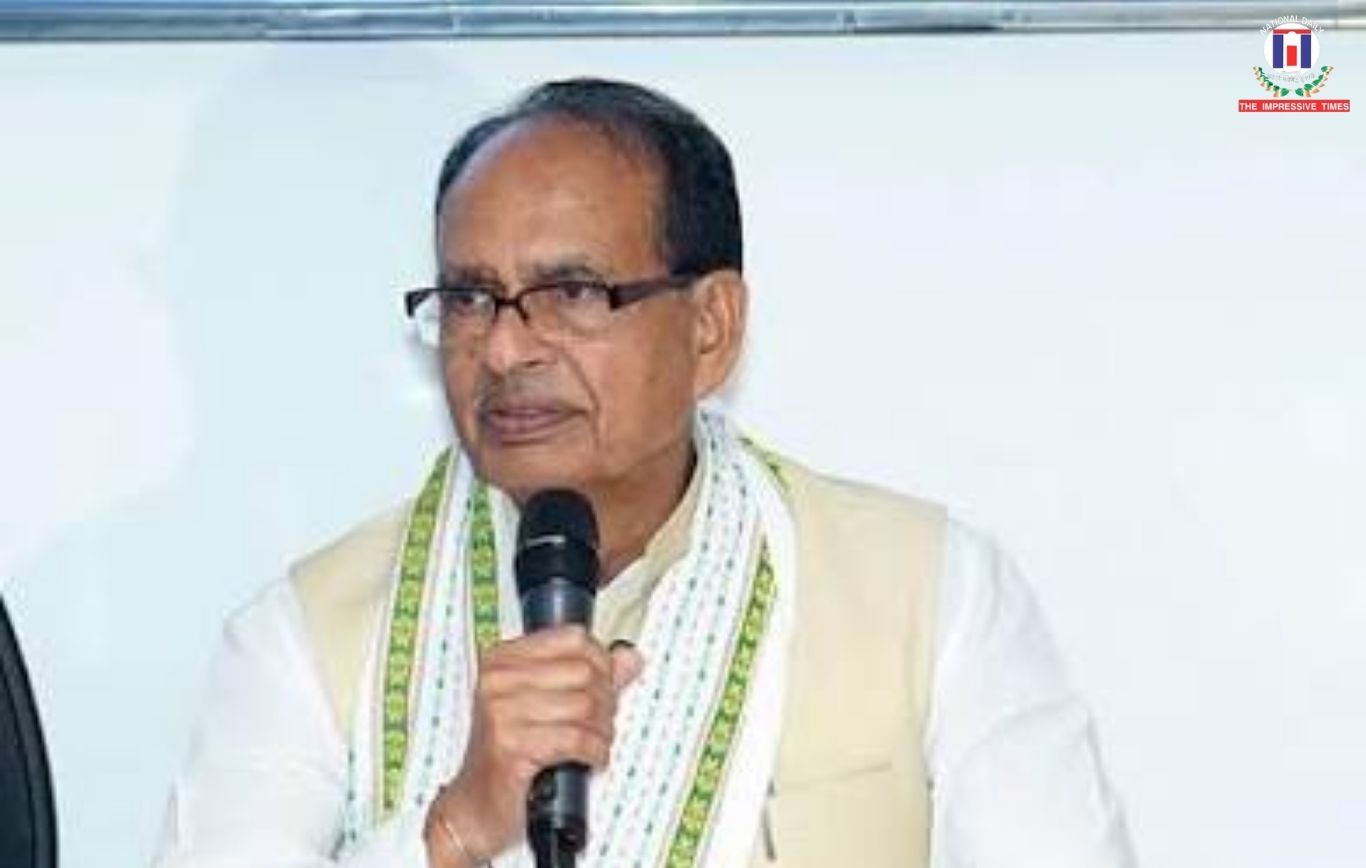
Union Minister for Agriculture & Farmers’ Welfare and Rural Development Shivraj Singh Chouhan will chair the two-day national conclave, which will focus on strengthening rural infrastructure, improving livelihoods, expanding social security and using technology to accelerate development at the grassroots level.
The conference, being held at the Bharat Ratna C. Subramaniam Auditorium in Pusa, aims to translate the vision of “Viksit Gram, Viksit Bharat” into action by creating a shared roadmap between the Centre and States. The discussions will focus on making rural development more inclusive, sustainable and outcome-oriented.
The event will also review the implementation of major rural development programmes, including Pradhan Mantri Awas Yojana–Gramin, Pradhan Mantri Gram Sadak Yojana, Deendayal Antyodaya Yojana–National Rural Livelihoods Mission, rural skill development initiatives and the National Social Assistance Programme.
Highlighting the importance of the conference, Shivraj Singh Chouhan said the objective is to ensure that every village becomes an active contributor to India’s development journey. The deliberations will also focus on strengthening planning at the Gram Panchayat level and ensuring better utilisation of resources.
Rural Development Ministers from all States and Union Territories are expected to participate in the conference along with policymakers, government officials and subject experts. The platform will allow States to share successful models, innovations and practical solutions to address challenges faced at the village level.
A major focus area of the conference will be rural housing, road connectivity, employment generation, women empowerment and social welfare. Special attention will be given to the ‘Lakhpati Didi’ initiative, aimed at strengthening women-led Self-Help Groups, promoting entrepreneurship and creating sustainable income opportunities in rural areas.
The conference will also examine ways to improve skill development and market access for rural youth. Experts and officials will discuss strategies to connect village-level talent with emerging economic opportunities.
Technology and Artificial Intelligence will form an important part of the discussions. The conference will explore the use of digital platforms, real-time monitoring systems and technology-based solutions to improve transparency, efficiency and accountability in rural development schemes.
The Centre will also showcase best practices adopted by different States, allowing successful initiatives to be replicated across the country. The exchange of ideas is expected to help create more effective policies suited to local needs.
The second day of the conference will include ministerial discussions and plenary sessions where suggestions from States will be compiled to prepare a future action plan. The outcomes will highlight the role of villages in achieving the broader vision of a developed India by 2047.
The conference will also witness the release of important publications covering areas such as water security, Gram Development Plans, women empowerment, rural livelihoods and grassroots success stories. These resources are expected to assist States and Gram Panchayats in improving planning and implementation.
The national conclave marks a renewed focus on rural transformation, recognising that India’s development journey depends significantly on the progress of its villages. By bringing together governments, experts and communities, the conference aims to create a stronger foundation for inclusive growth and sustainable rural prosperity.



























No Comments: