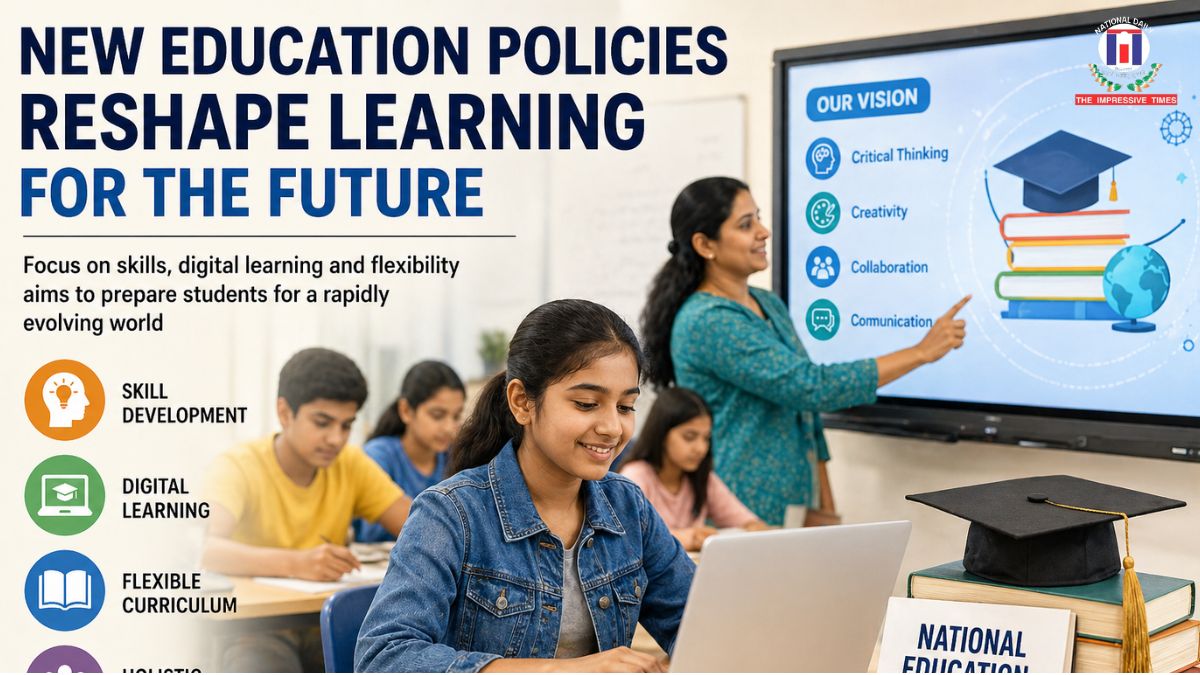
New Education Policies Reshape Learning for the Future
Focus on skills, digital learning and flexibility aims to prepare students for a rapidly evolving world

 The Impressive Times
New Delhi- India’s education system is undergoing a significant transformation as policymakers push for a more flexible, skill-oriented and technology-driven approach to learning. With the implementation of the National Education Policy 2020, institutions across the country are shifting focus from rote learning to holistic development.
The new framework emphasises critical thinking, creativity and practical knowledge, aiming to equip students with skills relevant to modern industries. Schools and universities are increasingly integrating vocational training, coding and interdisciplinary studies into their curriculum, ensuring learners are better prepared for future job markets.
One of the key highlights of the policy is the promotion of digital education. Platforms like DIKSHA and other online learning tools are being expanded to provide accessible and high-quality resources to students across urban and rural areas. This push gained momentum during the COVID-19 pandemic and continues to shape the future of education.
Higher education is also witnessing reforms, with an increased focus on research, innovation and global collaboration. The introduction of multidisciplinary universities and flexible degree programmes allows students to choose subjects across streams, breaking traditional academic boundaries. Experts believe this approach will foster innovation and improve employability.
Another major goal is to increase the Gross Enrollment Ratio (GER) in higher education, aiming to bring more students into the formal education system. Government initiatives are also targeting reduced dropout rates, especially among girls, through scholarships, better infrastructure and awareness campaigns.
However, challenges remain. Bridging the digital divide, ensuring teacher training and maintaining quality standards across institutions are critical concerns that need continuous attention. Rural areas, in particular, require improved internet connectivity and infrastructure to fully benefit from digital initiatives.
Despite these hurdles, the ongoing reforms mark a decisive step toward modernising India’s education system. By aligning academic learning with real-world skills, the country aims to build a workforce that is adaptable, innovative and ready to meet global demands.




















No Comments: