Natural or Injected Watermelon How to Identify Adulteration in 2 Minutes
Stay alert while buying watermelon this summer; identify chemically ripened fruit in just 2 minutes with simple tests

 The Impressive Times
New Delhi- Simple home tests can help you detect chemically ripened or injected watermelons this summer
With rising summer heat, Watermelon becomes a go-to refreshing fruit. However, not every watermelon available in the market is safe to consume. Experts warn that some sellers use harmful chemicals like calcium carbide or artificial colours to enhance appearance and ripening, which can pose serious health risks.
Here are some quick and easy ways to identify whether your watermelon is natural or chemically treated:
Tissue Paper Test
Cut a piece of watermelon and rub a clean white tissue on its pulp. If the tissue turns deep red or pink, it may indicate artificial colouring. A naturally ripe watermelon does not leave such strong stains.
Water Test
Place a small piece of watermelon in a glass of water. If the water quickly turns red or pink, it suggests adulteration. Natural juice does not dissolve so rapidly or intensely.
Check the Field Spot
Look at the outer surface. A naturally ripened watermelon usually has a yellowish patch (field spot) where it rested on the ground. If the fruit looks overly shiny and lacks this spot, it may have been artificially treated.
Seed Appearance
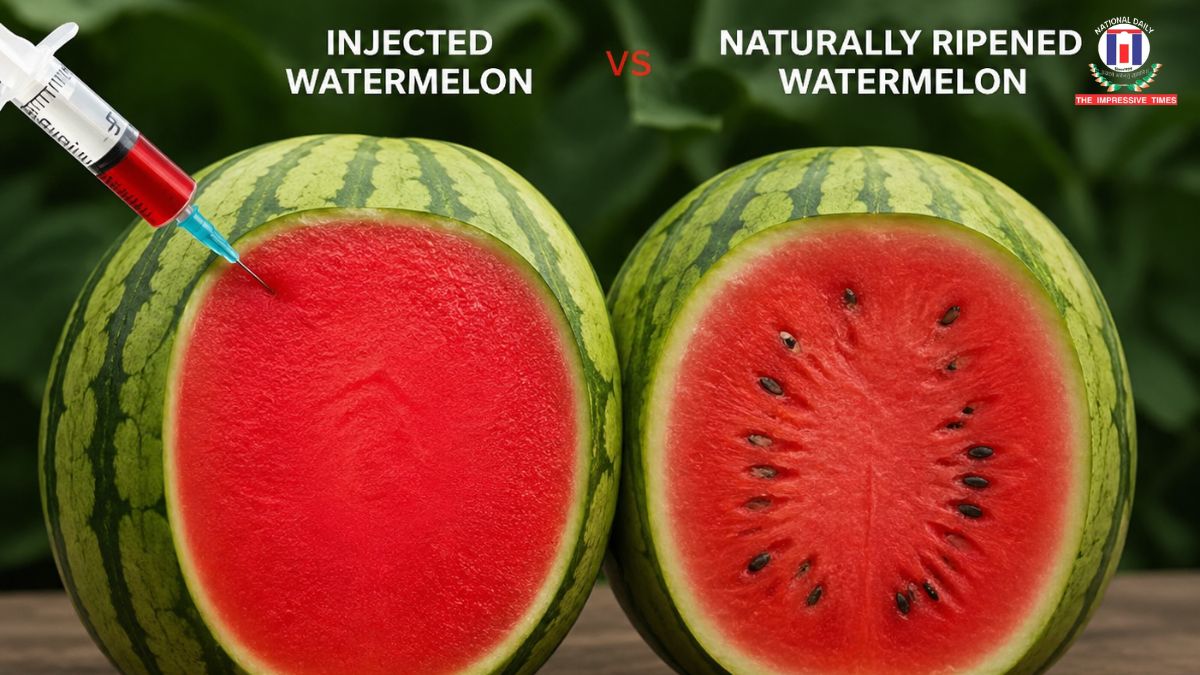
In a natural watermelon, seeds are dark brown or black and fully developed. If the flesh is very red but seeds appear white or underdeveloped, it could be artificially enhanced.
Texture and Colour Consistency
If the inside looks unnaturally bright, glossy, and uniformly coloured without variation, it may be chemically ripened. Natural fruits often show slight unevenness in colour.
Health Risks of Chemically Treated Watermelon
Consuming chemically ripened or injected watermelon can lead to digestive issues such as stomach pain, vomiting, diarrhoea, and food poisoning. Long-term exposure may also harm the liver and kidneys.











































No Comments: