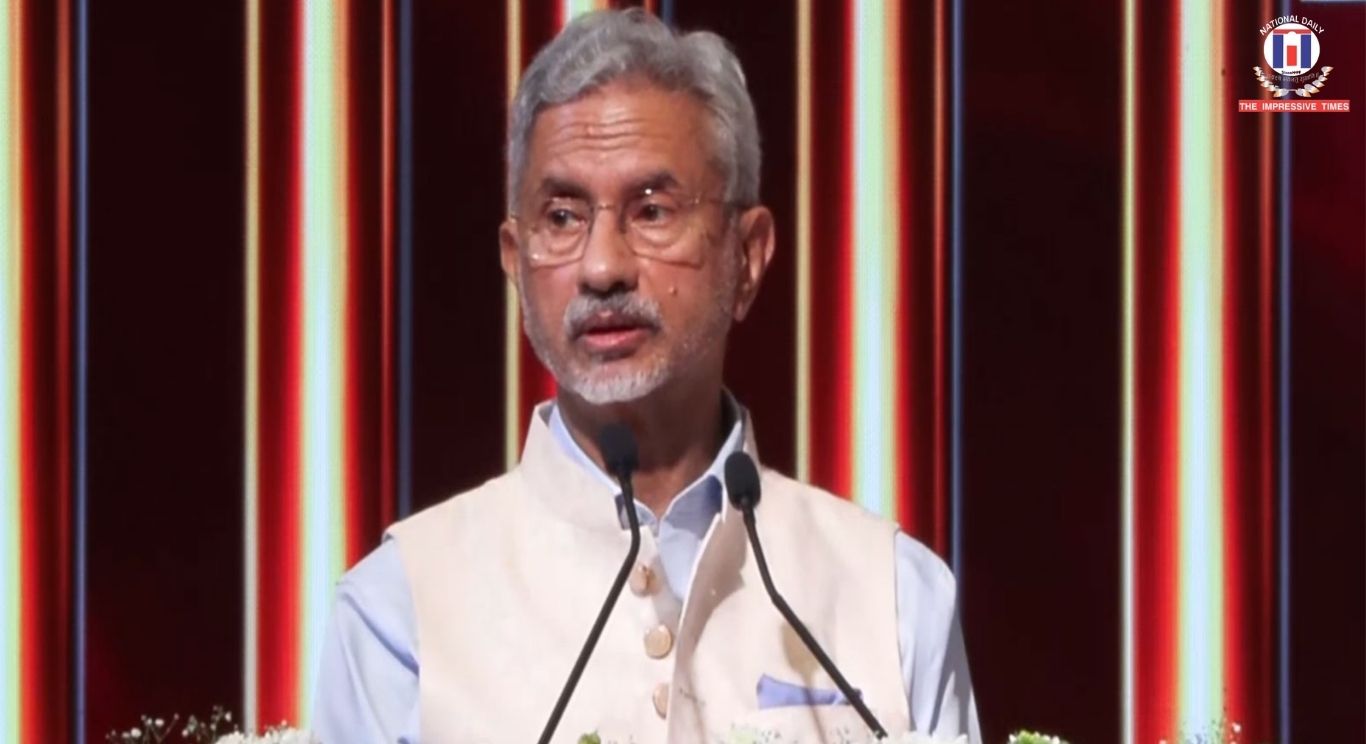
Union Minister for Communications and Development of North Eastern Region, Jyotiraditya Scindia, called for an inclusive and trusted digital financial ecosystem, emphasising that before finance becomes intelligent, it must become inclusive. He said the telecom network, an invisible highway that cannot be seen, is the very foundation on which fintech evolves. Together with compute and trust, connectivity forms the new digital trinity powering the next phase of digital finance.
Highlighting the scale of India’s digital transformation, Scindia said that around 25 crore people had access to the internet a decade ago, compared to 100 crore today. Broadband access has grown from just 6 crore to 103 crore, representing nearly 16 times growth in 10 years. He emphasised that technology must become ubiquitous, across India and the world.

The Smartphone Is the New Bank Branch
Minister Scindia said smartphones have become bank branches, taking citizens from internet connectivity to credit and investment. With around 6.5 lakh villages becoming participants in the digital economy, he said every connected village can become a member of the global fintech ecosystem.

5G Reaches 99.9% of Districts Within 26 Months
Highlighting India’s rapid 5G expansion, Scindia said that following the launch of 5G in 2022, India achieved capability across 99.9% of districts, covering almost 85% of the population, within 26 months. Scindia noted that the rollout has been supported by over 5 lakh 5G base stations.

Affordable Connectivity Is the Foundation of Inclusion
Scindia highlighted the sharp reduction in the cost of communications, noting that data costs have fallen to around 10 cents per GB. He said India has become the world’s cheapest data capital, making digital technology increasingly accessible.
UPI: From 90,000 Transactions to Global Scale
Scindia highlighted the journey of UPI, which began with around 90,000 transactions in its first month and has today scaled to more than 740 banks. UPI has processed around 24,162 crore transactions in FY 2025–26, worth approximately ₹314 lakh crore, demonstrating the scale that India’s Digital Public Infrastructure can achieve.
Bharat Leads in Digital Payments
Scindia noted that 84% of domestic digital transactions take place on UPI, while India accounts for approximately 49% of the world’s real-time digital payment volumes. He credited the fintech ecosystem for this achievement and said that India’s success demonstrates the power of technology built at scale.
Taking UPI to the World
Scindia highlighted the success of UPI as an expression of the Prime Minister’s vision of Vasudhaiva Kutumbakam. He said the technology is being taken to nine countries at no cost to them, while the world is looking towards taking this model to the next 20 countries.
Open, Affordable and Secure Infrastructure
Scindia said the architecture of digital finance rests on networks that carry connections, trust and interoperable platforms that connect institutions. He underlined three principles: innovation scales when infrastructure is open; inclusion scales when infrastructure is affordable; and trust scales when infrastructure is secure.
Digital Infrastructure Brings Finance Closer to Citizens
Highlighting the role of Jan Dhan accounts and DigiLocker, Scindia said around 60 crore Jan Dhan accounts and 9 billion documents on DigiLocker have dramatically reduced the distance between citizens and their ability to access finance. He emphasised that finance no longer needs to depend on the physical presence of a bank branch. “The smartphone is the bank branch,” he said, noting that a smartphone can take fintech to every citizen.
Connecting the Northeast
Scindia highlighted that fintech connectivity has reached almost every village in the North Eastern Region, driven by the Prime Minister’s impetus and sankalp. Through Digital Bharat Nidhi, around 22,000 towers are being established across 34,000 villages without telecom connectivity, with the objective of ensuring 100% saturation.
From Mobile to Terrestrial Connectivity
Scindia said that as India works towards 100% saturation on the mobile front, a new arterial system is being established, extending from mobile to terrestrial networks. He highlighted the role of Gram Panchayats in creating first-mile, middle-mile and last-mile connectivity to reach the remaining villages.
Convergence of Compute and Financial Infrastructure
Minister Scindia also highlighted the national AI capabilities and compute power converge with digital infrastructure, AI can personalise financial advice and credit and increasingly make financial services autonomous.
Greater Intelligence, Greater Responsibility
Scindia emphasised that with greater intelligence comes greater responsibility. He called for financial systems to be ring-fenced, with strong firewalls and safeguards to protect citizens and their financial security.
Sanchar Saathi and ASTR Protect Citizens
Sanchar Saathi, a Government of India initiative that protects citizens against suspicious connections and enables stolen devices to be blocked. Scindia highlighted the AI powered tool- ASTR, which has helped disconnect more than 88 lakh suspicious mobile connections.
Financial Fraud Risk Indicator Enables Prevention
The Financial Fraud Risk Indicator ring-fences suspicious transactions and helps stop fraudulent payments before money leaves citizens’ accounts. He called for SOPs across banking networks to strengthen the protection of citizens and their financial capabilities.
From Reactive Security to Prevention
Scindia emphasised the need to shift from detecting fraud after it happens to preventing it before it occurs. He said the objective must be to move from reactive security to predictive trust.
Building a Trust Grid for Finance
Scindia called for the creation of a Trust Grid for finance, bringing together telecom, digital identity, UPI and financial systems. He said greater convergence of Aadhaar and UPI can give every citizen the capability to participate in and benefit from the digital economy.
Intelligent India Must Democratise Intelligence
Scindia said that if Digital India democratised access, Intelligent India must democratise intelligence. AI cannot remain the preserve of corporates or banks. It must become a tool available to every citizen, enabling each person to benefit from the transformation underway.
India Moves From Technology Consumer to Technology Maker
Scindia highlighted India’s indigenous 4G telecom stack, noting that telecom stacks have historically been developed by a small number of countries and companies. India has now produced its own domestic 4G stack and is working on 5G.
India’s 6G Mission Has Begun
Scindia said India’s 6G mission has already started, with the ambition of contributing 10% of global 6G patents and becoming a valuable partner in the development of 6G standards.
Innovate in India, Serve the World
Concluding, Scindia said India must “Innovate in India, serve in India, serve the world and serve it securely.” He said the ambition must be to move from a connected India to intelligent digital finance and then to empowered finance, and from Digital Public Infrastructure to trusted infrastructure.











































No Comments: