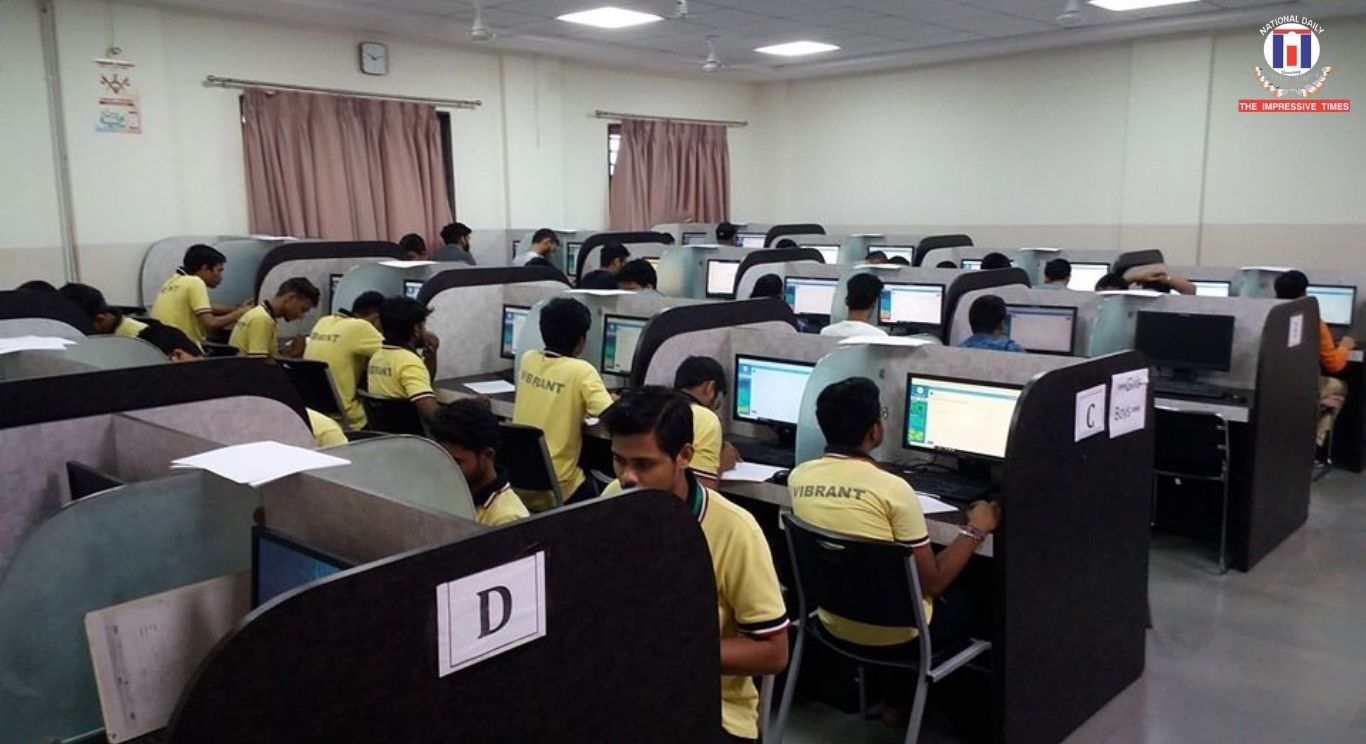
New Delhi: For thousands of students aspiring to pursue engineering at India’s leading technical institutions, the Joint Entrance Examination (JEE) represents a major step towards higher education. With intense competition and a demanding syllabus, success in JEE Main and JEE Advanced requires a combination of conceptual understanding, disciplined preparation and effective examination strategies.
Conducted through a two-stage selection framework, the examinations provide admission pathways to prestigious institutions, including the Indian Institutes of Technology (IITs), National Institutes of Technology (NITs), Indian Institutes of Information Technology (IIITs) and other participating technical institutes.
While JEE Main serves as an entrance examination for several engineering institutions, JEE Advanced is primarily associated with admission to undergraduate programmes at the IITs.
Understanding the differences between these examinations is essential for students planning their academic journeys.
Understanding the Two Stages of the Joint Entrance Examination
India’s engineering entrance examination system underwent an important restructuring in 2013 when the earlier All India Engineering Entrance Examination was replaced by JEE Main, while the IIT entrance examination became JEE Advanced.
The revised structure established separate examination stages for admission to different categories of technical institutions.
JEE Main is conducted by the National Testing Agency (NTA) and provides a route to undergraduate engineering programmes offered by NITs, IIITs and other participating institutions.
The examination also serves as the qualifying stage for Indian candidates seeking to appear in JEE Advanced.
JEE Advanced is organised by a designated Indian Institute of Technology under the guidance of the Joint Admission Board.
Candidates who meet the required eligibility conditions and secure qualifying ranks in JEE Advanced can participate in the admission process for IIT programmes.
JEE Main Provides Entry to Engineering and Architecture Programmes
JEE Main is designed to assess students seeking admission to undergraduate technical education.
The examination includes separate papers for different academic programmes.
Paper 1 is intended for students interested in pursuing Bachelor of Engineering or Bachelor of Technology degrees.
It evaluates knowledge in Physics, Chemistry and Mathematics, with an emphasis on conceptual understanding and problem-solving abilities.
The examination also includes papers for Bachelor of Architecture and Bachelor of Planning courses.
These programmes have different assessment requirements reflecting their respective academic disciplines.
Students should carefully identify the examination paper relevant to their intended course before submitting their applications.
JEE Advanced Tests Higher-Level Analytical Abilities
Students aiming to secure admission to IITs must generally qualify for JEE Advanced after meeting the required JEE Main performance criteria.
Compared with JEE Main, the Advanced examination places greater emphasis on analytical reasoning, application of concepts and solving complex problems.
The examination consists of two compulsory papers conducted on the same day.
Both papers assess candidates across Physics, Chemistry and Mathematics.
The question format and distribution of marks may vary between examination years.
As a result, candidates are encouraged to develop strong conceptual foundations rather than depending entirely on memorised formulas or fixed question patterns.
Performance in JEE Advanced determines eligibility for participation in the IIT admission process, subject to applicable admission rules.
Eligibility Requirements Demand Careful Attention
Before applying for either examination, students must understand the academic and administrative conditions specified by the respective examination authorities.
For JEE Main, eligibility is linked to recognised qualifying examinations, including Class 12 or equivalent educational qualifications.
The year in which a candidate appears for or passes the qualifying examination is an important consideration.
Students seeking admission to engineering programmes must also satisfy the subject requirements prescribed for their chosen courses.
Mathematics and Physics are central subjects for engineering aspirants, while additional subject requirements depend on the programme and applicable admission rules.
JEE Advanced has separate eligibility conditions involving performance in JEE Main, previous appearances in the examination and the year of first appearance in Class 12 or an equivalent examination.
Category-specific provisions may also apply.
Students should distinguish between eligibility to appear in an entrance examination and the academic conditions required for admission to a particular institution.
Since these rules can change, candidates must consult the official information bulletins for the relevant admission year.
A Strong Understanding of the Syllabus Is the First Step
Preparing for JEE requires a systematic approach to Physics, Chemistry and Mathematics.
Students should begin by reviewing the prescribed syllabus and identifying the topics included in each subject.
This helps them organise their preparation and avoid spending unnecessary time on material outside the examination requirements.
In Physics, understanding fundamental principles and their applications is particularly important.
Chemistry preparation requires attention to conceptual clarity, chemical reactions and the relationships between different topics.
Mathematics demands regular problem-solving practice and the ability to apply concepts accurately under time constraints.
Students can benefit from dividing the syllabus into manageable sections and setting realistic completion targets.
Regular revision should be incorporated into the study schedule to strengthen long-term retention.
NCERT Textbooks Help Build Essential Concepts
The National Council of Educational Research and Training textbooks are widely used as foundational learning resources for engineering entrance examination preparation.
They can help students develop a clear understanding of important concepts, definitions and principles taught at the senior secondary level.
For Chemistry, careful study of relevant textbook chapters can support conceptual accuracy.
In Physics and Mathematics, NCERT exercises provide a starting point for developing problem-solving abilities.
However, students preparing for JEE Advanced may need additional practice involving challenging and application-oriented questions.
The objective should be to understand how concepts work rather than simply memorising answers.
A combination of textbook learning, structured practice and regular revision can help strengthen examination readiness.
Time Management Can Make a Significant Difference
One of the biggest challenges faced by engineering aspirants is managing a large syllabus alongside school examinations and other academic commitments.
A realistic timetable can help students distribute their study hours across subjects.
Rather than spending excessive time on a single topic, candidates should establish a balanced routine that includes conceptual learning, practice questions and revision.
Students may also benefit from identifying their stronger and weaker areas early in the preparation process.
Difficult topics can then receive additional attention without disrupting progress in other subjects.
Short breaks between study sessions can help maintain concentration and reduce mental fatigue.
Consistency over an extended period is generally more productive than irregular periods of intensive study.
Previous-Year Papers and Mock Tests Strengthen Examination Readiness
Solving earlier examination papers is an important part of JEE preparation.
Previous-year questions help students become familiar with the nature of the examination and the different ways in which concepts may be tested.
They also provide opportunities to practise time management and improve accuracy.
Mock examinations can further help candidates assess their readiness under conditions similar to the actual test.
However, attempting practice tests alone is not sufficient.
Students should carefully examine incorrect answers, identify recurring mistakes and understand why particular questions were difficult.
This analysis can guide subsequent revision and help candidates improve their performance.
For JEE Advanced, practising questions that require multiple concepts and logical reasoning can be especially useful.
Avoiding Common Preparation Mistakes
Students preparing for competitive examinations sometimes focus heavily on completing large numbers of questions without ensuring that they understand the underlying concepts.
This approach can create difficulties when unfamiliar problems appear in the examination.
Another common mistake is relying on too many study resources.
Frequently changing books or preparation methods can interrupt learning and reduce the time available for revision.
Candidates should instead select suitable resources and use them consistently.
Ignoring weaker subjects can also affect overall performance.
A balanced preparation strategy should address all required subjects while allowing additional practice in challenging areas.
Students should also avoid comparing their progress constantly with that of others, as individual learning speeds and academic strengths vary.
Managing Examination Pressure Is Equally Important
The competitive nature of JEE can create considerable pressure among students.
Expectations surrounding examination scores, college admissions and future career prospects may affect confidence and concentration.
Maintaining a structured routine, getting adequate rest and seeking guidance when necessary can help students manage these challenges.
Teachers and mentors can assist with difficult concepts, while regular self-assessment can provide a clearer picture of academic progress.
Students should also recognise that improvement often occurs gradually through repeated practice and correction of mistakes.
Developing confidence in one’s preparation is important, but it should be supported by realistic assessments of strengths and areas requiring improvement.
Engineering Aspirants Should Stay Updated on Official Announcements
Examination authorities may revise application procedures, eligibility conditions, examination formats and admission requirements.
Therefore, students should regularly check official announcements issued by the National Testing Agency and the organising IIT.
Information related to registration deadlines, admit cards, examination schedules, answer keys and results should be obtained from authorised sources.
Candidates should also review the admission requirements of individual institutions before making decisions about their preferred programmes.
Disciplined Preparation Remains Key to JEE Success
JEE Main and JEE Advanced continue to serve as important gateways to engineering education in India.
Although the examinations differ in their objectives and difficulty levels, both require a sound understanding of fundamental concepts, consistent practice and effective time management.
Students who begin preparation with a clear strategy, monitor their progress and address weaknesses systematically can improve their examination readiness.
Beyond securing a qualifying rank, the preparation process can also help aspirants develop analytical thinking, persistence and problem-solving abilities that remain valuable throughout their academic and professional careers.
For engineering aspirants, a combination of focused study, reliable guidance and sustained effort remains central to navigating these competitive examinations.



























![UEFA Champions League: 10-men United fall 2-0 to Atleti; Viking hold Bayern to 3-3 draw ANI | Updated: Oct 14, 2026 09:08 IST Madrid [Spain], October 14 (ANI): Manchester United’s 2026/27 season is turning out to be a disaster after the club showed promise following Michael Carrick taking the helm of the club in January, as it faced another loss on Tuesday (local time). In its first away fixture for this season’s UEFA Champions League at the Estadio Metropolitano stadium, the Red Devils were handed a 2-0 defeat by Atletico Madrid, causing the club more misery as it also struggles domestically. Pablo Barrios scored inside the opening minute for Atletico before substitute Ademola Lookman sealed the victory late in the second half. Barrios capitalised on an early lapse in Manchester United’s defence to put Atletico ahead within the first 60 seconds of the match. Despite the initial shock of conceding so early, United pushed for an equaliser, with Bryan Mbeumo leading the attack on most occasions without any significant result. The hosts controlled much of the first half with their high-intensity pressing and possession. Alejandro Grimaldo came close to extending the lead with a free kick that struck the woodwork. Manchester United looked to respond after the break but struggled to create any clear chances against Atletico’s defence. Bruno Fernandes came close to equalising in the 70th minute, rattling the crossbar with an effort from distance. ‹› United’s task became more difficult in the 74th minute when defender Leny Yoro received a red card over a reckless challenge on Jonathan David. Atletico made their numerical advantage count five minutes later. Lookman, who had come on as a substitute, reacted quickest after goalkeeper Senne Lammens parried Jonathan David’s initial shot and found the back of the net in the 79th minute to seal the victory. Both teams have now recorded one win and one defeat in the opening stages of the Champions League league phase. Elsewhere, Norwegian side Viking FK held Bayern Munich to a dramatic 3-3 draw in the league phase. Viking mounted a late comeback to earn a draw after Bayern had overturned a two-goal deficit. At the Viking Stadion in Stavanger, Norwegian side Viking FK held Bayern Munich to a 3-3 draw, scoring a dramatic late equaliser after the German side had overturned a two-goal deficit. Gianni Stensness gave Viking an early lead in the second minute with a header from a corner before Peter Christiansen doubled their advantage in the 38th minute. Bayern responded after the break, with Harry Kane scoring twice in the 54th and 60th minutes to level the score. Luis Diaz put the visitors ahead in the 71st minute. However, Bayern were reduced to 10 men three minutes later after Michael Olise received his second yellow card. Viking capitalised on the advantage as Herman Haugen scored in the 90th minute to secure a 3-3 draw. With one win and one draw, Bayern are placed fourth with four points, while Viking are 26th with a draw and a loss. (ANI)](https://impressivetimes.com/wp-content/uploads/2026/10/TIT-Website-Image-4-5.jpg)

















No Comments: