New Delhi: Clearing the written stages of the Union Public Service Commission (UPSC) Civil Services Examination is a major achievement, but securing a place in the final merit list requires candidates to demonstrate more than academic knowledge. The Personality Test, commonly known as the IAS interview, plays an important role in assessing whether an aspirant possesses the qualities needed to handle responsibilities in public administration.
Unlike conventional examinations that primarily measure subject knowledge, the UPSC interview examines a candidate’s overall personality, ability to analyse situations, clarity of expression and approach towards public service.
The interaction provides an opportunity for candidates to demonstrate their understanding of social issues, decision-making abilities and professional values before an experienced interview board.
Why the UPSC Interview Matters in Final Selection
The Personality Test carries 275 marks, while the Civil Services Main Examination contributes 1,750 marks towards the final merit calculation.
Although the interview accounts for a smaller share of the overall score, differences in performance can significantly influence candidates’ final rankings.
A strong interview score may improve an aspirant’s position in the merit list, while a comparatively weaker performance can affect the final outcome despite good written examination marks.
The interview therefore remains an important stage for candidates seeking services such as the Indian Administrative Service, Indian Police Service and Indian Foreign Service.
UPSC Evaluates Key Personality Traits During the Interview
The commission’s assessment goes beyond factual accuracy and focuses on qualities considered essential for effective public administration.
Mental alertness is among the important attributes examined during the interaction. Candidates are expected to understand questions quickly and respond thoughtfully.
The board also evaluates whether aspirants can examine information critically rather than accepting statements without proper reasoning.
Clear communication is another essential aspect. Candidates should be able to explain their opinions logically and present complex ideas in an understandable manner.
Balanced judgment receives particular attention because administrative officers frequently encounter situations involving competing interests and differing perspectives.
The interview also considers awareness of social developments, leadership potential and the ability to work with people from diverse backgrounds.
Integrity, ethical conduct and consistency between personal values and professional responsibilities form another important part of the assessment.
These qualities are generally examined through the overall conversation rather than through separate tests.
How the UPSC Interview Board Conducts the Personality Test
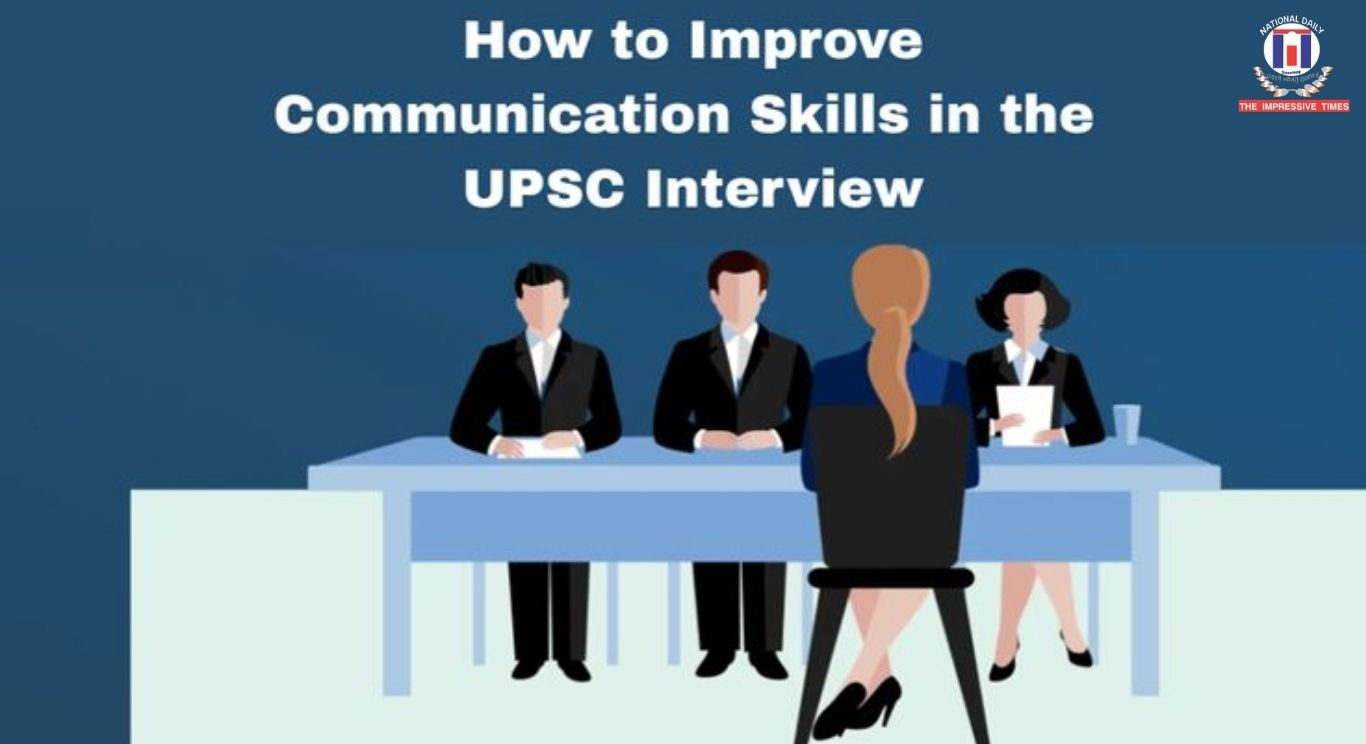
The UPSC Personality Test is conducted by a board consisting of a chairperson and four other members.
The panel brings together individuals with experience in public administration and other professional fields.
Rather than following a rigid question-and-answer format, the interview generally develops through discussions involving the candidate’s background, interests, opinions and understanding of contemporary issues.
The interaction often begins with questions based on information provided in the candidate’s Detailed Application Form (DAF).
These introductory questions may concern educational qualifications, professional experience, hometown, interests or reasons for choosing a career in civil services.
As the conversation progresses, board members may introduce questions related to governance, social challenges, national developments and hypothetical administrative situations.
Candidates may also be asked to explain their opinions or reconsider a position when presented with an alternative perspective.
The objective is to understand how an individual thinks, communicates and responds under different circumstances.
Detailed Application Form Plays an Important Role
Information submitted through the Detailed Application Form serves as a major reference point for interview preparation.
Candidates should be prepared to discuss their academic background, employment history, achievements, hobbies and personal interests.
Questions may also arise from their home state, educational discipline or professional experience.
For example, an engineering graduate may be asked about technological developments, while a candidate with professional experience could face questions related to their industry.
Similarly, aspirants may be expected to explain their service preferences and the factors influencing their career decisions.
Preparing thoroughly around the information provided in the DAF can help candidates respond confidently and consistently.
Current Affairs and Governance Awareness Remain Essential
A strong understanding of contemporary developments is another important aspect of interview readiness.
Candidates should follow major national and international events while developing informed opinions on issues affecting society and public administration.
However, merely memorising news headlines may not be sufficient.
Aspirants are expected to examine different dimensions of an issue, understand its implications and communicate a balanced viewpoint.
Governance-related questions may also require candidates to explain how they would respond to administrative challenges.
For instance, a candidate could be presented with a hypothetical situation involving public safety, resource allocation, law and order or implementation of government policies.
Such questions provide the board with an opportunity to assess practical reasoning, leadership qualities and decision-making abilities.
Knowledge of Home State and Personal Interests Can Strengthen Preparation
Candidates are advised to develop a clear understanding of their home state’s history, economy, cultural heritage and important social issues.
Awareness of recent developments, government initiatives and regional challenges may also prove useful during the interview.
Personal interests and hobbies mentioned in the application form deserve similar attention.
An aspirant who identifies reading, sports, music or another activity as a hobby should be able to discuss that interest naturally.
The board may explore how regularly the candidate pursues the activity and what they have learned from it.
Genuine involvement is more valuable than attempting to demonstrate expertise that does not reflect the candidate’s actual experience.
Communication Skills and Professional Conduct Influence Overall Impression
The way candidates present themselves during the interview can contribute to the board’s assessment of their personality.
Politeness, attentive listening and respectful communication help create a professional atmosphere.
Aspirants should allow board members to complete their questions before responding and avoid unnecessary interruptions.
Maintaining a comfortable speaking pace, using clear language and displaying composed body language can also support effective communication.
Formal, appropriate clothing and a professional appearance are advisable.
However, candidates should avoid becoming excessively concerned about gestures or attempting to imitate a particular interview style.
Confidence is most effective when accompanied by humility, sincerity and a willingness to acknowledge limitations.
Honesty and Authenticity Are More Valuable Than Rehearsed Answers
One of the most important aspects of the UPSC interview is presenting a genuine account of one’s personality and experiences.
Candidates sometimes feel pressured to deliver elaborate responses or make extraordinary claims about their motivation for joining civil services.
However, excessively rehearsed answers may appear less convincing than clear explanations based on personal experiences and realistic career aspirations.
When confronted with an unfamiliar question, candidates should avoid inventing information or making unsupported claims.
Acknowledging uncertainty is generally preferable to presenting an inaccurate answer with confidence.
Similarly, aspirants should remain open to different viewpoints and demonstrate the ability to consider alternative arguments without becoming defensive.
The interview is intended to assess suitability for public service, not to reward candidates for pretending to know everything.
Early Preparation and Mock Interviews Can Improve Confidence
Preparing for the Personality Test before the announcement of the Main Examination results may give candidates additional time to strengthen their communication skills and review important topics.
Regular discussions on current affairs, revision of DAF-related information and practice with administrative scenarios can contribute to better preparation.
Mock interviews may also help aspirants become familiar with formal interview settings and identify areas requiring improvement.
However, candidates should evaluate feedback carefully and avoid relying on advice that encourages artificial behaviour or rigid answer patterns.
Practising spoken communication, recording responses and reviewing speaking habits can help improve clarity and confidence.
The emphasis should remain on developing natural communication rather than memorising responses to every possible question.
Balanced Thinking and Integrity Remain Central to Civil Services Selection
The UPSC Personality Test represents the final opportunity for candidates to demonstrate their readiness for the responsibilities associated with civil services.
While academic preparation establishes a foundation of knowledge, the interview examines how effectively that knowledge can be applied through reasoning, judgment and communication.
Candidates who demonstrate intellectual curiosity, ethical awareness, emotional composure and a practical understanding of public issues may be better positioned to make a positive impression.
Ultimately, successful interview preparation involves more than anticipating questions. It requires aspirants to understand their own experiences, develop informed perspectives and communicate their ideas with confidence and sincerity.
The ability to remain authentic while demonstrating sound judgment and a commitment to public responsibilities continues to be central to the Personality Test.























![UEFA Champions League: 10-men United fall 2-0 to Atleti; Viking hold Bayern to 3-3 draw ANI | Updated: Oct 14, 2026 09:08 IST Madrid [Spain], October 14 (ANI): Manchester United’s 2026/27 season is turning out to be a disaster after the club showed promise following Michael Carrick taking the helm of the club in January, as it faced another loss on Tuesday (local time). In its first away fixture for this season’s UEFA Champions League at the Estadio Metropolitano stadium, the Red Devils were handed a 2-0 defeat by Atletico Madrid, causing the club more misery as it also struggles domestically. Pablo Barrios scored inside the opening minute for Atletico before substitute Ademola Lookman sealed the victory late in the second half. Barrios capitalised on an early lapse in Manchester United’s defence to put Atletico ahead within the first 60 seconds of the match. Despite the initial shock of conceding so early, United pushed for an equaliser, with Bryan Mbeumo leading the attack on most occasions without any significant result. The hosts controlled much of the first half with their high-intensity pressing and possession. Alejandro Grimaldo came close to extending the lead with a free kick that struck the woodwork. Manchester United looked to respond after the break but struggled to create any clear chances against Atletico’s defence. Bruno Fernandes came close to equalising in the 70th minute, rattling the crossbar with an effort from distance. ‹› United’s task became more difficult in the 74th minute when defender Leny Yoro received a red card over a reckless challenge on Jonathan David. Atletico made their numerical advantage count five minutes later. Lookman, who had come on as a substitute, reacted quickest after goalkeeper Senne Lammens parried Jonathan David’s initial shot and found the back of the net in the 79th minute to seal the victory. Both teams have now recorded one win and one defeat in the opening stages of the Champions League league phase. Elsewhere, Norwegian side Viking FK held Bayern Munich to a dramatic 3-3 draw in the league phase. Viking mounted a late comeback to earn a draw after Bayern had overturned a two-goal deficit. At the Viking Stadion in Stavanger, Norwegian side Viking FK held Bayern Munich to a 3-3 draw, scoring a dramatic late equaliser after the German side had overturned a two-goal deficit. Gianni Stensness gave Viking an early lead in the second minute with a header from a corner before Peter Christiansen doubled their advantage in the 38th minute. Bayern responded after the break, with Harry Kane scoring twice in the 54th and 60th minutes to level the score. Luis Diaz put the visitors ahead in the 71st minute. However, Bayern were reduced to 10 men three minutes later after Michael Olise received his second yellow card. Viking capitalised on the advantage as Herman Haugen scored in the 90th minute to secure a 3-3 draw. With one win and one draw, Bayern are placed fourth with four points, while Viking are 26th with a draw and a loss. (ANI)](https://impressivetimes.com/wp-content/uploads/2026/10/TIT-Website-Image-4-5.jpg)










No Comments: