TIT Correspondent
info@impressivetimes.com
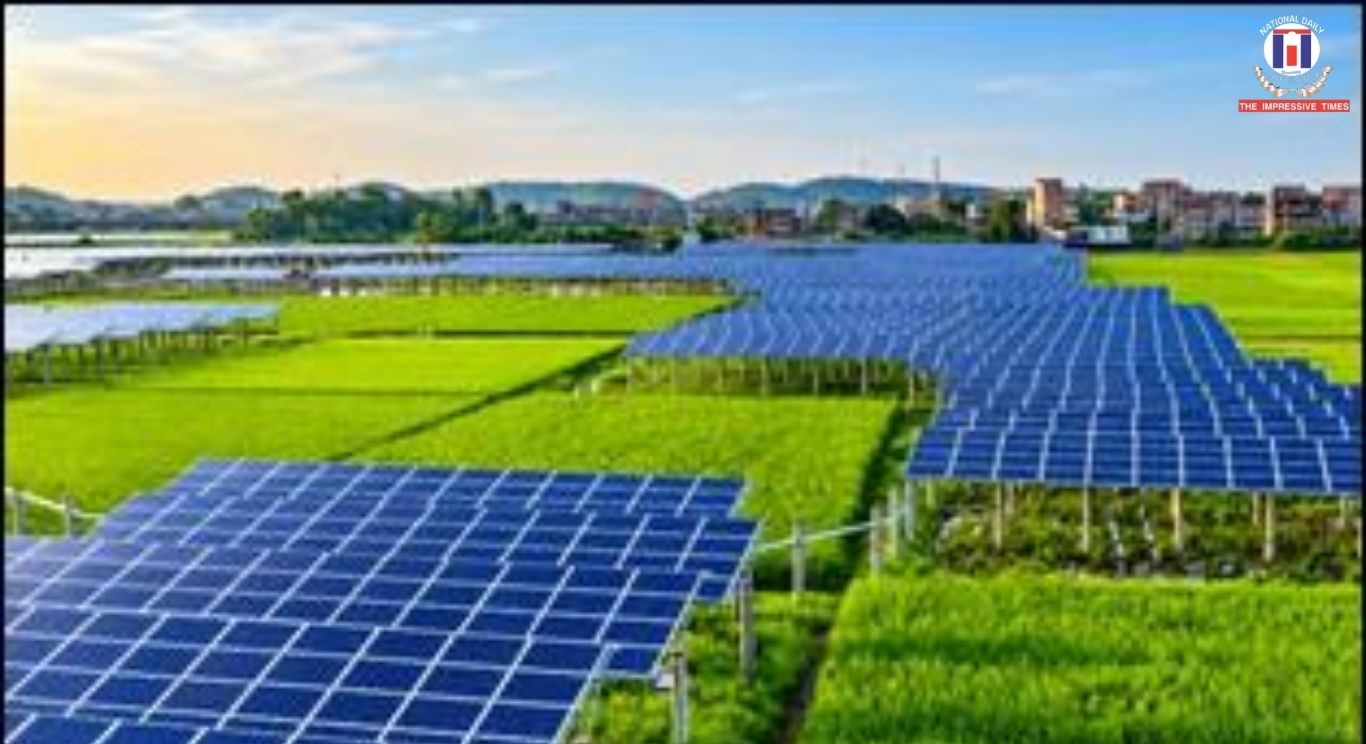
Imagine a farm where crops continue to grow beneath solar panels while the same land generates electricity. This is the idea behind agrivoltaics, an emerging approach that brings food production and renewable energy together to promote sustainable agriculture and more efficient use of farmland.
Also known as agrisolar or dual-use solar, agrivoltaics involves installing solar panels above crops or between cultivation rows. Unlike conventional solar installations that may replace agricultural activity on a site, these systems are designed to allow farming and electricity generation to take place together.
As India looks for ways to strengthen rural livelihoods and expand clean energy, this approach is attracting growing interest for its potential to support farmers, improve land productivity and encourage environmentally responsible agricultural practices.
How Solar Energy and Farming Can Work Together
Traditional farming requires land, water and reliable energy for activities such as irrigation. Solar installations can help meet some of these energy needs, while carefully designed agrivoltaic systems go a step further by allowing agricultural production to continue alongside power generation.
Elevated solar panels can provide sufficient space for crops, farm workers and agricultural machinery underneath. Depending on the panel arrangement, crop selection and local climate, partial shade may also reduce direct exposure to intense sunlight and limit moisture loss from the soil.
These benefits are not universal, however. Different crops require different amounts of sunlight, and excessive shading can affect growth and yields. Successful projects therefore depend on selecting suitable crops and adapting panel height, spacing and orientation to local farming conditions.
When properly planned, the system can help farmers make productive use of the same land for two purposes rather than choosing between agricultural activity and solar power generation.
Can Agrivoltaics Improve Farmers’ Incomes?
One of the most promising aspects of agrivoltaics is the possibility of diversifying farm earnings. Farmers may continue to earn from crops while also benefiting from electricity generated by solar installations, depending on the ownership, financing and operating arrangements.
Solar power can also support irrigation and other farm operations. Where grid connectivity and applicable regulations permit, surplus electricity may be supplied to the grid, creating another potential source of revenue.
Industry estimates cited in discussions on India’s agrivoltaic potential suggest that annual earnings in some cases could increase from around ₹60,000 per acre to more than ₹1 lakh per acre. Actual returns will vary considerably according to crop yields, installation costs, electricity tariffs, financing terms and the agreements between farmers and energy developers.
For small and marginal farmers, access to affordable financing and transparent power-purchase arrangements will be important in determining whether these projects deliver meaningful financial benefits.
A Sustainable Approach to Water and Climate Challenges
Agriculture is increasingly exposed to extreme heat, irregular rainfall and changing water availability. Agrivoltaics may offer a practical way to address some of these pressures when systems are designed for local conditions.
Partial shade can help reduce evaporation and protect certain crops from excessive heat. Solar electricity can also reduce dependence on diesel-powered irrigation pumps and support the wider use of renewable energy in rural areas.
However, the impact on water use and crop productivity depends on the local environment and the type of cultivation. Scientific assessment and field trials are essential to ensure that energy generation does not come at the expense of agricultural output.
Suitable combinations of solar infrastructure and crops such as selected fruits, vegetables, spices and medicinal plants could help expand the technology’s applications, particularly in regions with favourable sunlight and agricultural conditions.
India’s Growing Interest in Agrivoltaics
India has considerable scope to explore the combined use of farmland for agriculture and solar power. According to figures cited in the government’s agrivoltaics overview, the country had 36 operational projects with a combined installed capacity of 37.54 megawatts as of August 2025, with another 10 pilot projects under development.
Estimates of India’s long-term agrivoltaic potential range from 3,000 gigawatts to nearly 14,000 gigawatts, although these figures represent potential rather than installed or immediately achievable capacity.
Maharashtra, Rajasthan, Andhra Pradesh, Madhya Pradesh, Karnataka and Uttar Pradesh are among the states identified as having significant potential for agrivoltaic development. Their prospects reflect a combination of agricultural land availability, solar resources and regional farming conditions.
Government programmes are also helping build the foundations for wider solar adoption in agriculture. The Pradhan Mantri Kisan Urja Suraksha evam Utthaan Mahabhiyan, or PM-KUSUM, supports solar energy deployment in the agricultural sector, including solarisation of irrigation pumps and decentralised power generation.
Research institutions, including the National Institute of Solar Energy and the Indian Council of Agricultural Research’s Indian Agricultural Research Institute, are also involved in research, demonstrations and capacity building related to agrivoltaics.
Why Agrivoltaics Matters for Sustainable Living
Sustainability is not limited to reducing electricity consumption or choosing environmentally friendly products. It also involves finding better ways to use natural resources, protect livelihoods and meet the needs of a growing population.
Agrivoltaics brings these objectives together by exploring how the same land can support food production and clean electricity. If implemented responsibly, it could help rural communities diversify their economic opportunities while contributing to India’s renewable energy ambitions.
The approach nevertheless requires careful planning. Installation costs, access to finance, crop compatibility, maintenance and the protection of farmers’ rights must all be addressed before projects can deliver benefits at scale.
As research and pilot projects expand, agrivoltaics could become an important part of conversations around sustainable farming and climate-resilient rural development. Its long-term success will depend on a simple but essential principle: clean energy growth must work alongside agriculture, not undermine the livelihoods that depend on it.













































No Comments: