New Delhi : The Telecom Regulatory Authority of India (TRAI) has released findings from its Independent Drive Test (IDT) conducted across Jammu city and the Delhi–Jammu highway corridor, offering a comprehensive snapshot of mobile network performance across urban, high-density, and transit environments.
The tests, carried out between February 2 and 5, 2026, covered 178.2 km of city routes and 620.5 km of highways, along with hotspot locations, walk tests, and inter-operator calling. Technologies evaluated ranged from 2G and 3G to 4G and 5G, reflecting real-world user experience across diverse conditions.
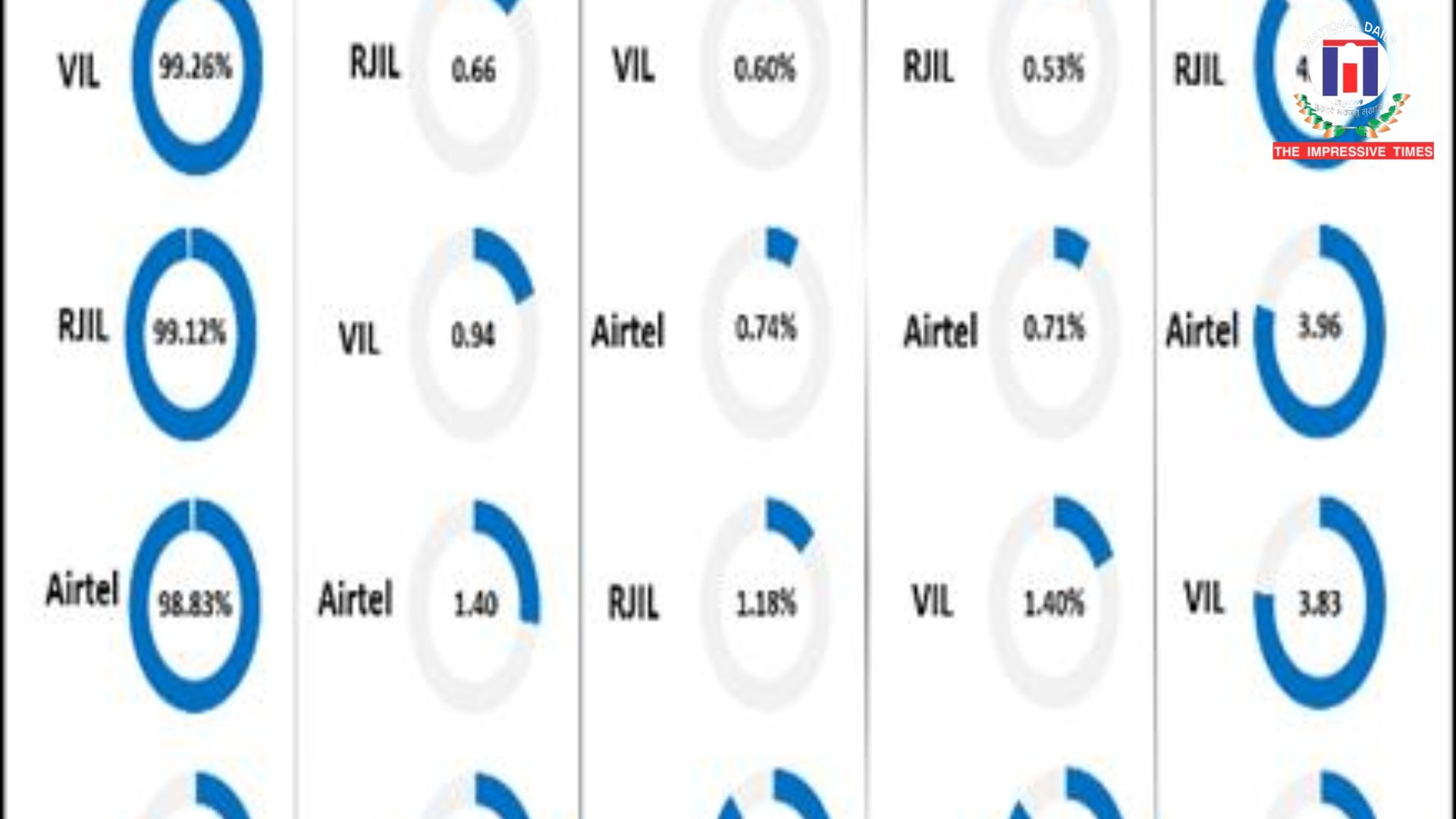
In voice services, private telecom operators showed strong performance. Call Setup Success Rates (CSSR) remained high for Airtel (98.83%), Reliance Jio (99.12%), and Vodafone Idea (99.26%), while BSNL lagged at 81.62%. Drop call rates were also relatively low for private players, with Vodafone Idea at 0.60%, Airtel at 0.74%, and Jio at 1.18%, compared to a significantly higher 7.87% for BSNL.
Call setup time—a key indicator of user experience—was fastest for Jio at 0.66 seconds, followed by Vodafone Idea (0.94 seconds) and Airtel (1.40 seconds), while BSNL recorded a longer delay of 4.05 seconds. In terms of call quality, measured through Mean Opinion Score (MOS), Jio led with 4.43, followed by Airtel (3.96), Vodafone Idea (3.83), and BSNL (3.07).
Data performance highlighted a clear advantage for 5G-enabled networks. Reliance Jio recorded the highest average download speed at 295.90 Mbps, followed by Airtel at 179.53 Mbps. Vodafone Idea reported 25.34 Mbps, while BSNL lagged at 11.30 Mbps. Upload speeds were comparable between Jio (30.50 Mbps) and Airtel (30.09 Mbps), with Vodafone Idea at 16.39 Mbps and BSNL at 3.86 Mbps.
Latency performance also favored private operators, with Jio recording the lowest median latency at 22.84 ms, followed by Airtel (27.94 ms), BSNL (29.72 ms), and Vodafone Idea (43.38 ms).
Hotspot testing further reinforced these trends, with Jio and Airtel delivering significantly higher 5G speeds compared to 4G networks, indicating the growing impact of next-generation infrastructure.
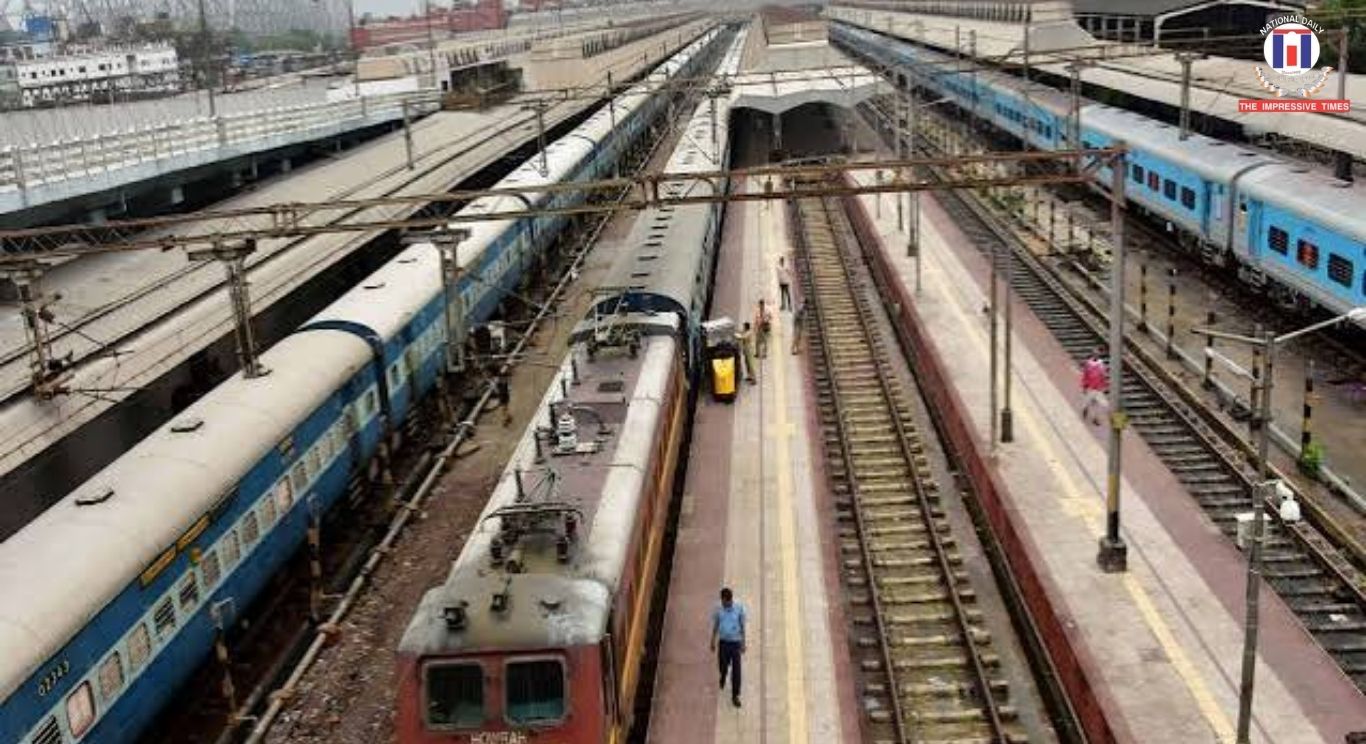
The assessment in Jammu city covered key residential and commercial areas, including Prem Nagar, Gandhi Nagar, and Shastri Nagar, as well as major public locations such as Government Medical College, Jammu Bus Stand, Jammu Tawi Railway Station, and Raghunath Temple. Walk tests in crowded markets like Gole Market and Hari Market captured network performance in dense pedestrian zones.
Highway testing from Delhi to Jammu via Ambala and Jalandhar evaluated connectivity during high-speed travel, an increasingly critical parameter for users on the move.
TRAI stated that the findings have been shared with all telecom service providers for necessary improvements. The report underscores the progress made in 4G and 5G services while highlighting the need for continued upgrades, particularly in legacy networks, to ensure consistent and reliable connectivity across regions.
The assessment reflects TRAI’s ongoing efforts to monitor service quality and enhance user experience in India’s rapidly evolving telecom landscape.
















![UEFA Champions League: 10-men United fall 2-0 to Atleti; Viking hold Bayern to 3-3 draw ANI | Updated: Oct 14, 2026 09:08 IST Madrid [Spain], October 14 (ANI): Manchester United’s 2026/27 season is turning out to be a disaster after the club showed promise following Michael Carrick taking the helm of the club in January, as it faced another loss on Tuesday (local time). In its first away fixture for this season’s UEFA Champions League at the Estadio Metropolitano stadium, the Red Devils were handed a 2-0 defeat by Atletico Madrid, causing the club more misery as it also struggles domestically. Pablo Barrios scored inside the opening minute for Atletico before substitute Ademola Lookman sealed the victory late in the second half. Barrios capitalised on an early lapse in Manchester United’s defence to put Atletico ahead within the first 60 seconds of the match. Despite the initial shock of conceding so early, United pushed for an equaliser, with Bryan Mbeumo leading the attack on most occasions without any significant result. The hosts controlled much of the first half with their high-intensity pressing and possession. Alejandro Grimaldo came close to extending the lead with a free kick that struck the woodwork. Manchester United looked to respond after the break but struggled to create any clear chances against Atletico’s defence. Bruno Fernandes came close to equalising in the 70th minute, rattling the crossbar with an effort from distance. ‹› United’s task became more difficult in the 74th minute when defender Leny Yoro received a red card over a reckless challenge on Jonathan David. Atletico made their numerical advantage count five minutes later. Lookman, who had come on as a substitute, reacted quickest after goalkeeper Senne Lammens parried Jonathan David’s initial shot and found the back of the net in the 79th minute to seal the victory. Both teams have now recorded one win and one defeat in the opening stages of the Champions League league phase. Elsewhere, Norwegian side Viking FK held Bayern Munich to a dramatic 3-3 draw in the league phase. Viking mounted a late comeback to earn a draw after Bayern had overturned a two-goal deficit. At the Viking Stadion in Stavanger, Norwegian side Viking FK held Bayern Munich to a 3-3 draw, scoring a dramatic late equaliser after the German side had overturned a two-goal deficit. Gianni Stensness gave Viking an early lead in the second minute with a header from a corner before Peter Christiansen doubled their advantage in the 38th minute. Bayern responded after the break, with Harry Kane scoring twice in the 54th and 60th minutes to level the score. Luis Diaz put the visitors ahead in the 71st minute. However, Bayern were reduced to 10 men three minutes later after Michael Olise received his second yellow card. Viking capitalised on the advantage as Herman Haugen scored in the 90th minute to secure a 3-3 draw. With one win and one draw, Bayern are placed fourth with four points, while Viking are 26th with a draw and a loss. (ANI)](https://impressivetimes.com/wp-content/uploads/2026/10/TIT-Website-Image-4-5.jpg)








No Comments: