Tiger, Leopard and Cheetah Spotted Together in Rare Wildlife Convergence at Ranthambore
Unusual sighting in Ranthambore’s Zone 9 sparks scientific interest as experts call the simultaneous presence of three apex predators a rare ecological event.

 The Impressive Times
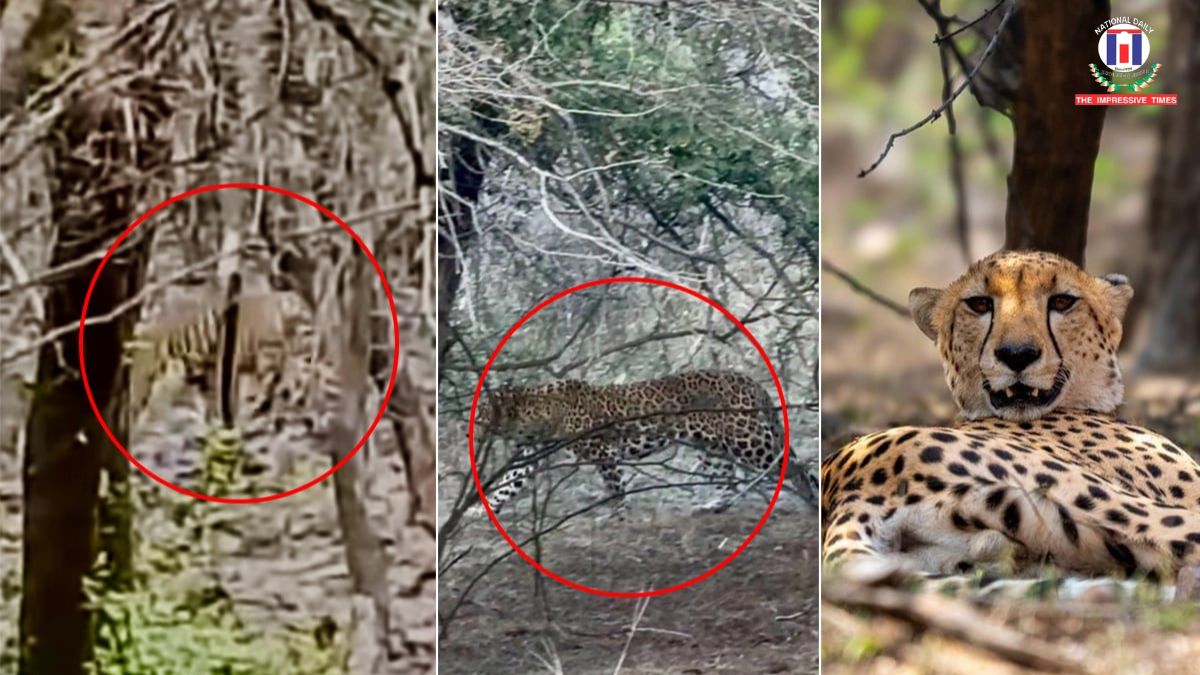
Jaipur: A rare wildlife encounter at Ranthambore Tiger Reserve has caught the attention of conservationists after a tiger, a leopard and a cheetah were seen within the same landscape during a narrow time window, in what experts describe as an extraordinary ecological occurrence.
The unusual sighting took place in Zone 9 of the reserve near the Chakal river, where tourists and forest officials observed the three predators within an estimated one to two kilometre radius.
Forest authorities said the event is significant because the simultaneous presence of these species in such close proximity is highly uncommon, given their differing territorial habits, hunting strategies and habitat preferences.
Officials identified the cheetah as KP-2, a dispersing animal from Kuno National Park in Madhya Pradesh, which entered Rajasthan recently and has since been tracked by a joint monitoring team from Ranthambore and Kuno.
After the sighting, the cheetah reportedly moved toward Zone 8, where officials continue round-the-clock surveillance using specialised tracking systems.
Wildlife experts say the encounter is scientifically notable because tigers, leopards and cheetahs typically reduce competition by occupying different ecological niches. Tigers dominate large territories, leopards often avoid direct interaction with tigers by adapting their movement patterns, while cheetahs usually favour open grasslands rather than dense forest systems.
Experts believe the rare overlap may have been driven by temporary ecological factors such as prey movement, dispersal routes or landscape connectivity, rather than any long-term coexistence in a shared microhabitat.
The sighting has also renewed attention on habitat corridors and predator dynamics in India’s protected forests.
Spread across nearly 1,800 square kilometres, Ranthambore remains one of India’s most biodiverse reserves, supporting a significant tiger population along with hundreds of bird, reptile and plant species.
Conservationists say moments like these highlight the complexity of natural ecosystems and offer valuable insights into predator behaviour in changing landscapes.















































No Comments: