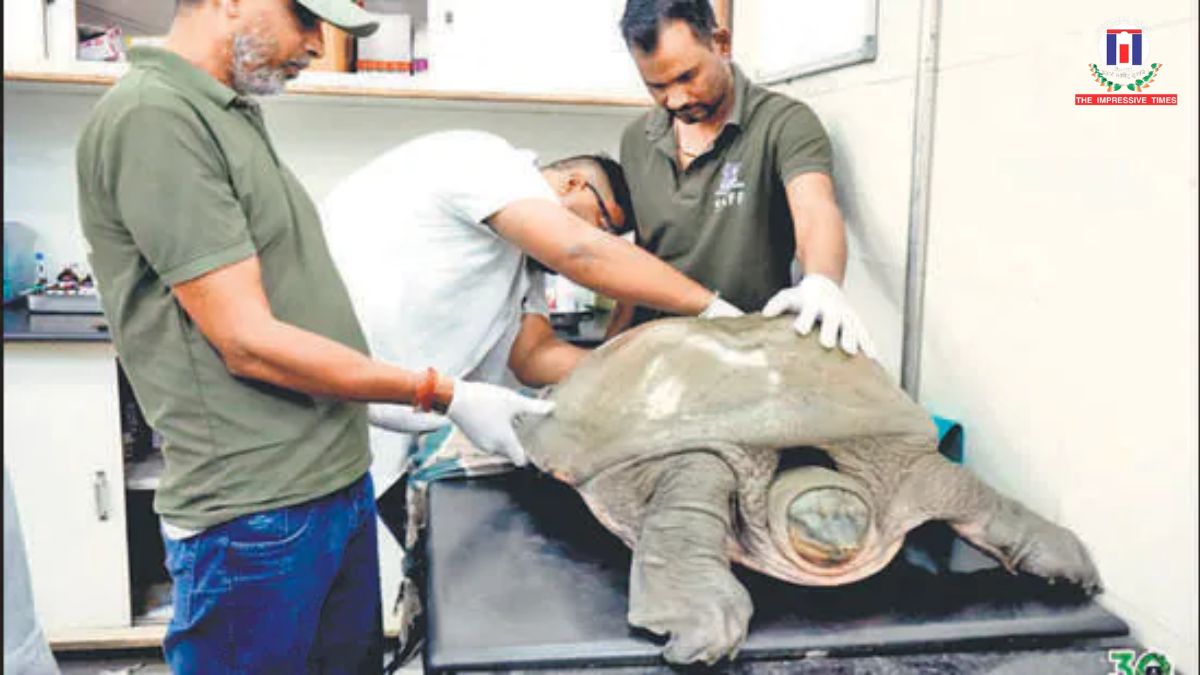
Delhi: A 50kg Indian flapshell turtle was rescued from a polluted waterbody in east Delhi, drawing attention to the growing challenges faced by urban wildlife amid worsening environmental conditions. The rescue operation, carried out by Wildlife SOS in the Mandoli area, also underscored the role of public vigilance in protecting vulnerable species living in increasingly degraded habitats.
The turtle was reportedly found struggling near a waterbody in Harsh Vihar by a local resident, who intervened and alerted rescuers after moving the reptile to safety. A Wildlife SOS team later reached the location, secured the animal and carried out an assessment before releasing it into a more suitable habitat.
Rescue officials said the turtle had suffered minor abrasions, believed to have been caused by nearby road surfaces and debris, though no major injuries were detected. The successful operation prevented further distress for the reptile, which may have faced greater danger had it remained in the contaminated and hazardous environment.
The incident has renewed focus on the pressures confronting the Indian flapshell turtle, a species classified as vulnerable and protected under India’s wildlife laws. Conservationists have long warned that urban expansion, shrinking wetlands, contaminated water sources and habitat destruction are placing increasing stress on aquatic wildlife, particularly in densely populated cities.
Wildlife experts said the rescue reflects a broader pattern of animals being displaced or endangered by pollution and human activity, often forcing them into unsafe areas. They also noted that citizen reporting can play a crucial role in early intervention, especially during warmer months when wildlife rescue calls tend to increase.
The case has added to ongoing concerns over the condition of urban waterbodies and the impact of environmental neglect on native species. Conservation groups say protecting wildlife in cities will require not only emergency rescues but stronger efforts to restore habitats, reduce pollution and improve public awareness about coexistence with local biodiversity.

























No Comments: