Proposed U.S. Oil Blockade Could Drive Export Boom but Raise Fuel Costs
Tensions in Strait of Hormuz may tighten global supply, pushing petrol prices higher

 The Impressive Times
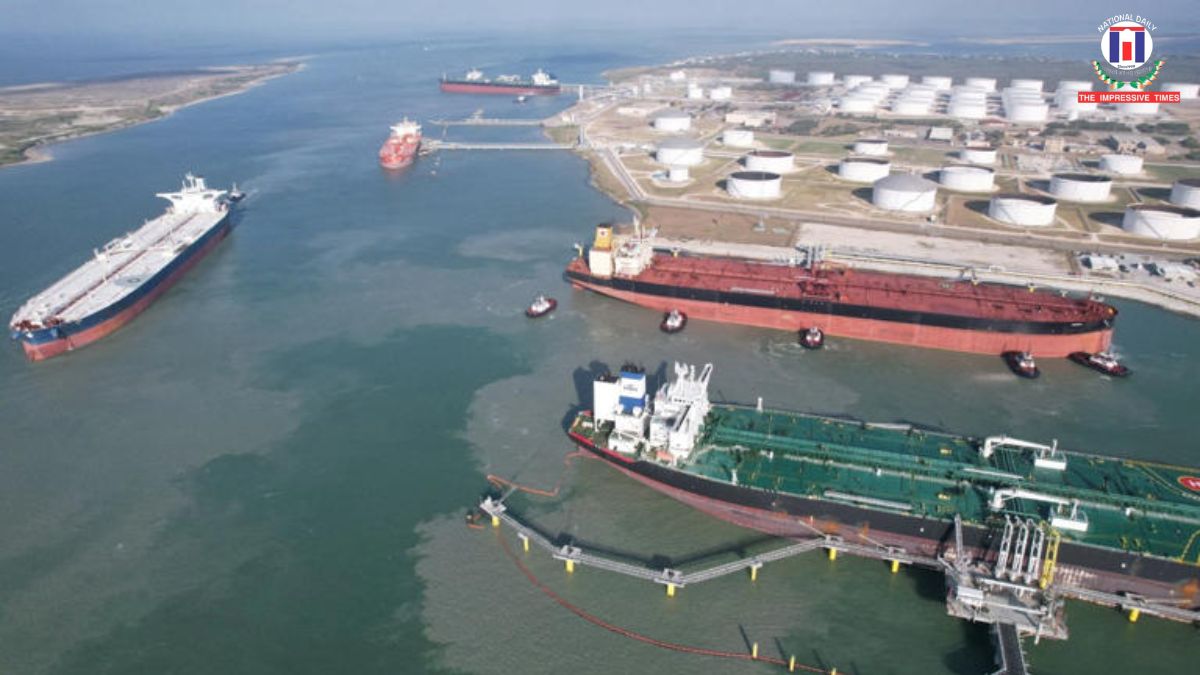
A potential U.S. move to impose a naval blockade in the Strait of Hormuz is expected to significantly reshape global oil flows—boosting American exports while raising concerns about rising fuel prices worldwide.
Reports indicate that U.S. crude shipments are already on track to reach record levels this month, with dozens of supertankers heading toward the Gulf Coast to load oil. The surge comes amid growing geopolitical tensions and discussions around restricting Iran’s access to the crucial maritime route.
The Strait of Hormuz remains one of the world’s most vital oil transit corridors, handling a substantial share of global crude movement. Any disruption in this region can quickly impact international supply chains.
The proposed blockade aims to limit Iran’s oil exports, which currently account for millions of barrels per day passing through the narrow waterway. A successful restriction could significantly reduce global supply, creating upward pressure on oil prices.
While the plan could benefit American oil producers by increasing demand for U.S. crude, analysts warn that reduced global supply is likely to push up fuel prices.
Higher crude costs typically translate into more expensive petrol and diesel, affecting consumers and industries alike. Economists caution that even a partial disruption in supply from the region could have immediate consequences for global markets.
Energy markets are already reacting to the possibility of tighter supply, with traders closely watching developments in the region. Increased tanker activity along the U.S. Gulf Coast reflects expectations of stronger export demand.
However, experts note that such geopolitical moves carry risks, including potential escalation in regional tensions and further instability in energy markets.
The proposed strategy highlights a complex trade-off: while U.S. exporters stand to gain from higher demand, the broader impact could strain global economies through rising energy costs.
As discussions continue, the situation underscores how geopolitical decisions in critical regions like the Strait of Hormuz can have far-reaching consequences for both producers and consumers worldwide.

































![UEFA Champions League: 10-men United fall 2-0 to Atleti; Viking hold Bayern to 3-3 draw ANI | Updated: Oct 14, 2026 09:08 IST Madrid [Spain], October 14 (ANI): Manchester United’s 2026/27 season is turning out to be a disaster after the club showed promise following Michael Carrick taking the helm of the club in January, as it faced another loss on Tuesday (local time). In its first away fixture for this season’s UEFA Champions League at the Estadio Metropolitano stadium, the Red Devils were handed a 2-0 defeat by Atletico Madrid, causing the club more misery as it also struggles domestically. Pablo Barrios scored inside the opening minute for Atletico before substitute Ademola Lookman sealed the victory late in the second half. Barrios capitalised on an early lapse in Manchester United’s defence to put Atletico ahead within the first 60 seconds of the match. Despite the initial shock of conceding so early, United pushed for an equaliser, with Bryan Mbeumo leading the attack on most occasions without any significant result. The hosts controlled much of the first half with their high-intensity pressing and possession. Alejandro Grimaldo came close to extending the lead with a free kick that struck the woodwork. Manchester United looked to respond after the break but struggled to create any clear chances against Atletico’s defence. Bruno Fernandes came close to equalising in the 70th minute, rattling the crossbar with an effort from distance. ‹› United’s task became more difficult in the 74th minute when defender Leny Yoro received a red card over a reckless challenge on Jonathan David. Atletico made their numerical advantage count five minutes later. Lookman, who had come on as a substitute, reacted quickest after goalkeeper Senne Lammens parried Jonathan David’s initial shot and found the back of the net in the 79th minute to seal the victory. Both teams have now recorded one win and one defeat in the opening stages of the Champions League league phase. Elsewhere, Norwegian side Viking FK held Bayern Munich to a dramatic 3-3 draw in the league phase. Viking mounted a late comeback to earn a draw after Bayern had overturned a two-goal deficit. At the Viking Stadion in Stavanger, Norwegian side Viking FK held Bayern Munich to a 3-3 draw, scoring a dramatic late equaliser after the German side had overturned a two-goal deficit. Gianni Stensness gave Viking an early lead in the second minute with a header from a corner before Peter Christiansen doubled their advantage in the 38th minute. Bayern responded after the break, with Harry Kane scoring twice in the 54th and 60th minutes to level the score. Luis Diaz put the visitors ahead in the 71st minute. However, Bayern were reduced to 10 men three minutes later after Michael Olise received his second yellow card. Viking capitalised on the advantage as Herman Haugen scored in the 90th minute to secure a 3-3 draw. With one win and one draw, Bayern are placed fourth with four points, while Viking are 26th with a draw and a loss. (ANI)](https://impressivetimes.com/wp-content/uploads/2026/10/TIT-Website-Image-4-5.jpg)












No Comments: