India Prepares Strategic Operation to Secure Ships and Energy Supply in Strait of Hormuz
Government prioritizes evacuation of Indian ships and sailors while working to stabilize oil and gas supply amid ongoing Gulf tensions

 The Impressive Times
New Delhi: Amid escalating tensions in West Asia, India is moving ahead with a comprehensive plan to safeguard its ships and ensure uninterrupted energy supplies through the strategically crucial Strait of Hormuz.
The ongoing conflict in the region has severely disrupted global oil and gas movement, affecting markets from Europe to Asia. Although a ceasefire between the United States and Iran has been announced, its impact remains limited on the ground, keeping maritime routes under stress.
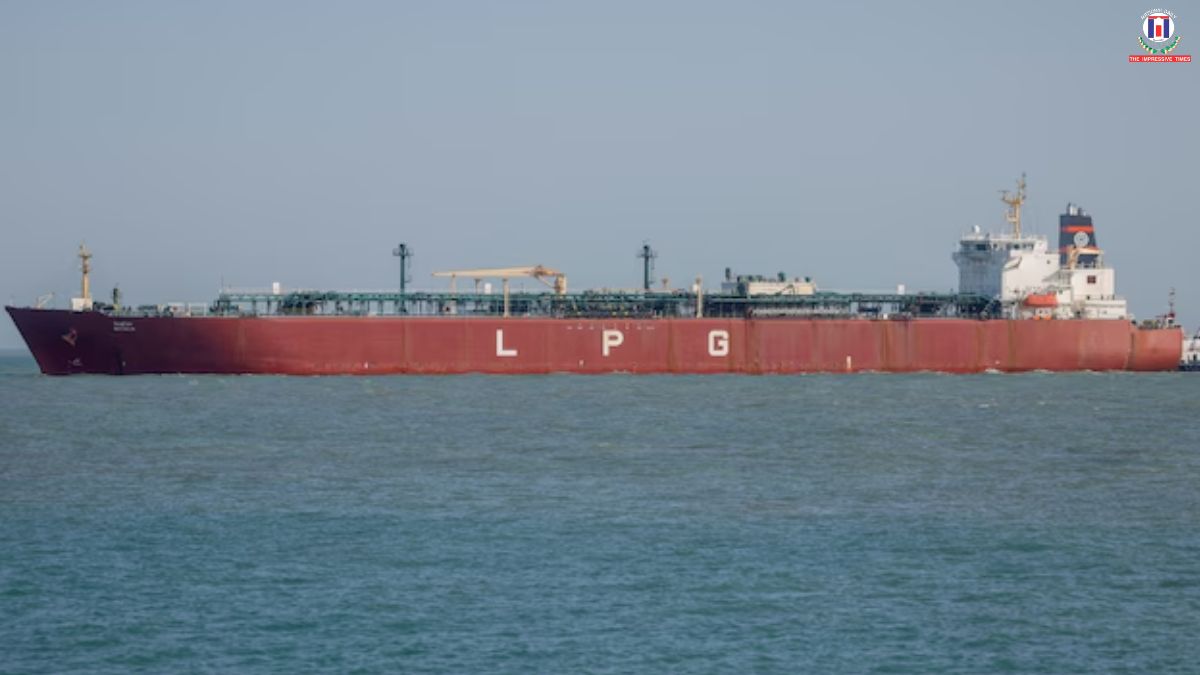
According to government assessments, around 18 vessels have been placed on a priority evacuation list. This includes five Indian-flagged ships, while the rest are foreign vessels carrying Indian crew members. Authorities are considering a coordinated operation, which may require cooperation from multiple regional stakeholders to ensure safe passage.
Officials estimate that nearly 20,000 Indian seafarers are currently deployed across ships in the Persian Gulf, many of whom face heightened risk due to the volatile situation. The disruption has also significantly impacted energy flows. Before the conflict intensified, nearly 20 million barrels of crude oil passed daily through the Strait of Hormuz. This figure has dropped sharply since early March, raising concerns across global energy markets.
The security environment has worsened, with multiple attacks reported on commercial vessels in recent weeks. Hundreds of oil tankers remain stationed in surrounding waters, carrying massive volumes of crude, making safe navigation a critical challenge.
For India, the Strait of Hormuz—located between Iran and Oman—remains a vital energy corridor. Reports indicate that several Indian-linked vessels are positioned across nearby regions, including the Gulf of Oman, Gulf of Aden, and the Red Sea. Some ships have already begun using alternative routes considered relatively safer under current conditions.
Among the vessels identified for priority movement are crude carriers as well as LPG and LNG ships. In addition, several cargo vessels transporting essential materials such as fertilizers have also been flagged for monitoring and assistance. Government agencies, including those handling shipping, defence, and foreign affairs, are working in coordination with the navy and coast guard to manage the situation.
There have been some positive developments as well. A few vessels have successfully crossed the Strait and reached Indian shores safely in recent weeks, offering a degree of reassurance.
However, officials caution that a prolonged conflict could have serious implications for India’s energy security and trade. Ensuring the safe return of Indian crew members and stabilizing supply lines remains the government’s top priority as the situation continues to evolve.















![UEFA Champions League: 10-men United fall 2-0 to Atleti; Viking hold Bayern to 3-3 draw ANI | Updated: Oct 14, 2026 09:08 IST Madrid [Spain], October 14 (ANI): Manchester United’s 2026/27 season is turning out to be a disaster after the club showed promise following Michael Carrick taking the helm of the club in January, as it faced another loss on Tuesday (local time). In its first away fixture for this season’s UEFA Champions League at the Estadio Metropolitano stadium, the Red Devils were handed a 2-0 defeat by Atletico Madrid, causing the club more misery as it also struggles domestically. Pablo Barrios scored inside the opening minute for Atletico before substitute Ademola Lookman sealed the victory late in the second half. Barrios capitalised on an early lapse in Manchester United’s defence to put Atletico ahead within the first 60 seconds of the match. Despite the initial shock of conceding so early, United pushed for an equaliser, with Bryan Mbeumo leading the attack on most occasions without any significant result. The hosts controlled much of the first half with their high-intensity pressing and possession. Alejandro Grimaldo came close to extending the lead with a free kick that struck the woodwork. Manchester United looked to respond after the break but struggled to create any clear chances against Atletico’s defence. Bruno Fernandes came close to equalising in the 70th minute, rattling the crossbar with an effort from distance. ‹› United’s task became more difficult in the 74th minute when defender Leny Yoro received a red card over a reckless challenge on Jonathan David. Atletico made their numerical advantage count five minutes later. Lookman, who had come on as a substitute, reacted quickest after goalkeeper Senne Lammens parried Jonathan David’s initial shot and found the back of the net in the 79th minute to seal the victory. Both teams have now recorded one win and one defeat in the opening stages of the Champions League league phase. Elsewhere, Norwegian side Viking FK held Bayern Munich to a dramatic 3-3 draw in the league phase. Viking mounted a late comeback to earn a draw after Bayern had overturned a two-goal deficit. At the Viking Stadion in Stavanger, Norwegian side Viking FK held Bayern Munich to a 3-3 draw, scoring a dramatic late equaliser after the German side had overturned a two-goal deficit. Gianni Stensness gave Viking an early lead in the second minute with a header from a corner before Peter Christiansen doubled their advantage in the 38th minute. Bayern responded after the break, with Harry Kane scoring twice in the 54th and 60th minutes to level the score. Luis Diaz put the visitors ahead in the 71st minute. However, Bayern were reduced to 10 men three minutes later after Michael Olise received his second yellow card. Viking capitalised on the advantage as Herman Haugen scored in the 90th minute to secure a 3-3 draw. With one win and one draw, Bayern are placed fourth with four points, while Viking are 26th with a draw and a loss. (ANI)](https://impressivetimes.com/wp-content/uploads/2026/10/TIT-Website-Image-4-5.jpg)













No Comments: