Manjunath Rao (47), Vijayanagar in Shivamogga district, was killed in the attack while on a family trip with his wife.
Investigators examining seized electronic devices have reportedly found messages and digital content suggesting coordination through handlers based across the Line of Control. The materials are said to include references aimed at creating psychological impact and signalling intent following earlier incidents attributed to militant groups in the region. Officials quoted in the report claim the attackers had received instructions to identify and target civilians during the Pahalgam incident.
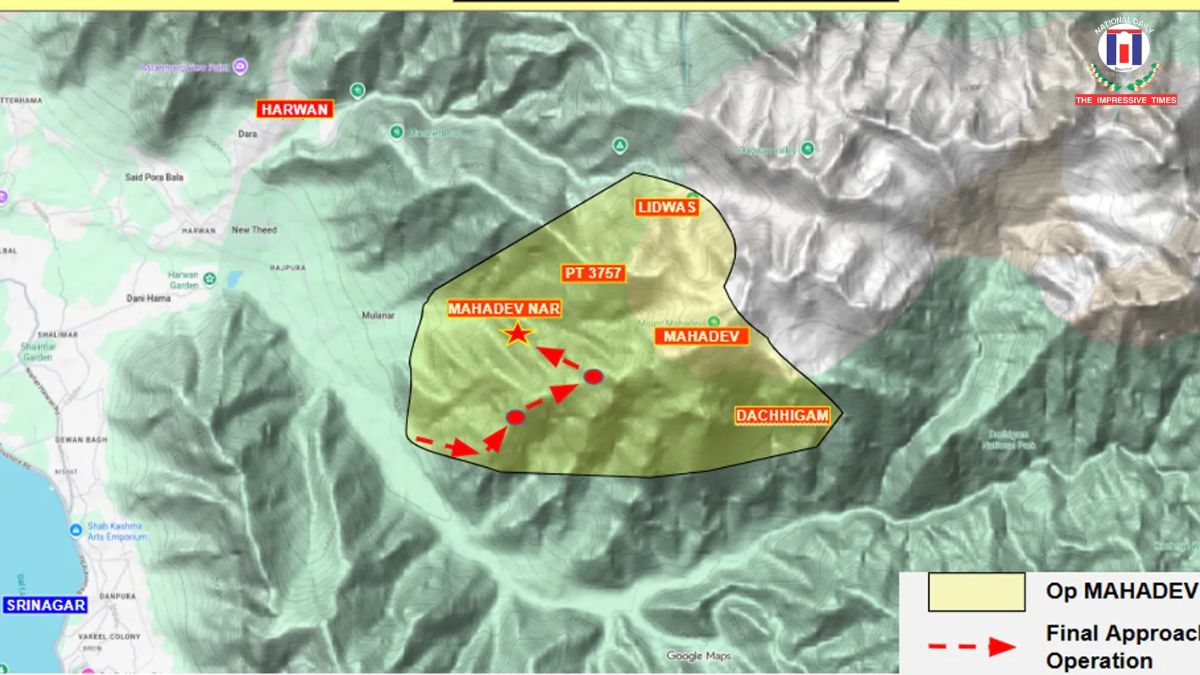
The investigation further traces the movement of the suspects across multiple locations in Jammu and Kashmir before they were tracked down during a 93-day counterterrorism operation involving the Army, Jammu and Kashmir Police, and central security agencies. The operation covered difficult terrain across more than 250 kilometres before culminating in an encounter in July 2025, where all three suspects were killed.
Officials involved in the probe have also linked one of the suspects to earlier militant activity in the region, suggesting a longer operational history across South Kashmir and adjoining areas. Intelligence inputs combined with surveillance data were used to map their movement patterns leading up to the final encounter.
Authorities say the broader investigation is still examining communication records, recovered devices, and network links to determine the extent of external support and coordination behind the attack. Security agencies have described the operation as part of ongoing counterterror efforts in the region, focused on dismantling active militant modules and their support structures.


































No Comments: