Why is Gen Z Shifting Towards Tiny, Cozy Cafes?
Tiny cafes see a boom in India as 10-seat cafes become the trend, catering niche experience and a shift in cafe culture for younger generations.

 The Impressive Times
TIT Correspondent
info@impressivetimes.com
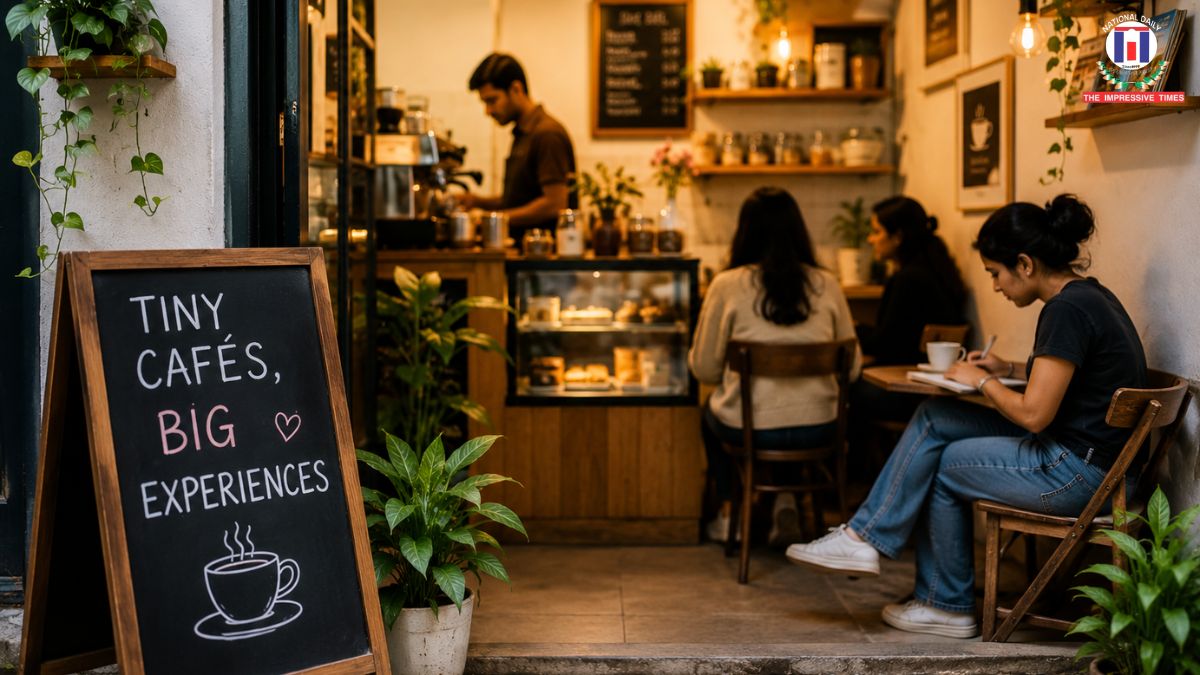
India’s cafe culture is undergoing a noticeable shift. While large coffee chains once dominated urban social life, a new generation of tiny cafes, often with fewer than 10 seats, is rapidly gaining popularity among young customers.
From Delhi and Bengaluru to Jaipur and Chandigarh, compact cafés focused on niche experiences are becoming the preferred hangout spots for Gen Z and millennials. These cafés are not trying to serve everyone. Instead, they focus on one speciality — matcha drinks, artisanal coffee, tiramisu, ramen, books, vinyl music or handcrafted desserts.
Many of these cafés operate from small rented spaces, converted homes or narrow market corners. Yet despite their size, they are drawing large crowds through social media visibility and carefully designed experiences.
Unlike traditional cafés built for long meetings or large groups, tiny cafés are designed to feel personal and intimate. Customers often visit alone to work, read, journal or spend quiet time away from crowded commercial spaces.
Owners say the trend is being driven by changing lifestyle preferences among younger urban consumers who now value atmosphere and uniqueness more than large menus or luxury interiors.
Minimal seating also helps café owners reduce costs at a time when rent and operational expenses continue to rise in major cities. Many entrepreneurs are choosing smaller spaces because they are easier to maintain and allow them to focus on quality rather than volume.
Social media platforms, especially Instagram, have played a major role in the boom. Aesthetic interiors, handwritten menus, ceramic cups and cozy lighting frequently become viral content online, turning even tiny neighbourhood cafés into popular destinations.
Food and beverage experts believe the trend also reflects changing social behaviour. Young people increasingly prefer quieter and more curated environments over crowded malls or loud restaurants.
Some cafés are even experimenting with highly specific themes such as silent cafes, camera-themed spaces, anime cafes or no-laptop cafes aimed at encouraging offline conversations.
The rise of tiny cafes is also creating opportunities for independent bakers, artists and musicians. Many owners collaborate with local creators to host poetry readings, pottery workshops, live acoustic sessions or book swaps inside their small spaces.
Industry observers say the trend could continue growing as customers increasingly seek personalised experiences instead of mass-market café culture.
While large coffee brands still dominate the market financially, India’s tiny café movement is proving that small spaces can create strong communities.















































No Comments: