Indus Water Treaty Debate: Claims of Unequal Sharing and Strategic Imbalance Resurface
Experts highlight asymmetry in water allocation between India and Pakistan under 1960 agreement

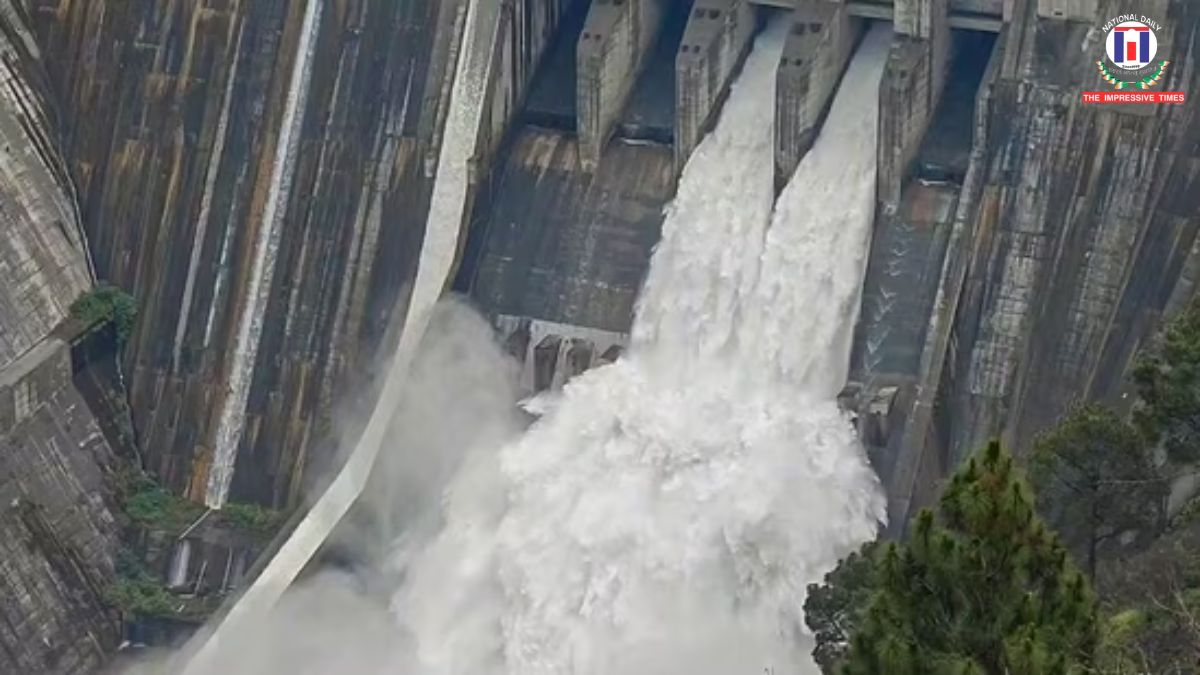
 The Impressive Times
New Delhi- The Indus Waters Treaty has once again come under scrutiny, with discussions intensifying over its perceived imbalance and long-term implications for India and Pakistan.
The treaty governs the sharing of the Indus River System, which includes six major rivers — Indus, Jhelum, Chenab, Ravi, Beas, and Sutlej — forming a critical lifeline for agriculture, drinking water, and energy production across both countries.
Signed in 1960 with mediation from the World Bank, the agreement allocated the three eastern rivers — Ravi, Beas, and Sutlej — to India, while granting Pakistan control over the western rivers — Indus, Jhelum, and Chenab.
In volumetric terms, this arrangement translates to Pakistan receiving nearly 80% of the total water flow of the system, while India retains access to about 20%. Analysts note that India, despite being the upstream country controlling the headwaters, agreed to significant concessions during negotiations.
Historical accounts suggest that early proposals, including those put forward in 1954, required India to limit development projects on key rivers and forgo potential water usage, which Pakistan later utilised for its own infrastructure expansion.
Additionally, India committed financial resources — estimated at £62 million at the time — to support Pakistan in building water management systems. This aspect is often cited as a unique feature of the treaty, where the upstream nation contributed funds despite relinquishing a larger share of water.
The treaty also imposes technical restrictions on India’s use of the western rivers, permitting primarily non-consumptive activities such as run-of-the-river hydropower projects, subject to design and operational conditions. No comparable limitations apply to Pakistan under the agreement.
Supporters of the treaty argue that it has endured for decades as a rare example of sustained cooperation between two neighbouring countries despite political tensions. However, critics point to structural imbalances, arguing that the framework limits India’s developmental flexibility while ensuring steady water access for Pakistan.
As geopolitical dynamics evolve and water demand increases, the Indus Waters Treaty continues to be a focal point of policy debate, raising questions about equity, sustainability, and future renegotiation.










































No Comments: