Pedalling Between Life and Death: Delhi’s Cyclists Risk Everything on Congested Roads
Working-class commuters brave heat, chaos and reckless traffic every day to reach Delhi’s industrial and commercial hubs

 The Impressive Times
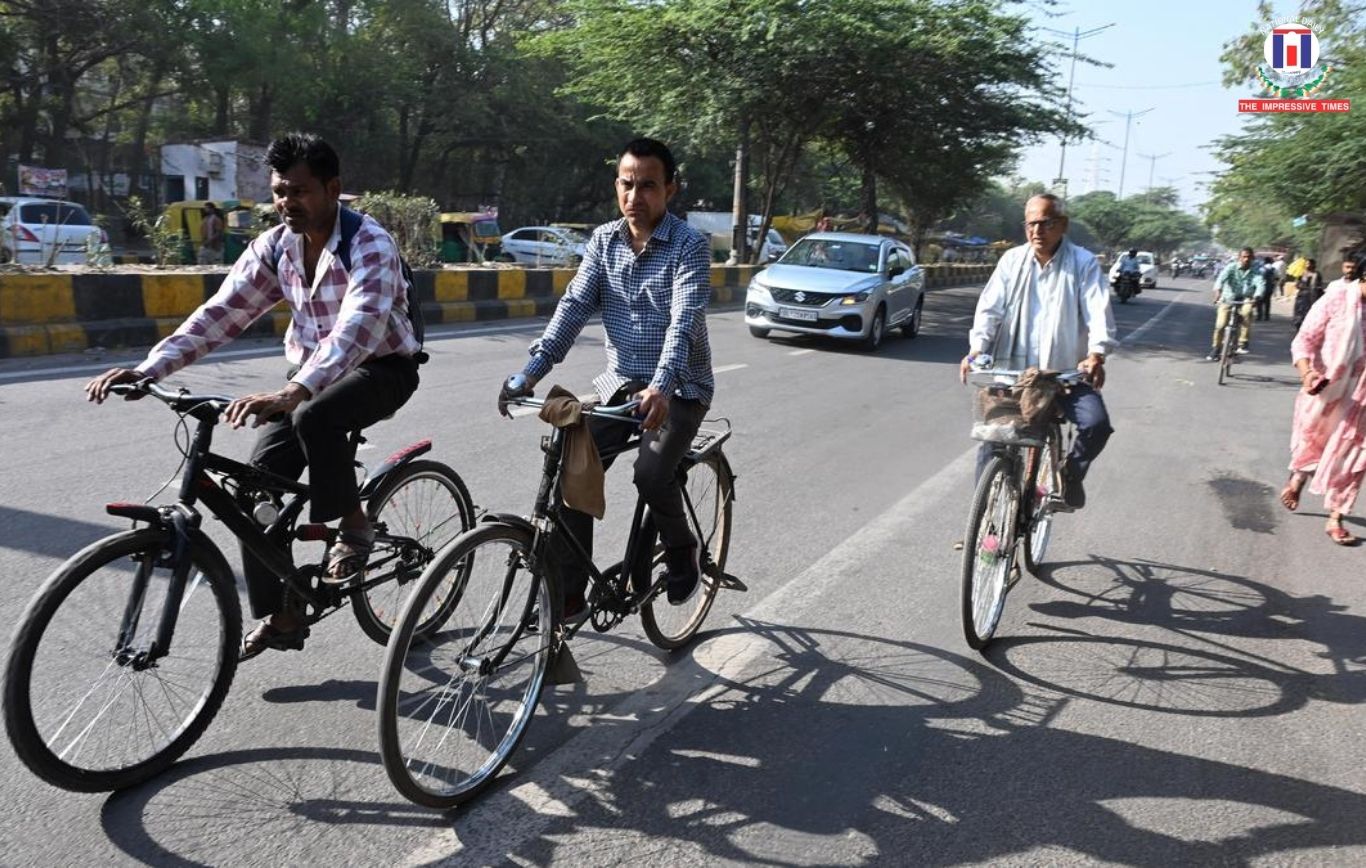
At 8:30 on a scorching April morning, traffic surges through a busy T-junction in south Delhi, nearly 15 kilometres from the Haryana border. The countdown signal flashes amber in seconds, triggering a familiar rush. Cars accelerate, buses squeeze through narrow gaps, motorcycles weave aggressively, and horns pierce the already heavy air.
Amid this chaos, Ajay pushes harder on his bicycle pedals.
Rising slightly off his seat to gain speed before the light changes, he manoeuvres carefully through a dangerous cluster of buses, e-rickshaws, cars and bikes. One bus brushes alarmingly close. Around him, nearly 20 to 30 cyclists — mostly workers headed to jobs across the city — struggle to survive the morning traffic surge.
“The 10 seconds spent crossing this signal are the toughest,” Ajay says, stopping briefly to catch his breath.
Sweat drenches his faded blue cotton shirt as temperatures climb toward 40 degrees Celsius. He unwraps the gamcha around his neck, pours water over it and wipes his face before preparing to continue the journey.
For Ajay, this is routine.
Every day, he cycles nearly 27 kilometres from Faridabad to Green Park, where he works as a security guard. The route forces him through multiple high-risk intersections where cyclists are often pushed to the edge of the road by speeding vehicles and impatient drivers.
Across Delhi and its bordering regions, lakhs of working-class commuters depend on bicycles as their most affordable means of transport. From factory workers and guards to delivery staff and domestic workers, thousands travel long distances daily from the city’s outskirts into crowded industrial and commercial centres.
But Delhi’s roads remain deeply hostile to cyclists.
Dedicated cycling lanes are either missing, broken, or encroached upon in several areas. During peak hours, cyclists are forced into mixed traffic alongside heavy buses, SUVs, motorcycles and auto-rickshaws. Women cyclists face even greater difficulties, often squeezed dangerously close to the kerb while navigating reckless traffic.
The combination of extreme summer heat, air pollution, poor road infrastructure and aggressive driving turns every commute into a battle for survival.
Yet despite the risks, cyclists continue to ride — not by choice, but necessity.
For workers like Ajay, the bicycle is more than transport. It is the only affordable bridge between home and livelihood in one of India’s most traffic-choked cities.























No Comments: