DoT Showcases India’s 6G Vision at ESTIC 2025, Emphasizes Telecom’s Role in Viksit Bharat 2047
Secretary (Telecom) Dr. Neeraj Mittal emphasized telecom’s pivotal role in driving India’s journey toward Viksit Bharat 2047.


 The Impressive Times
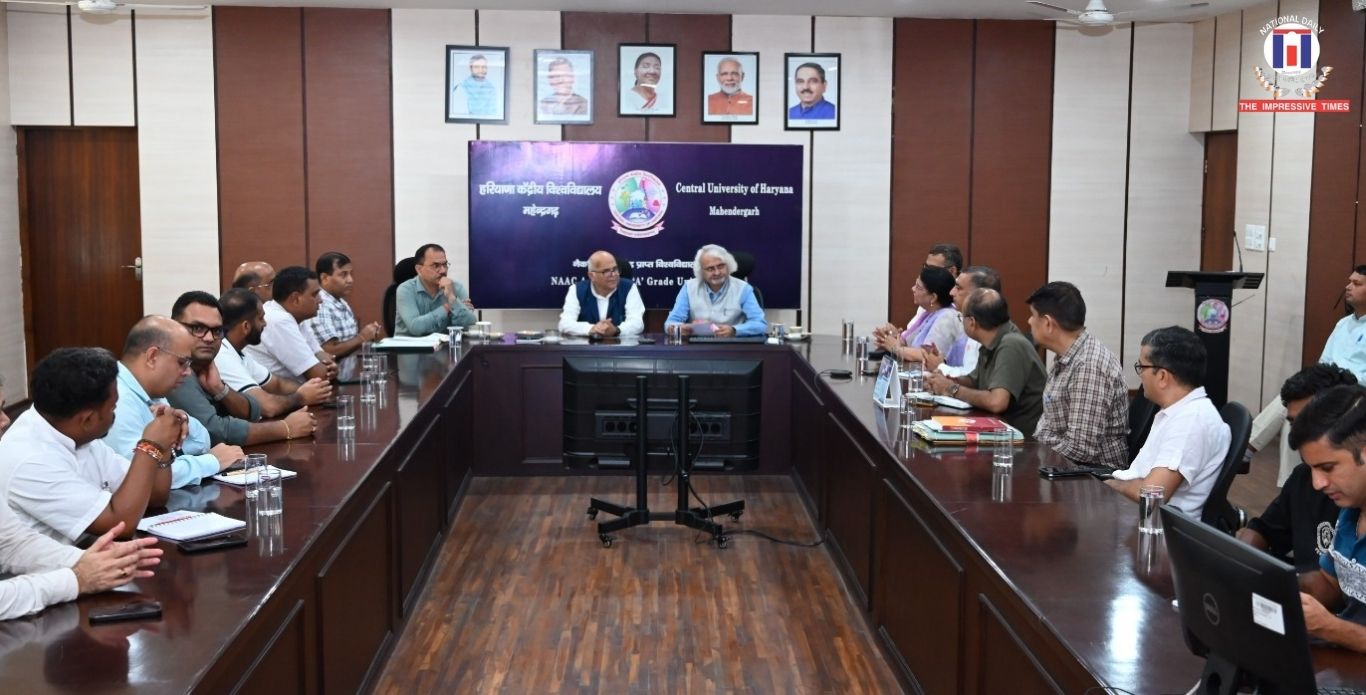
New Delhi, November 5, 2025: The Department of Telecommunications (DoT), Ministry of Communications, led a thematic session on “Digital Communication” at the Emerging Science, Technology and Innovation Conclave (ESTIC) 2025, held at Bharat Mandapam, New Delhi, from November 3–5, 2025.
Chaired by Dr. Neeraj Mittal, Secretary (Telecom) and Chairman, Digital Communications Commission, the session brought together leading scientists, academicians, and telecom industry experts to discuss India’s innovation roadmap toward 6G and the nation’s vision for Viksit Bharat 2047.
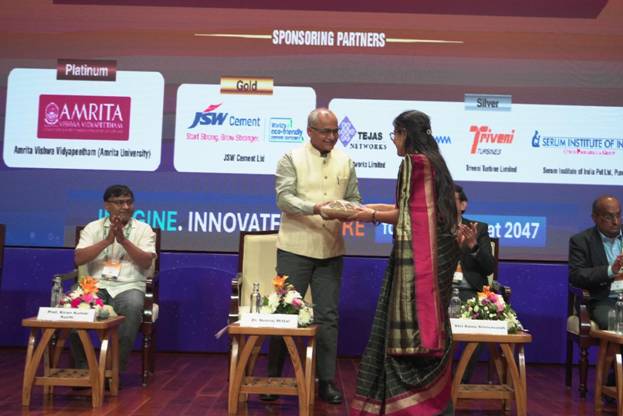
In his keynote address, Dr. Mittal highlighted the growing influence of the telecom sector, stating that “Telecom is an enabler of every modern technology and a driver of India’s economic transformation.” He emphasized that connectivity is now the backbone of all productive activity and that India’s rapid progress in digital infrastructure is creating immense global opportunities.
He noted that India has executed one of the fastest 5G rollouts globally, inspired by the Hon’ble Prime Minister’s vision, and that 100 5G labs have already been established nationwide to develop new use cases and accelerate 6G readiness.
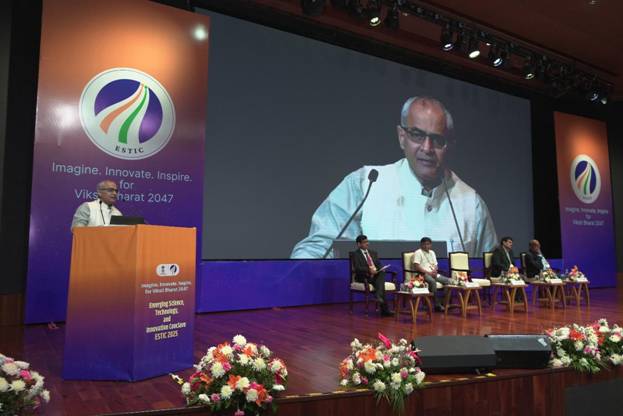
The Secretary underlined the Government’s multi-layered strategy to strengthen India’s digital communication ecosystem—focusing on research and development, indigenous manufacturing, and industry-academia collaboration.
More than 100 R&D projects on 6G are currently supported by the DoT, covering areas such as Open RAN, indigenous chipset design, AI-driven intelligent networks, and regulatory sandboxes that encourage innovation.
He also highlighted the Bharat 6G Alliance, an initiative inspired by the Prime Minister’s vision, which has so far forged 10 international partnerships and aims for India to contribute 10% of global 6G patents by 2030.
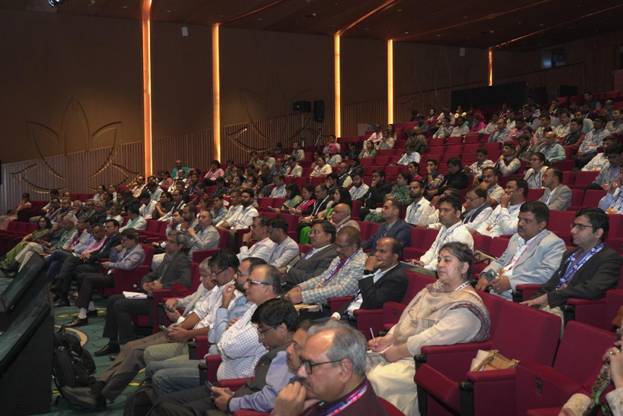
The thematic session featured a keynote address by Prof. Kiran Kumar Kuchi of IIT Hyderabad and Founder of WiSig Networks, who spoke on “How to Realise the 6G Vision for Bharat.”
Other speakers included Ramu Srinivasaiah, Founder and Director, Lekha Wireless Solutions, Bengaluru, who discussed the expanding role of ORAN in private networks, and Dr. Kumar N. Sivarajan, Co-Founder and CTO, Tejas Networks, who shared insights on positioning India as a global telecom leader by 2030.
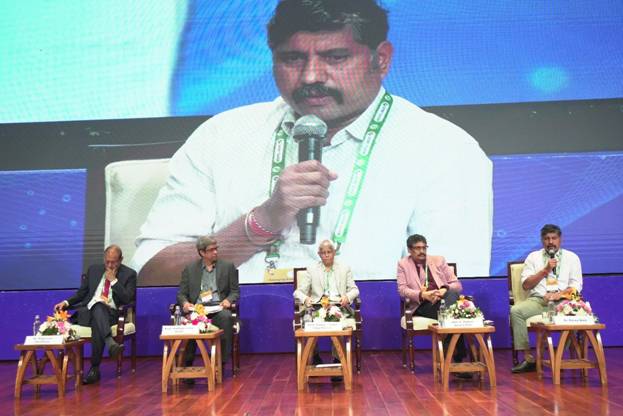
A panel discussion on “Taking Indigenous Technologies to the Next Level” was moderated by Dr. Rajkumar Upadhyay, CEO of C-DOT. The panel included experts from IIT Madras, IISc Bengaluru, BSNL, and Tejas Networks, who deliberated on advancing 5G, developing indigenous Positioning, Navigation, and Timing (PNT) systems using NavIC L1 signals, and enabling disruptive technologies ranging from D2M to 6G.
ESTIC 2025, themed “Viksit Bharat 2047 – Pioneering Sustainable Innovation, Technological Advancement, and Empowerment,” was inaugurated by Prime Minister Narendra Modi on November 3.
Jointly organized by 13 Ministries and Departments under the guidance of the Principal Scientific Adviser to the Government of India, the conclave has brought together over 3,000 participants, including Nobel laureates, leading scientists, policymakers, and innovators.
Deliberations across 11 focus areas—ranging from Artificial Intelligence, Quantum Technologies, Energy, and Digital Communications to Space and Semiconductor Manufacturing—aim to define India’s roadmap for technology-driven growth.
































No Comments: