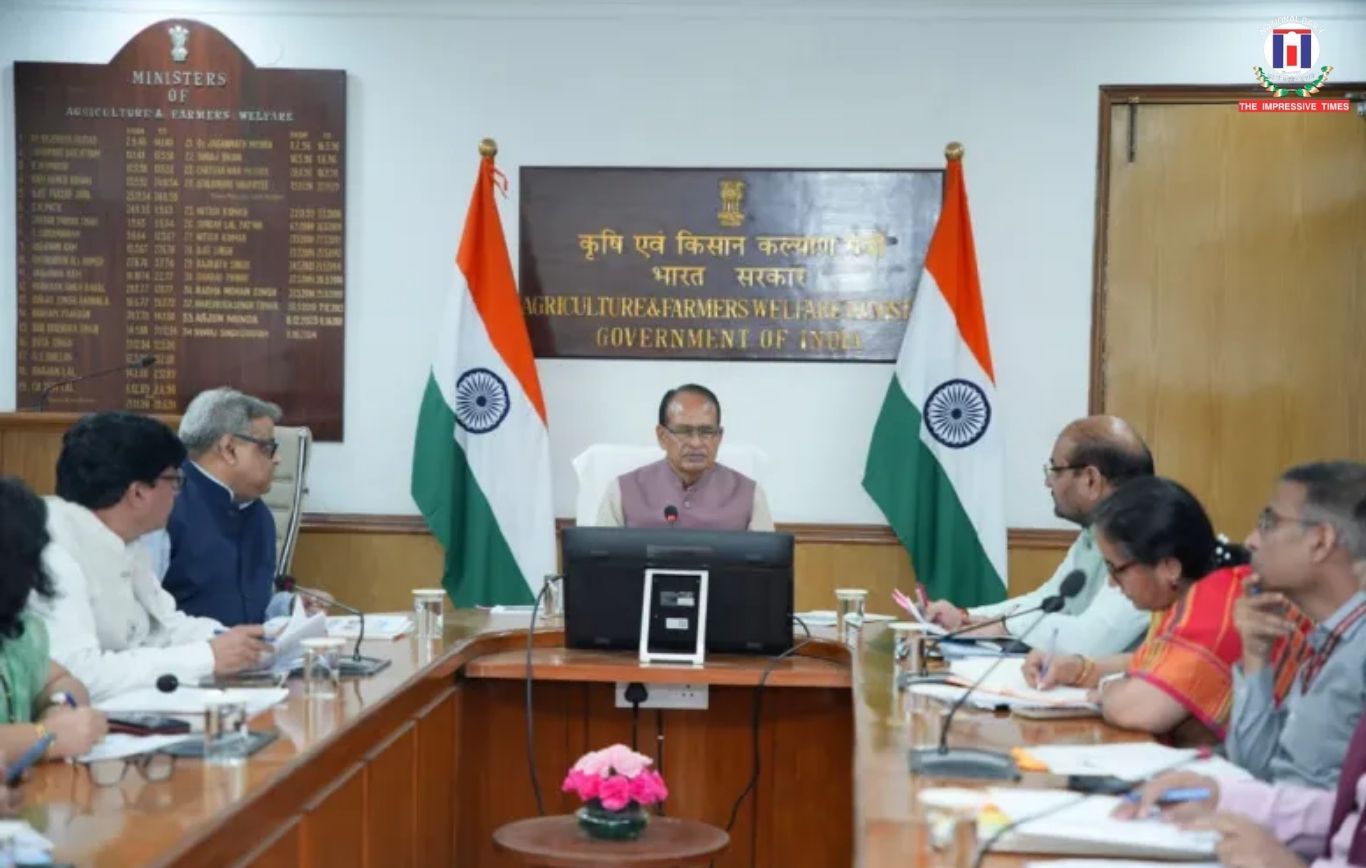
New Delhi, June 16: With the possibility of El Nino conditions affecting rainfall patterns, the Centre has intensified preparations for the upcoming Kharif season, with Union Agriculture Minister Shivraj Singh Chouhan calling for advance planning in districts likely to experience deficient or uneven rainfall.
During a high-level agriculture review meeting at Krishi Bhawan on Tuesday, the minister directed officials to identify vulnerable districts and prepare crop-specific contingency plans in coordination with state governments. The move aims to ensure that farmers receive timely guidance, alternative crop options and necessary support if weather conditions become challenging.
The meeting focused on preparations for Kharif 2026, including sowing progress, crop targets and state-level readiness. Officials reviewed the possible impact of El Nino, a climate phenomenon often associated with changes in global weather patterns and potential disruption in monsoon rainfall over several regions.
The Agriculture Minister stressed that climate uncertainty requires proactive action rather than reactive measures. He said districts facing possible rainfall shortages must have detailed strategies ready so that farmers can quickly shift to suitable alternatives and minimise risks to production and income.
The government also highlighted the need to increase cotton and pulse production as part of a broader strategy to strengthen agricultural resilience and reduce dependence on imports. Officials discussed measures such as improved seed varieties, scientific cultivation methods, moisture conservation techniques, intercropping and better farm practices to enhance productivity.
Cotton production received special attention during the review meeting. The ministry emphasised the importance of adopting modern agricultural practices to improve yields while ensuring better returns for farmers. Techniques such as mulching and efficient water management were highlighted as important tools to protect crops during uncertain weather conditions.
Another key area of discussion was the Pulse Self-Reliance Mission, aimed at increasing domestic production of crops such as pigeon pea, black gram and green gram. Strengthening pulse cultivation has become a priority due to its importance in food security, nutrition and farmer income stability.
The government’s preparedness comes amid concerns over the possibility of a weaker monsoon influenced by El Nino conditions. However, officials noted that India is better equipped today to handle potential rainfall challenges compared to previous years due to stronger agricultural systems, improved water availability and higher foodgrain reserves.
Reservoir storage levels have shown encouraging signs, with water availability reportedly higher than the average recorded during previous El Nino years. This provides additional confidence that the country has greater capacity to manage rainfall-related disruptions.
India’s agricultural sector has increasingly focused on climate adaptation as extreme weather events become more frequent. From drought-resistant crop varieties to improved irrigation methods and digital advisory systems, the emphasis has shifted towards building a farming ecosystem capable of handling environmental uncertainties.
Experts have repeatedly highlighted that climate resilience will be essential for maintaining agricultural growth. Rainfall variability can impact sowing decisions, crop output, food prices and rural incomes, making advance planning a crucial component of agricultural policy.
The Centre’s latest directives reflect an effort to protect farmers from possible climate shocks while ensuring continued food security. By combining contingency planning, technology-driven farming and crop diversification, the government aims to reduce vulnerabilities and support sustainable agricultural growth.
As the Kharif season progresses, the effectiveness of these preparations will depend on coordination between central agencies, state governments and farmers at the grassroots level. A timely response system could play a decisive role in ensuring that weather uncertainty does not become a major obstacle to India’s agricultural ambitions.































No Comments: