
 The Impressive Times
NEW DELHI: Marking the World Day to Combat Desertification and Drought 2026, Union Minister for Environment, Forest and Climate Change Bhupender Yadav reaffirmed India’s commitment to sustainable land management and ecosystem restoration, highlighting significant progress towards the country’s environmental goals.
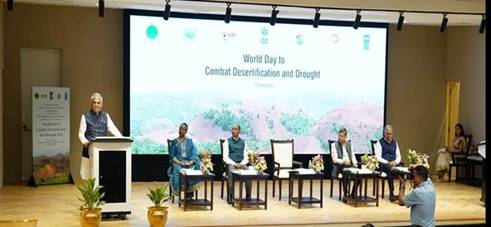
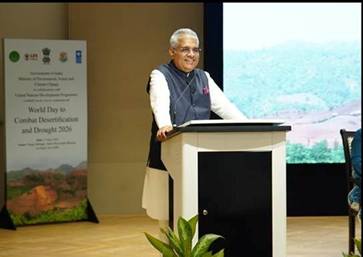
Addressing a gathering at Indira Paryavaran Bhawan in New Delhi, the Minister said India has already restored 21.76 million hectares of degraded land against its ambitious target of 26 million hectares by 2030 under the global Bonn Challenge, one of the world’s largest land restoration commitments announced by Prime Minister Narendra Modi.
Emphasising that environmental restoration is central to sustainable development, Yadav said India’s approach combines policy commitment, scientific innovation and public participation. He noted that restoration activities have generated approximately 1.22 billion person-days of employment, demonstrating how environmental initiatives can also support livelihoods and economic growth.
The Minister highlighted several flagship programmes contributing to land restoration. Under the Watershed Development Component of the Pradhan Mantri Krishi Sinchayee Yojana, more than 27 million hectares have been treated, while over 61.3 million geo-tagged natural resource management assets have been created across the country.
He further stated that around 1.7 lakh hectares have been covered under greening and restoration activities through the Green India Mission, while CAMPA-supported afforestation programmes have restored nearly 3.20 lakh hectares over the past five years.
Highlighting community participation, Yadav said Joint Forest Management now covers around 81.53 million hectares, making it one of the largest community-based forest management systems globally. In addition, over 1.21 lakh hectares have been brought under agroforestry, and bamboo plantations have expanded across nearly 60,000 hectares outside forest areas.
Referring to Prime Minister Modi’s “Ek Ped Maa Ke Naam” campaign, the Minister noted that more than 266 crore saplings have been planted nationwide. He also underlined the importance of technological platforms such as Bhuvan, VEDAS and Yuktdhara in facilitating scientific planning, monitoring and implementation of restoration projects.
Yadav highlighted the progress of the Aravalli Green Wall Initiative, which has exceeded its annual targets during 2025-26. He also announced a target to restore 54,000 hectares of mangrove forests by 2028 under the MISHTI programme, while wetland conservation efforts continue under the National Plan for Conservation of Aquatic Ecosystems.
Speaking on this year’s theme, “Rangelands: Recognize. Respect. Restore.”, the Minister stressed the importance of rangelands and grasslands in biodiversity conservation, carbon sequestration, climate resilience and rural livelihoods. He noted that India’s drylands cover approximately 228 million hectares, while nearly 97.85 million hectares, or 29.77 per cent of the country’s geographical area, are affected by land degradation and desertification.
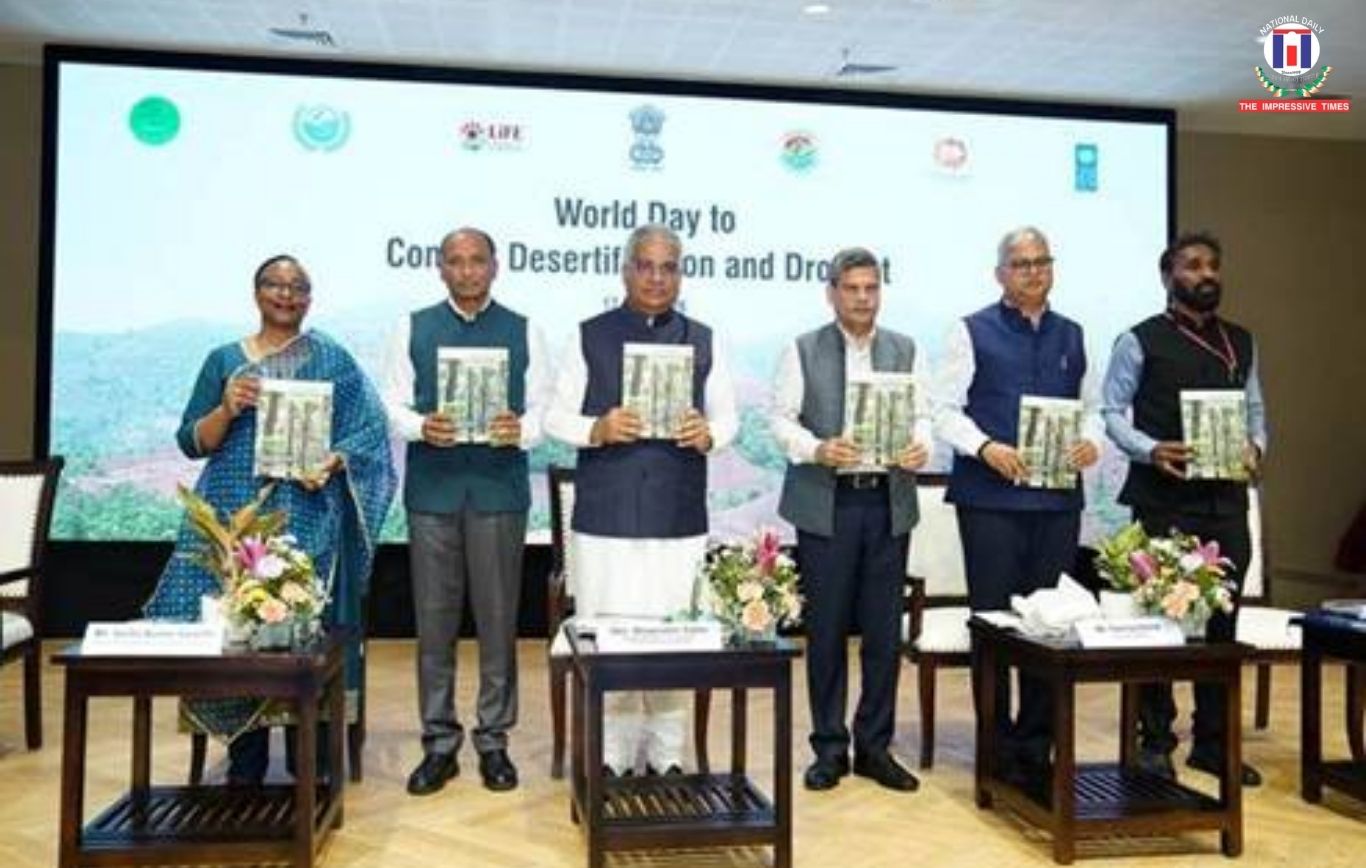
On the occasion, Yadav released a Special Issue of Indian Forester and India’s Second Progress Report on the Bonn Challenge (2011–2020). Prepared in collaboration with the International Union for Conservation of Nature (IUCN), the report documents restoration efforts across States and Union Territories and highlights their ecological and socio-economic benefits.
The event, attended by nearly 200 participants from government agencies, research institutions, international organisations and civil society, concluded with a renewed commitment to accelerate restoration efforts, strengthen sustainable land management and promote nature-based solutions to combat desertification and drought while securing a greener and more resilient future.




































No Comments: