Somnath Temple a Timeless Symbol of India’s Sanatan Consciousness, Cultural Pride and National Self-Respect- Chief Minister
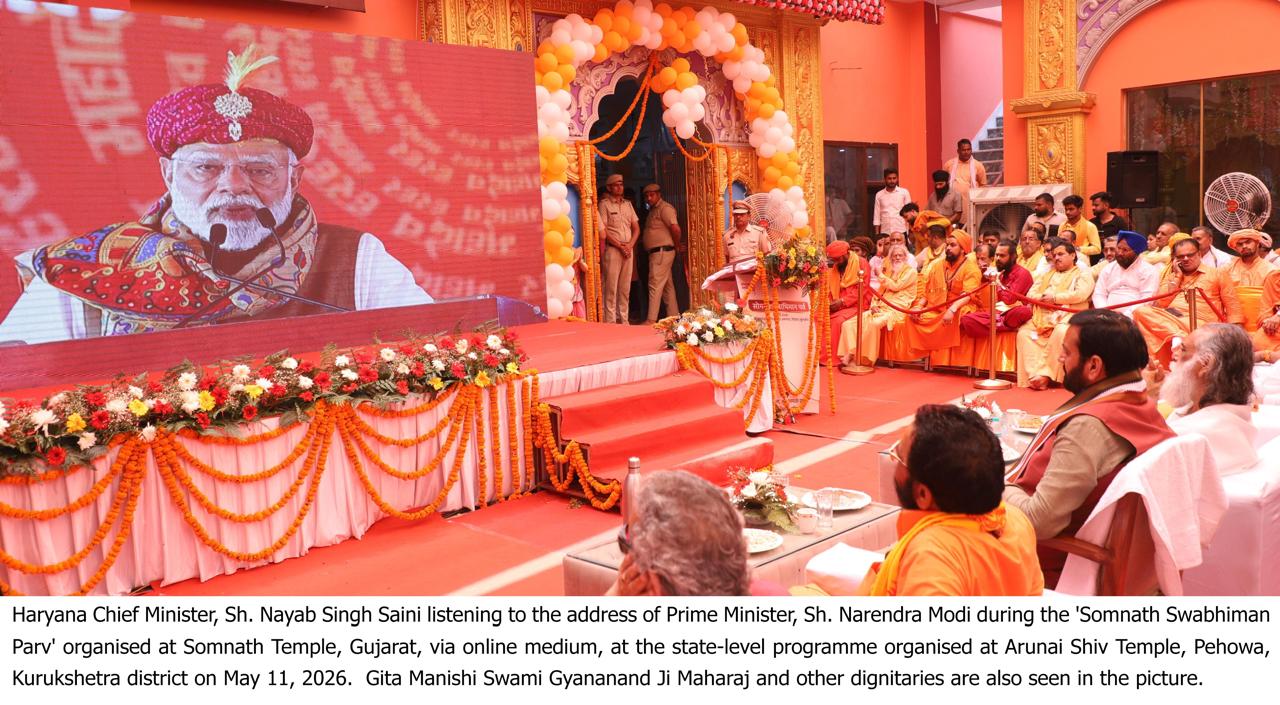
CM participates in ‘Somnath Swabhiman Parva’ at Shree Sangmeshwar Mahadev Temple Arunai in Pehowa, Kurukshetra

 The Impressive Times
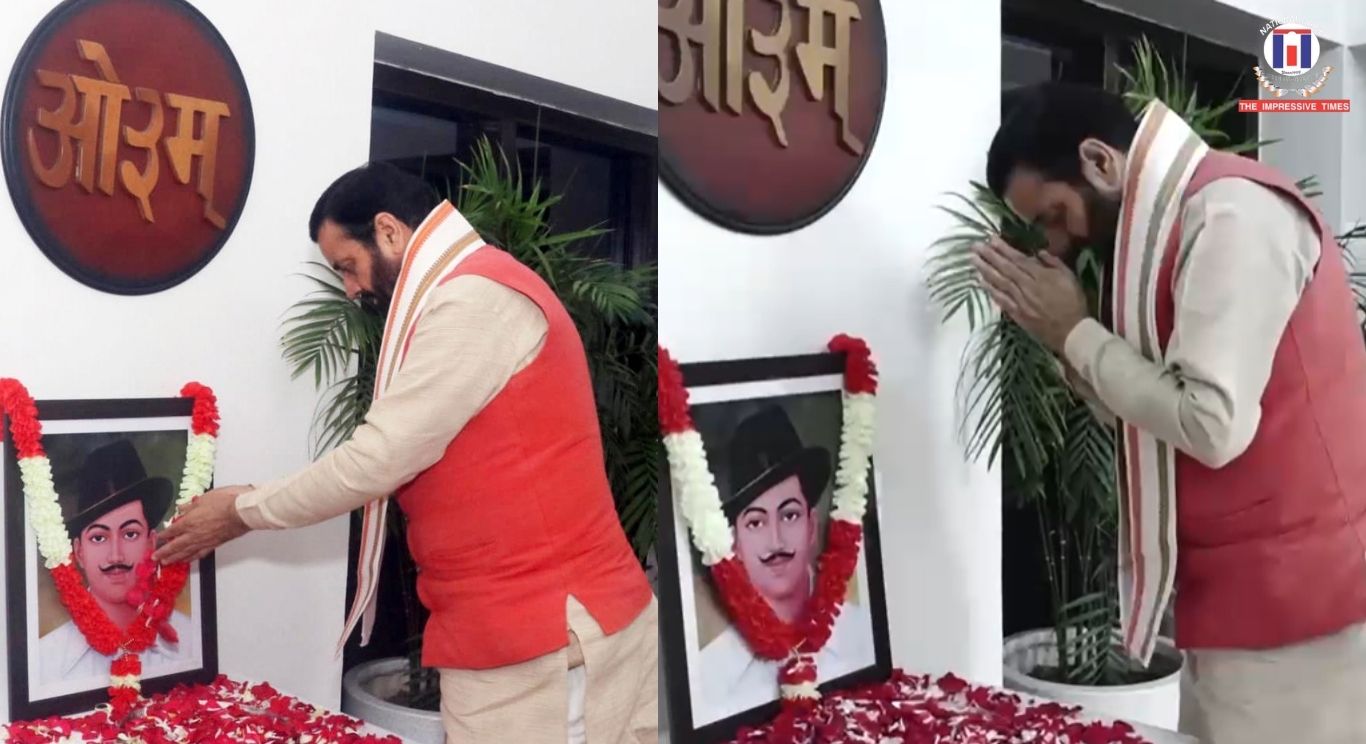
New Delhi, May 11– Haryana Chief Minister, Nayab Singh Saini said that the Somnath Temple is not merely a place of worship but a timeless symbol of India’s Sanatan consciousness, unwavering faith and national self-respect that has inspired the nation to rise stronger after every invasion, struggle and adversity.
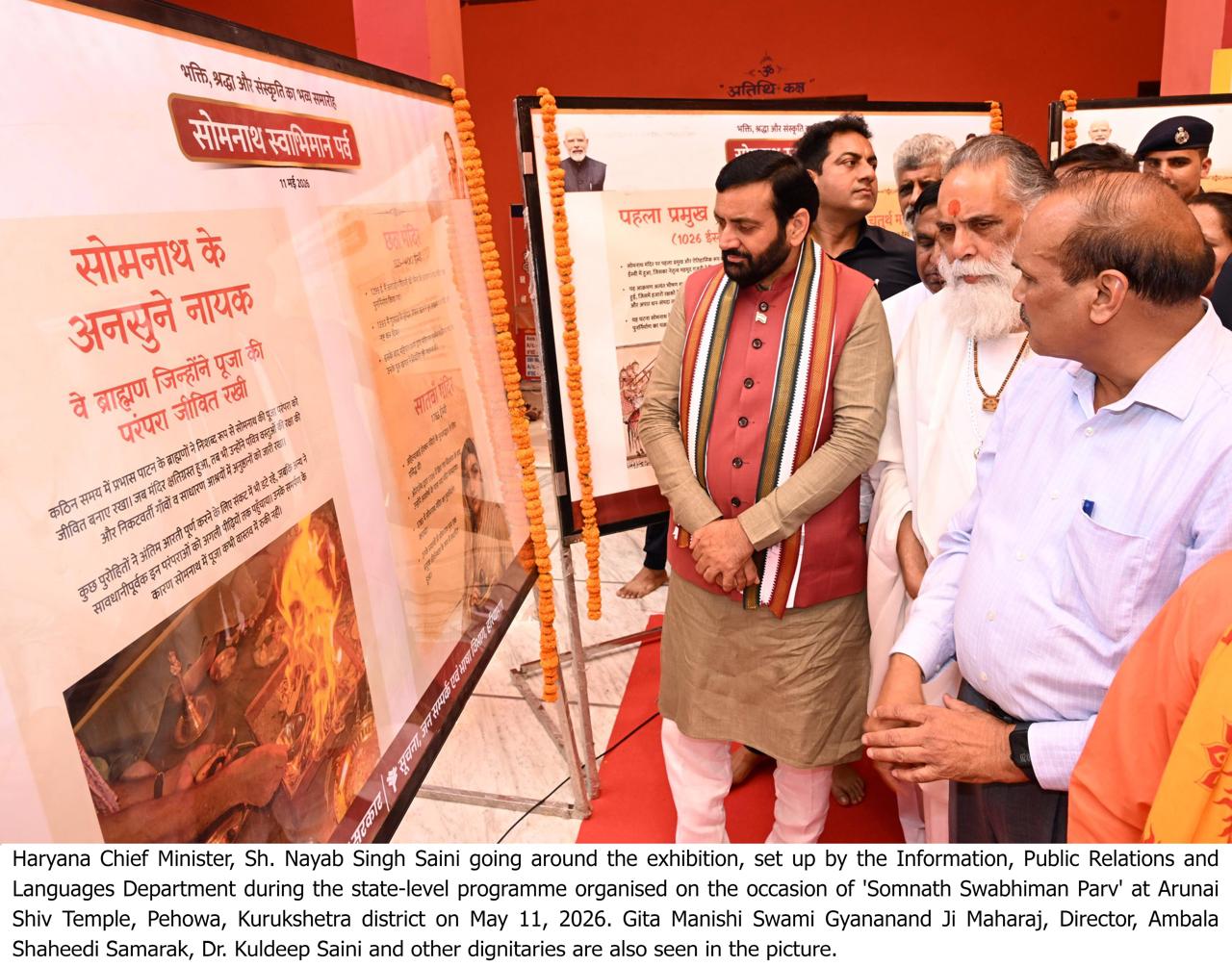
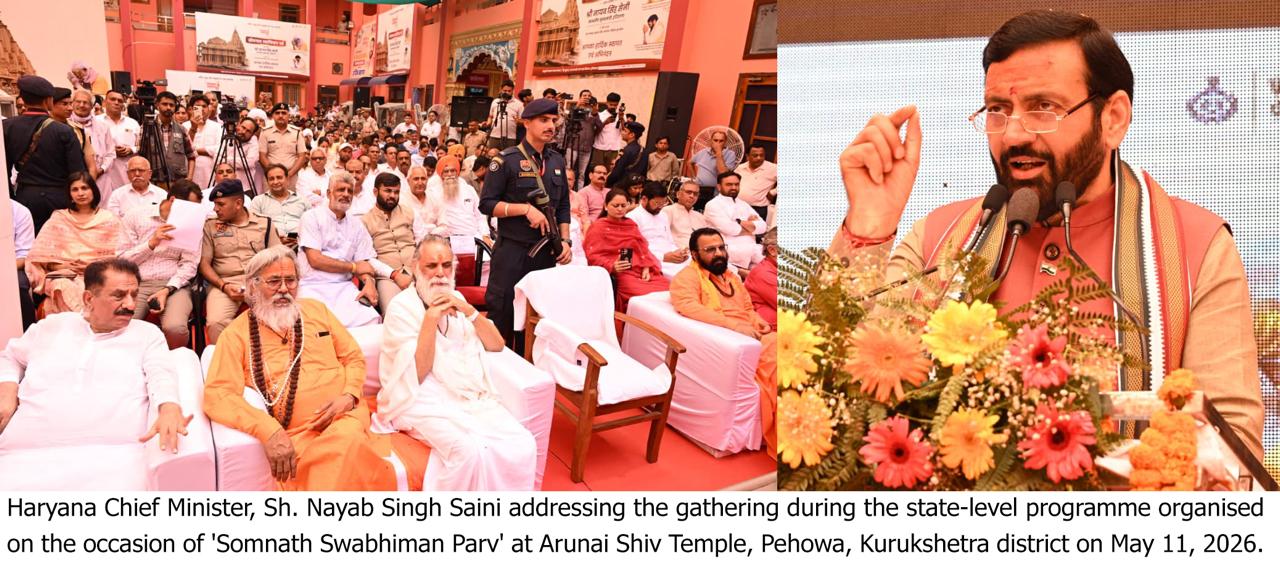
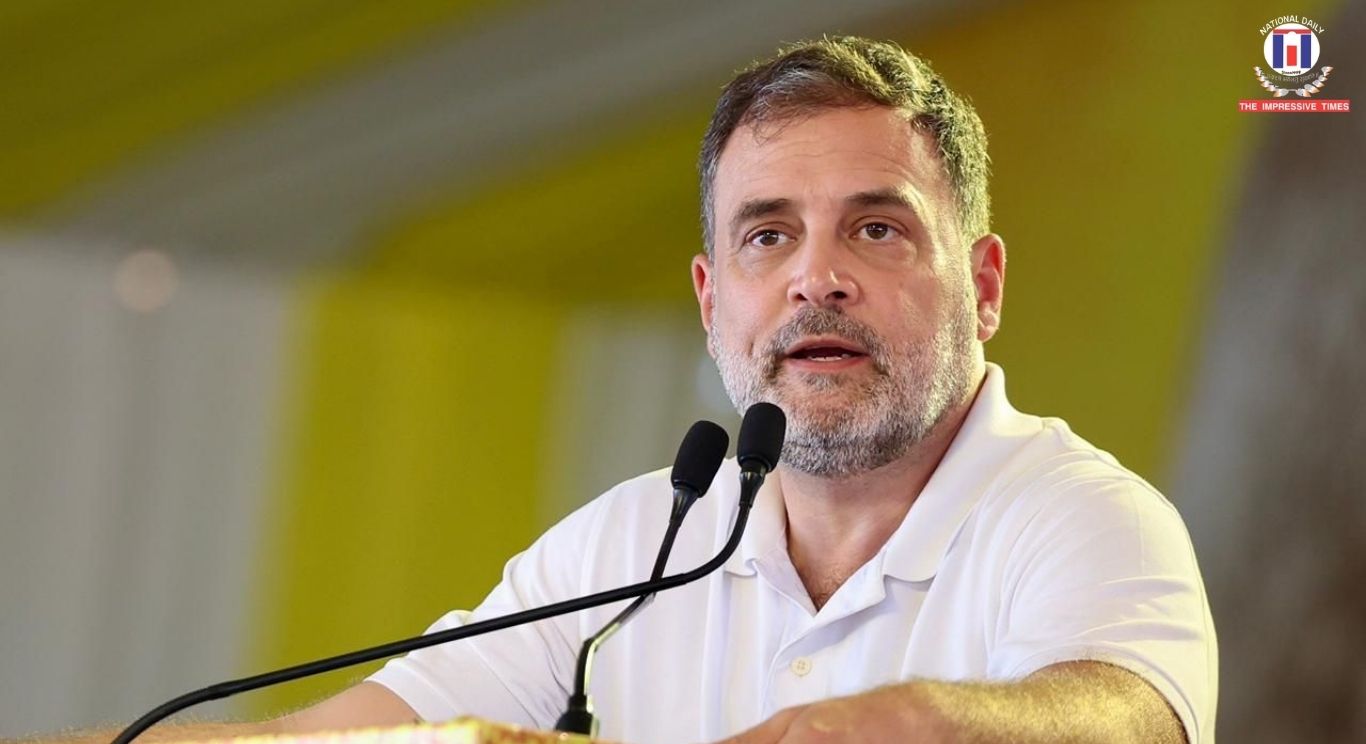
Addressing the state-level “Somnath Swabhiman Parva” as Chief Guest, organised at the sacred Shree Sangmeshwar Mahadev Temple Arunai in Pehowa, Kurukshetra on Monday, the Chief Minister said the year-long national celebration marking 75 years of the reconstruction of Somnath Temple reflects the spiritual awakening, cultural resurgence and civilisational continuity of India.
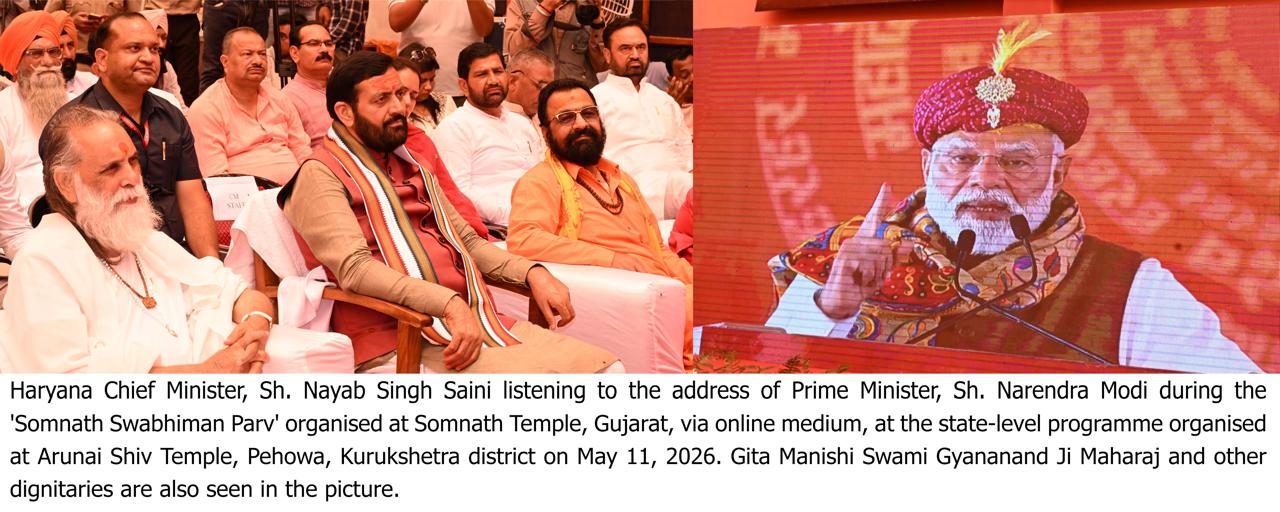
During the event, the Chief Minister and the dignitaries present also watched the live telecast from Somnath Temple, where Prime Minister, Narendra Modi offered special prayers and addressed the gathering.
Beginning his address with chants of Har Har Mahadev, the Chief Minister said that celebrating the Parva at the holy confluence of the Vedic rivers Arunai and Saraswati further enhanced the spiritual significance of the occasion. He said the ancient Sangameshwar Temple has, for centuries, remained a sacred reminder of this divine confluence and India’s rich spiritual heritage.
Extending greetings to devotees on the occasion of Somnath Swabhiman Parva, the Chief Minister said the celebration commenced on January 11 this year and will continue till January 11, 2027. He informed that devotees from across the country are visiting Somnath Temple during the commemorative year, and a special pilgrimage train carrying devotees from Haryana will depart on June 8 under the ‘Mukhyamantri Teerth Yatra Yojana’ for economically weaker senior citizens.
PM Modi has given a new global stature to India’s spiritual and cultural heritage
The Chief Minister said that under the visionary leadership of Prime Minister, Sh. Narendra Modi, India’s spiritual and cultural heritage, has received renewed global recognition and respect.
He said the grand construction of Shree Ram Janmabhoomi Temple in Ayodhya after centuries of wait and the consecration of Ram Lalla became the greatest symbol of the resurgence of Indian civilisation and cultural pride. From Kashmir to Kanyakumari, the entire nation was immersed in devotion to Lord Shree Rama, he added.
Referring to the redevelopment of Kashi Vishwanath Dham, Mahakal Lok and Kedarnath Dham, the Chief Minister said these initiatives have restored the glory of India’s ancient pilgrimage centres and connected modern India with its civilisational roots.
He further said that through initiatives such as the Char Dham Project, PRASAD Scheme and preservation of cultural heritage sites, India is reconnecting with its spiritual foundations. This is a defining era of New India where development and heritage are progressing together, he added.
The Chief Minister said that by giving the message of Yoga, Ayurveda and “Vasudhaiva Kutumbakam” to the world, Prime Minister, Sh. Narendra Modi has elevated the stature of Indian culture globally.
Under the Prime Minister’s Leadership, India’s Sacred Pilgrimage Centres and Spiritual Heritage Sites Witness Historic Revival and Grand Transformation
Referring to the redevelopment of Kashi Vishwanath Dham, Mahakal Lok, Kedarnath Dham, the inauguration of the Kartarpur Corridor and the recently inaugurated Kurukshetra Anubhav Kendra, the Chief Minister said that under the visionary leadership of Prime Minister, Narendra Modi, unprecedented work has been carried out over the past 11 years for the historic revival and grand transformation of the country’s major pilgrimage centres and spiritual heritage sites.
He said these initiatives have not only restored the ancient glory of India’s revered religious places but have also connected modern India with its rich civilisational and cultural heritage while providing world-class facilities and improved infrastructure for devotees.
Somnath is the eternal symbol of India’s resilience and Sanatan faith
Describing Somnath as the first among the twelve sacred Jyotirlingas, the Chief Minister said that according to the Puranas, Chandradev performed intense penance at this holy site to seek liberation from his sufferings, after which Lord Shiva manifested here in the form of a Jyotirlinga. Since then, the sacred shrine came to be known as Somnath.
The Chief Minister said the history of the Somnath Temple is the history of India’s endurance and spiritual resilience. The temple was attacked, looted and destroyed several times by foreign invaders, yet every time it rose again with greater strength, courage and faith.
The Chief Minister said that foreign invaders attempted not only to destroy a temple, but also India’s faith, culture and identity. However, they failed to understand that Sanatan does not exist merely in temples; it lives in the hearts of the people of India, he said.
Reconstruction of Somnath restored India’s cultural self-respect
Recalling the reconstruction of Somnath after Independence, the Chief Minister said Sardar Vallabhbhai Patel had viewed the rebuilding of the temple as the restoration of national honour and cultural pride.
The Chief Minister further said that India’s first President, Dr Rajendra Prasad, inaugurated the reconstructed Somnath Temple in May 1951 and said that the completion of 75 years of the reconstruction is a matter of pride for every Indian.
He further said that this year also marks 1,000 years since the first attack on Somnath in 1026 AD, making the “Somnath Swabhiman Parva” a symbol of a thousand years of endurance and unbroken faith.
Youth must know India’s glorious civilisational heritage
The Chief Minister called upon the younger generation to reconnect with India’s spiritual and cultural roots. He said that India is not merely a geographical entity; India is a civilisation, a culture and a spiritual consciousness, he said.
He said the Somnath Swabhiman Parva is not merely a remembrance of the past, but a national campaign for cultural awakening and civilisational consciousness. He urged parents and society to ensure that future generations remain connected to India’s glorious heritage, traditions and spiritual values.
Haryana Government committed to preservation of spiritual and cultural heritage
Highlighting the efforts being made by the Haryana Government for preservation of spiritual and cultural heritage, the Chief Minister said continuous work is being undertaken for the development of pilgrimage centres, conservation of temples and sarovars and promotion of religious tourism.
He said that within the sacred 48-kos land of Kurukshetra, situated between the Saraswati and Drishadvati rivers, 367 pilgrimage sites have been identified, many of which had faded into obscurity over time.
The Chief Minister informed that after an extensive survey and documentation, 18 new pilgrimage sites were added in 2023, taking the total documented pilgrimage sites in the sacred region to 182.
He further said that under the Swadesh Darshan Scheme, Kurukshetra was included in the Shri Krishna Circuit in 2015, and several pilgrimage destinations are being developed under the project. As part of this initiative, 134 locations within the 48-kos region will be developed as tourism and spiritual destinations.
Referring to the recently inaugurated Jyotisar Anubhav Kendra, the Chief Minister said the state-of-the-art complex developed at a cost of around Rs 200 crore uses modern technology to present the philosophy, teachings and history of the Mahabharata in an immersive manner for future generations.
Call for village-level cultural programmes and spiritual awareness
Appealing to saints, religious organisations, social institutions and youth to take the message of Somnath Swabhiman Parva to every household, the Chief Minister called for organising cultural programmes, Shiv Mahapuran recitations and Bhagavad Gita path in villages to strengthen awareness about India’s history, culture and spiritual traditions.
He said the nation must move ahead in science, technology and development while remaining firmly rooted in spirituality and cultural values. We must build an India that is modern yet deeply connected to its roots; an India that advances in science but never forgets spirituality, he said.
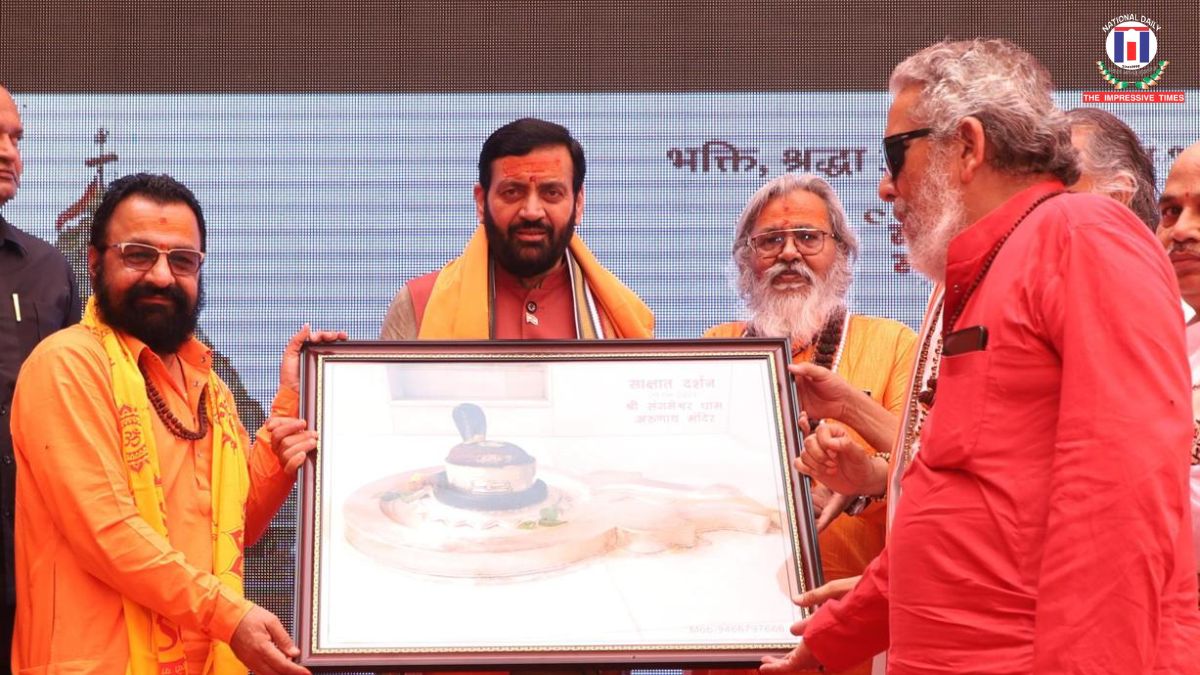
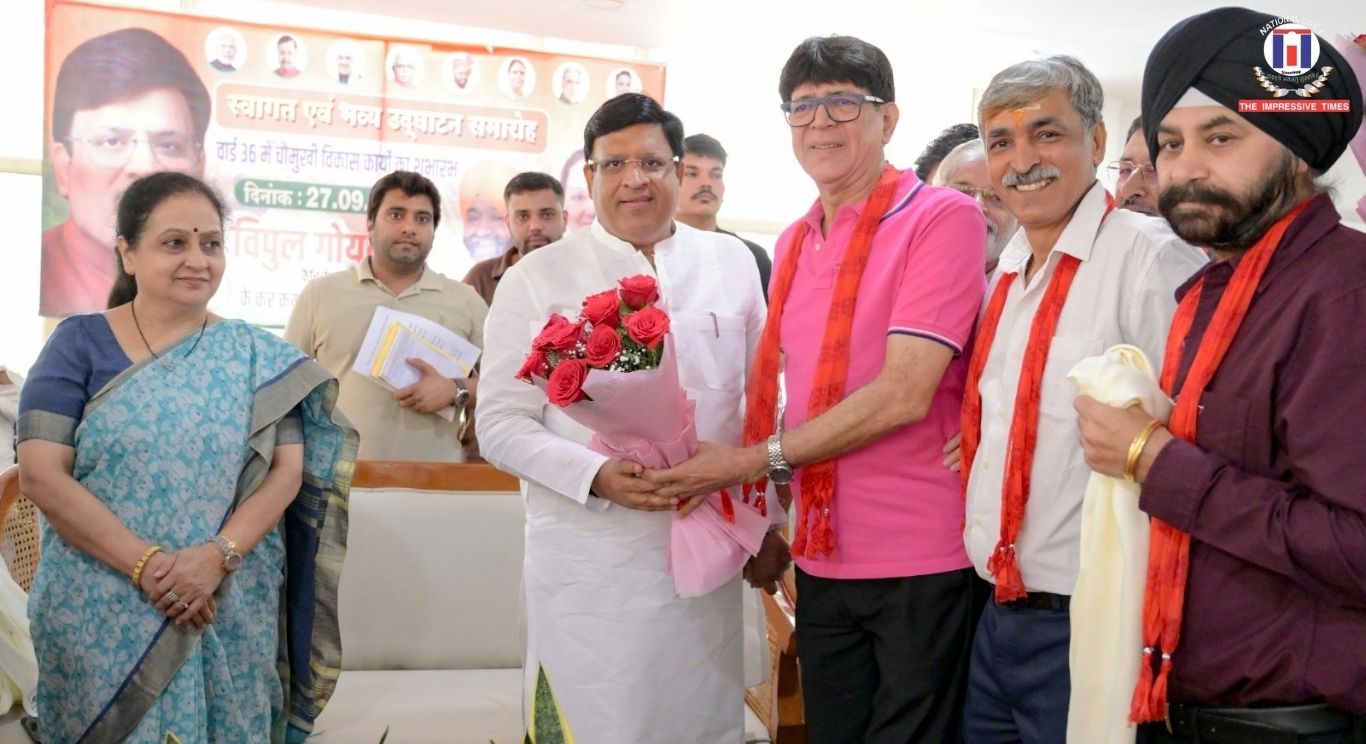
Notably, the Chief Minister was also felicitated by the temple committee and members of the Sant Samaj.
Somnath Swabhiman Parv symbolises India’s Sanatan culture and national pride
Speaking on the occasion, Swami Gyananand Ji Maharaj said that Somnath Swabhiman Parv symbolises India’s Sanatan culture and national pride. He said that those who once tried to destroy Somnath have now been confined to the pages of history, but the flag of Somnath continues to convey the message of India’s strength and spiritual resilience.
Swami Gyananand Ji Maharaj further said that the Somnath Temple stands as a symbol of India’s cultural identity and self-respect, and despite being destroyed repeatedly, it was rebuilt time and again through unwavering faith and devotion.
He further said that even after the invasion of Mohammad Ghaznavi nearly a thousand years ago, the Somnath Temple was reconstructed several times. Its restoration was later undertaken through the efforts of Sardar Vallabhbhai Patel. Marking 75 years of its restoration, the occasion is being celebrated as “Swabhiman Parv”. Saints and devotees from across the country have collectively chanted the Omkar Mantra as part of the celebrations, he said.
Swami Gyananand Ji Maharaj said that the history of Somnath not only teaches the spirit of struggle but also inspires patience, determination and resilience. He said that rising again despite repeated destruction over centuries reflects the true identity and spirit of India. He stressed that today’s younger generation must learn about the nation’s history, understand its cultural roots and take pride in its rich heritage.
Mahant Ravindra Puri Ji Maharaj, Bansi Puri Ji Maharaj, Pandit Satpal Maharaj, Gautam Bhushan, former Minister of State Subhash Sudha, Chairman Dharmveer Mirzapur, Vice Chairman Dhooman Singh Kirmach, Chairperson Kanwaljeet Kaur, Gurnam Saini and other distinguished dignitaries also remained present on this occasion
























No Comments: