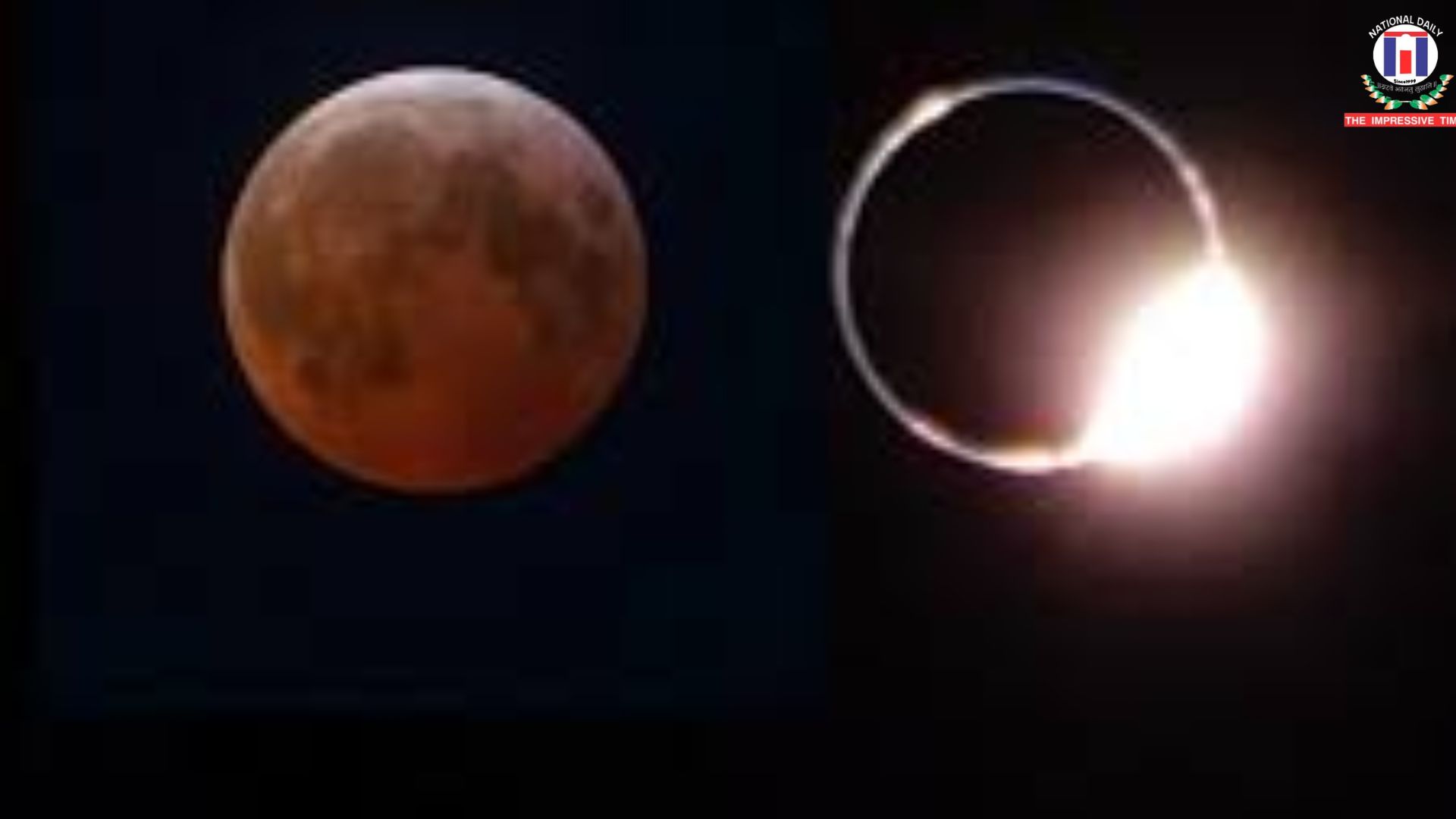
New Delhi, March 6: Scientists studying a recent Lunar Eclipse have uncovered intriguing details about the Moon after analysing rare images captured using an infrared camera. Researchers say the unique observations are helping them better understand temperature changes and surface characteristics of Earth’s natural satellite during the eclipse.
During a lunar eclipse, the Moon passes into the shadow of Earth, which causes a sharp drop in sunlight reaching the lunar surface. By recording the event through infrared technology, astronomers were able to track how different regions of the Moon cooled at varying speeds.
The images showed that certain parts of the lunar surface retained heat longer than others. According to scientists, this difference is linked to variations in the Moon’s soil composition and the texture of rocks spread across its surface.
Infrared observations are particularly valuable because they can measure heat radiation, allowing researchers to detect subtle temperature differences that are not visible in normal photographs.
Experts believe such data could improve understanding of the Moon’s geological structure and help future lunar missions identify stable landing zones or regions with unique mineral properties.
The findings also demonstrate how advanced imaging technologies can reveal hidden aspects of celestial bodies that traditional observation methods often miss.
Researchers say continued monitoring of lunar eclipses with specialised instruments could provide even deeper insights into the Moon’s surface behaviour and long-term evolution.
















































No Comments: