Raghav Chadha Leads Mass Exit from AAP; 7 Rajya Sabha MPs Merge with BJP
Two-Third Rule Shields MPs from Disqualification Under Anti-Defection Law

 The Impressive Times
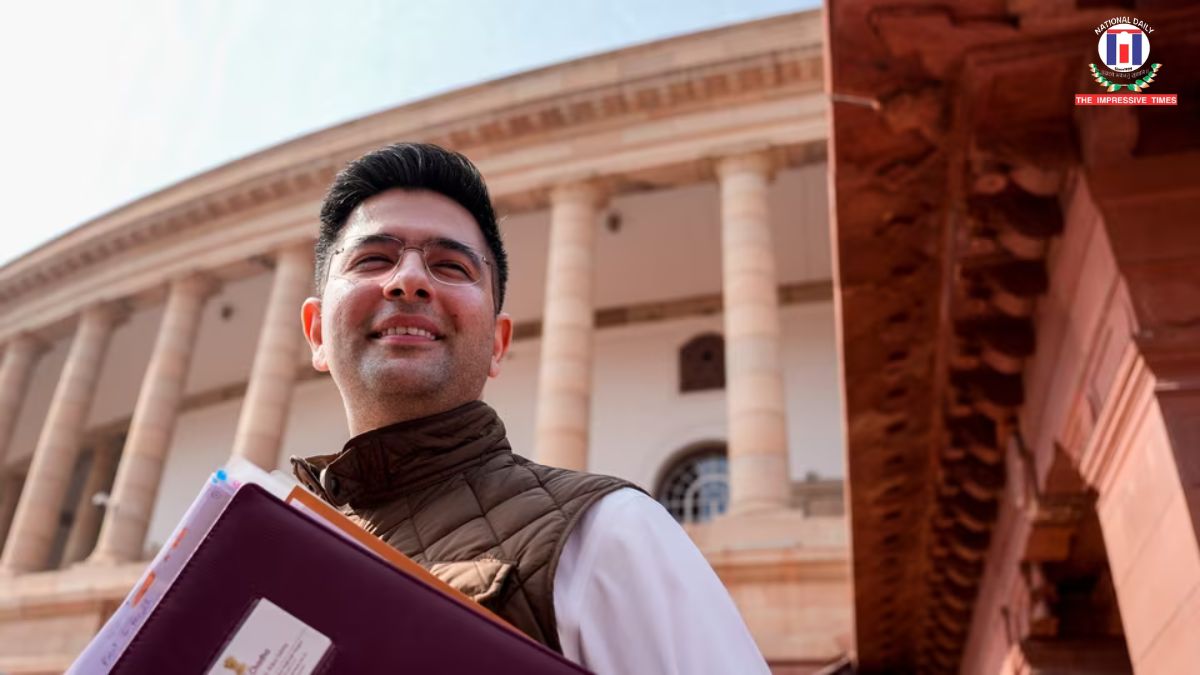
In a dramatic political development, Raghav Chadha has formally parted ways with the Aam Aadmi Party and announced a collective merger with the Bharatiya Janata Party in the Rajya Sabha. He is joined by six other Members of Parliament, taking the total number of defectors to seven.
This coordinated move is significant because it meets the constitutional requirement that protects legislators from disqualification under India’s anti-defection framework.
Under the Tenth Schedule of the Constitution, an individual MP switching parties risks losing their seat. However, an exception applies when at least two-thirds of a party’s legislators agree to merge with another party.
Out of AAP’s 10 Rajya Sabha MPs, seven have now acted together — exactly the number needed to meet the two-thirds threshold. Because of this, their membership in the Upper House remains intact despite the shift to BJP.
Alongside Chadha, the leaders who joined the BJP include:
Most of these MPs were elected from Punjab in 2022 when AAP secured a sweeping mandate in the state.
After the split, only three Rajya Sabha MPs continue with AAP:
This significantly weakens AAP’s strength in the Upper House, especially ahead of crucial political contests.
Even if AAP had expelled Chadha earlier, it would not have automatically stripped him of his Rajya Sabha membership. The law allows MPs to retain their seat unless disqualification is proven through a formal process — often lengthy and subject to interpretation by the Chair.
This made a collective exit the only effective route for Chadha and his colleagues to switch sides without legal consequences.
The development is particularly damaging for AAP in Punjab, where most of the defecting MPs were elected. With state elections less than a year away, the party faces a major political setback.
Notably, Swati Maliwal, who had been at odds with AAP leadership for some time, also used this opportunity to exit without risking her parliamentary position.
Many of the MPs who switched are not traditional politicians:
This mass defection marks one of the most serious internal ruptures in AAP since its formation under Arvind Kejriwal. The coming months will determine whether the party can recover from this setback or if it signals a broader political realignment at the national level.




















No Comments: