PM Modi Unveils India’s First Quantum Chips and Indigenous CAR-T Cancer Therapy at ESTIC 2025
CAR-T Cell Therapy: India’s 1st indigenous cancer cell therapy by ImmunoACT was supported by DBT and BIRAC

 The Impressive Times
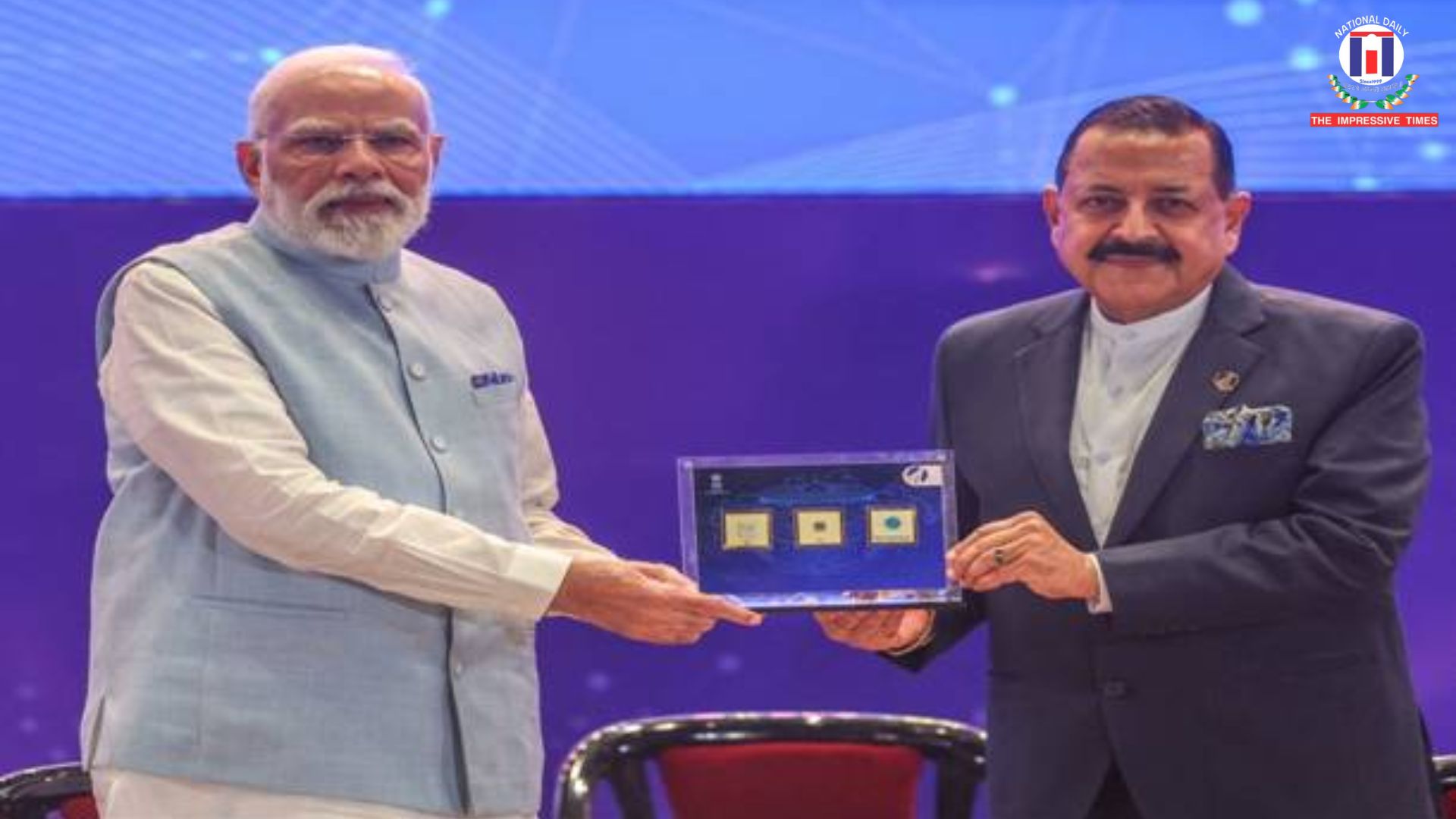
New Delhi, November 5, 2025: In a historic moment for Indian science and innovation, Prime Minister Narendra Modi today unveiled three groundbreaking technologies at the Emerging Science, Technology & Innovation Conclave (ESTIC) 2025:
QSIP – India’s first quantum security chip
25-qubit QPU – the nation’s first quantum computing chip
CAR-T Cell Therapy – India’s first indigenous cancer cell therapy developed by Indian innovators
These innovations mark a new era in India’s pursuit of technological self-reliance and global leadership in healthcare, computation, and quantum technologies.
Among the innovations presented was NexCAR19, developed by ImmunoACT, a spin-off from IIT Bombay, representing India’s first indigenously developed Chimeric Antigen Receptor T-cell (CAR-T) therapy. Supported by the Department of Biotechnology (DBT) and the Biotechnology Industry Research Assistance Council (BIRAC), this therapy represents a major step in India’s biotech capability.
Globally recognized as a breakthrough in treating advanced cancers, CAR-T therapy uses genetically modified immune cells to target and destroy cancer cells. NexCAR19, termed India’s first “living drug,” makes gene and cell therapy affordable and accessible while maintaining the highest global standards of safety and efficacy.
ImmunoACT was nurtured under the BioNest initiative of BIRAC, receiving funding, mentorship, and technical assistance during its incubation at the Society of Innovation and Entrepreneurship (SINE), IIT Bombay.
In 2021, the TMC–IIT Bombay team began clinical trials for NexCAR19 at ACTREC, Tata Memorial Hospital, with partial support from DBT and BIRAC under the National Biopharma Mission. The ongoing trials for pediatric patients at Tata Memorial Centre continue to show promising outcomes, with ImmunoACT serving as the manufacturing partner.
To scale up this breakthrough, DBT has also funded ImmunoACT under the Biomanufacturing initiative of the BioE3 Policy to establish a 200L GMP-grade lentiviral vector and plasmid manufacturing platform. This infrastructure will support the production of gene delivery systems capable of treating up to 1,000 patients annually.
The facility will integrate advanced bioreactor technologies for high-density cell growth and continuous vector production—enhancing yields, efficiency, and affordability of gene-based therapies in India.
The Department of Biotechnology is also accelerating both early and late-stage translational research to develop next-generation CAR-T therapeutics for various cancers, including Multiple Myeloma, Acute Lymphocytic Leukemia, B-cell Acute Lymphoblastic Leukemia, and Glioblastoma. Efforts are being directed towards tackling both liquid and solid tumors, as well as reducing toxicity associated with immunotherapy.
Alongside the medical innovation, PM Modi also unveiled India’s first 25-qubit Quantum Processing Unit (QPU) and QSIP – Quantum Security Integrated Processor, signifying India’s rapid progress in the field of quantum computation and secure communication. These technologies are expected to drive computational sovereignty and strengthen the country’s quantum ecosystem under the broader goal of Viksit Bharat 2047.
















![UEFA Champions League: 10-men United fall 2-0 to Atleti; Viking hold Bayern to 3-3 draw ANI | Updated: Oct 14, 2026 09:08 IST Madrid [Spain], October 14 (ANI): Manchester United’s 2026/27 season is turning out to be a disaster after the club showed promise following Michael Carrick taking the helm of the club in January, as it faced another loss on Tuesday (local time). In its first away fixture for this season’s UEFA Champions League at the Estadio Metropolitano stadium, the Red Devils were handed a 2-0 defeat by Atletico Madrid, causing the club more misery as it also struggles domestically. Pablo Barrios scored inside the opening minute for Atletico before substitute Ademola Lookman sealed the victory late in the second half. Barrios capitalised on an early lapse in Manchester United’s defence to put Atletico ahead within the first 60 seconds of the match. Despite the initial shock of conceding so early, United pushed for an equaliser, with Bryan Mbeumo leading the attack on most occasions without any significant result. The hosts controlled much of the first half with their high-intensity pressing and possession. Alejandro Grimaldo came close to extending the lead with a free kick that struck the woodwork. Manchester United looked to respond after the break but struggled to create any clear chances against Atletico’s defence. Bruno Fernandes came close to equalising in the 70th minute, rattling the crossbar with an effort from distance. ‹› United’s task became more difficult in the 74th minute when defender Leny Yoro received a red card over a reckless challenge on Jonathan David. Atletico made their numerical advantage count five minutes later. Lookman, who had come on as a substitute, reacted quickest after goalkeeper Senne Lammens parried Jonathan David’s initial shot and found the back of the net in the 79th minute to seal the victory. Both teams have now recorded one win and one defeat in the opening stages of the Champions League league phase. Elsewhere, Norwegian side Viking FK held Bayern Munich to a dramatic 3-3 draw in the league phase. Viking mounted a late comeback to earn a draw after Bayern had overturned a two-goal deficit. At the Viking Stadion in Stavanger, Norwegian side Viking FK held Bayern Munich to a 3-3 draw, scoring a dramatic late equaliser after the German side had overturned a two-goal deficit. Gianni Stensness gave Viking an early lead in the second minute with a header from a corner before Peter Christiansen doubled their advantage in the 38th minute. Bayern responded after the break, with Harry Kane scoring twice in the 54th and 60th minutes to level the score. Luis Diaz put the visitors ahead in the 71st minute. However, Bayern were reduced to 10 men three minutes later after Michael Olise received his second yellow card. Viking capitalised on the advantage as Herman Haugen scored in the 90th minute to secure a 3-3 draw. With one win and one draw, Bayern are placed fourth with four points, while Viking are 26th with a draw and a loss. (ANI)](https://impressivetimes.com/wp-content/uploads/2026/10/TIT-Website-Image-4-5.jpg)




No Comments: