India Must Build Globally Competitive Media Companies, Says I&B Secretary at CII Big Picture Summit 2026
CII releases a white paper outlining a roadmap to transform India’s media and entertainment industry into a $100-billion sector by the early 2030s, with a focus on original intellectual property, sustainable business models and global expansion.
Mumbai, October 15: Chanchal Kumar, Secretary of the Ministry of Information and Broadcasting, has called on India’s media and entertainment industry to move beyond its position as a major global content market and develop globally competitive companies that create and own original intellectual property.
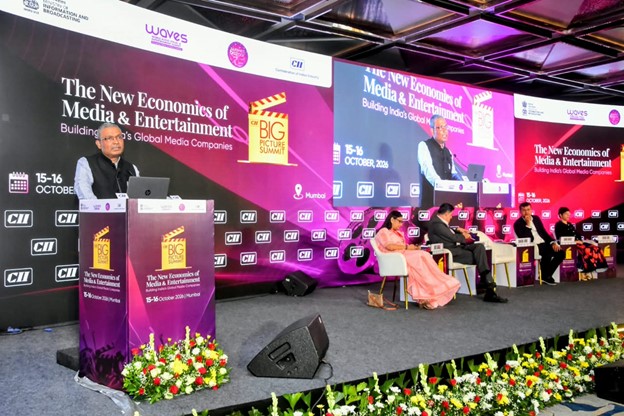
Addressing the inaugural session of the two-day CII Big Picture Summit 2026 in Mumbai on Thursday, Kumar emphasised the need for sustainable business models, stronger global market access and greater investment in original content and creative technology.
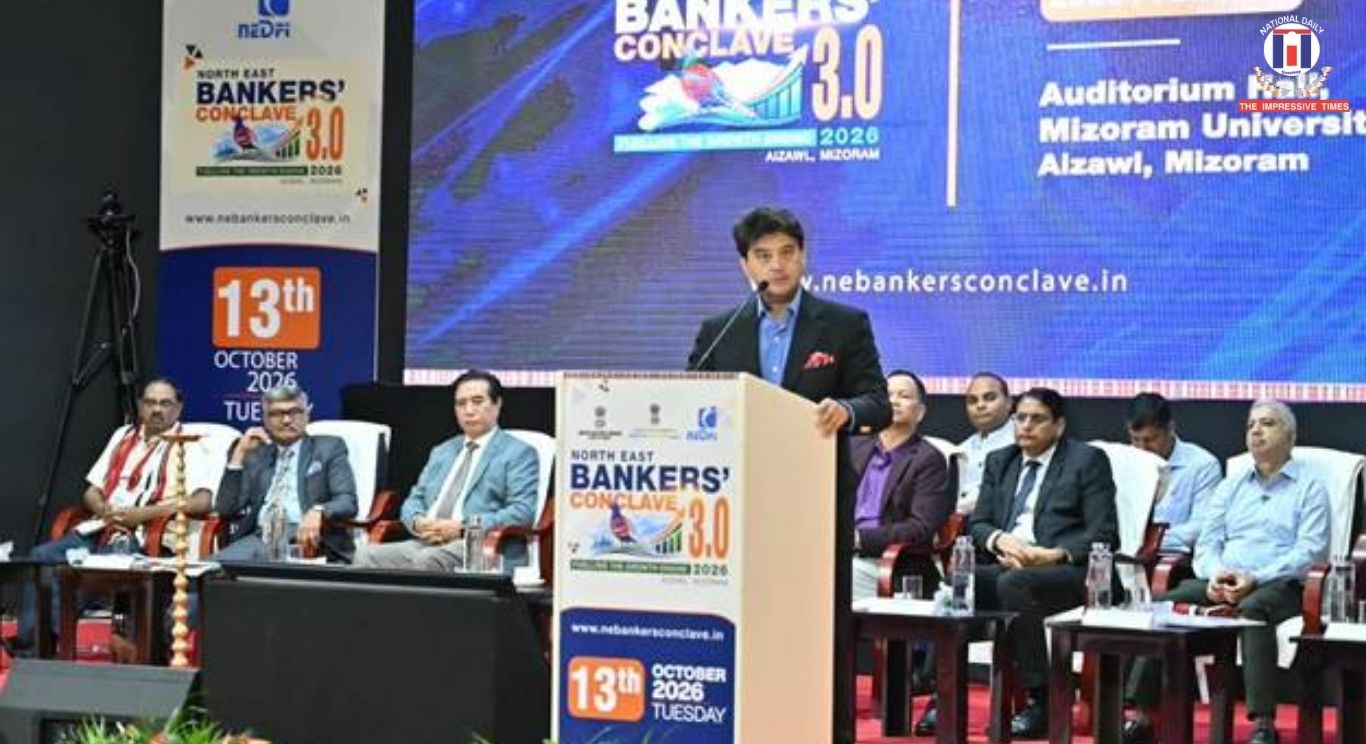
The summit, themed “The New Economics of Media and Entertainment: Building India’s Future Global Media Companies,” brought together industry leaders to discuss strategies for strengthening India’s position in the global media and entertainment landscape.
Kumar said India could convert its rich storytelling traditions, cultural diversity and creative talent into long-term economic and cultural value. He linked the summit’s objectives to Prime Minister Narendra Modi’s vision of “Create In India, Create For The World”, highlighted at WAVES 2025.
Government Initiatives to Strengthen the Creative Economy
Kumar highlighted government initiatives aimed at developing India’s creative ecosystem, including WAVES, WAVES Bazaar, the Indian Institute of Creative Technologies (IICT) and India Cine Hub.
He also stressed the importance of a robust anti-piracy framework to protect intellectual property and ensure that creators and businesses benefit from their work.
Emphasising the need to build globally scalable Indian media businesses, he outlined the vision: “Create in India. Own in India. Scale from India. Take it to the world.”
CII White Paper Sets $100-Billion Industry Target
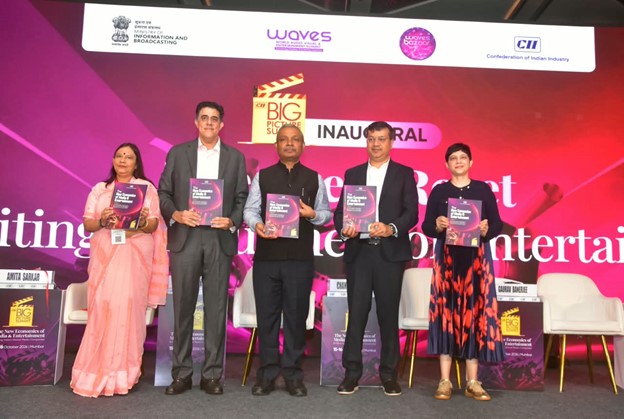
A major highlight of the summit was the release of the Confederation of Indian Industry’s (CII) white paper, The New Economics of Media & Entertainment.
The report presents a roadmap for India’s media and entertainment sector to reach $100 billion by the early 2030s. It calls for faster reforms, stronger regional markets and measurable implementation of industry growth strategies.
The report also highlights the need for business models that can translate India’s large audience base and creative capabilities into sustainable revenue and international competitiveness.
Industry Leaders Emphasise Sustainable Business Models and AI
Gaurav Banerjee, Summit Chair and Managing Director and CEO of Sony Pictures Networks India, called for a fundamental reassessment of media business models.
He said a large audience was only the starting point, stressing the importance of delivering value to audiences, measurable outcomes for advertisers and sustainable returns for investors.
Gunjan Soni, Summit Co-Chair and Country Managing Director of YouTube India, described creativity and culture as important economic strengths supporting India’s Viksit Bharat ambition. She highlighted the potential of digital technology and artificial intelligence to help young creators transform local stories and ideas into globally competitive enterprises.
Rajan Navani, Summit Co-Chair and Managing Director and CEO of JetSynthesys, said wider access to technology and AI was essential for keeping pace with global developments. He noted that AI was rapidly narrowing the gap between human imagination and the ability to bring creative ideas to life.
WAVES Global Investor and Investee Meet Connects Creative Businesses
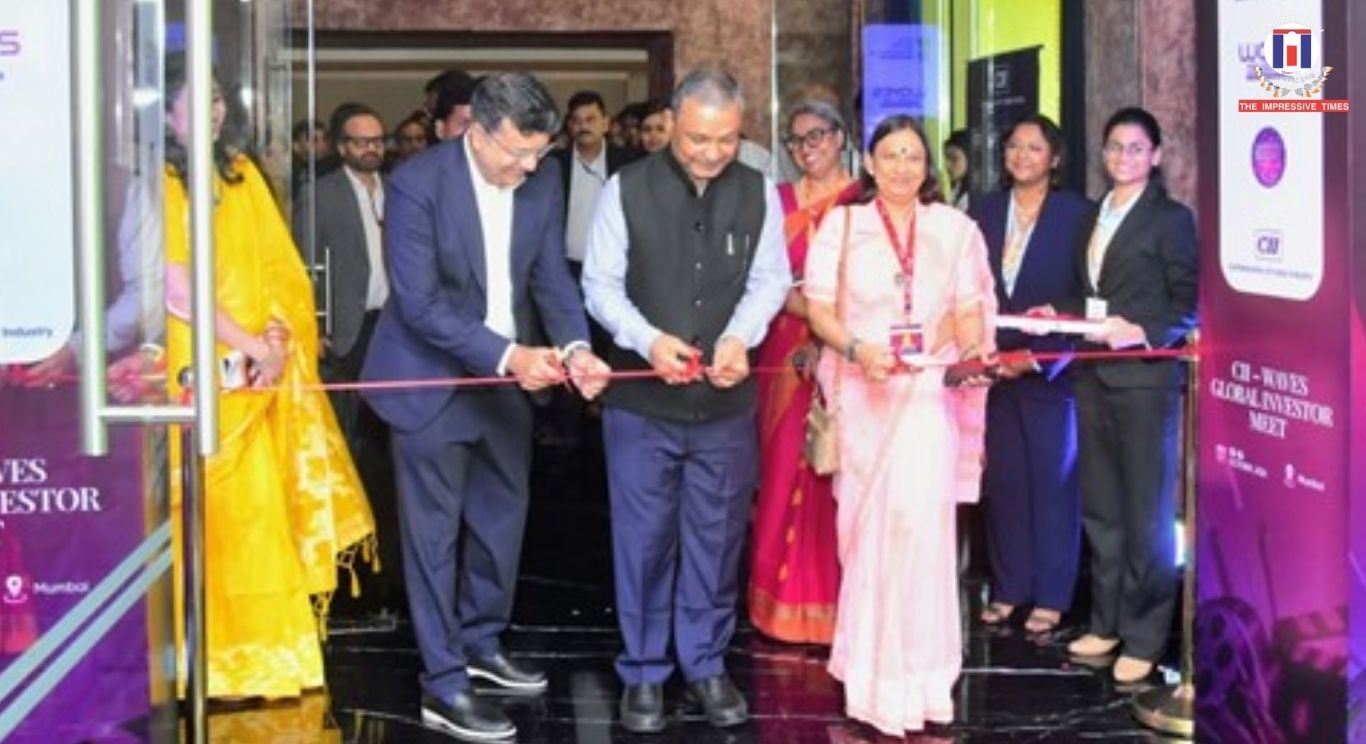
Kumar also inaugurated the WAVES Global Investor and Investee Meet, which brought together more than 150 investors and investees to strengthen connections between capital providers and emerging creative businesses.
The initiative connected nearly 20 participants from WaveX and WAVES Bazaar, providing opportunities for creative enterprises to engage with potential investors and explore avenues for growth.
The summit underscored the importance of combining original content, technology, intellectual property protection and investment to strengthen India’s media and entertainment industry and expand its global reach.

























![UEFA Champions League: 10-men United fall 2-0 to Atleti; Viking hold Bayern to 3-3 draw ANI | Updated: Oct 14, 2026 09:08 IST Madrid [Spain], October 14 (ANI): Manchester United’s 2026/27 season is turning out to be a disaster after the club showed promise following Michael Carrick taking the helm of the club in January, as it faced another loss on Tuesday (local time). In its first away fixture for this season’s UEFA Champions League at the Estadio Metropolitano stadium, the Red Devils were handed a 2-0 defeat by Atletico Madrid, causing the club more misery as it also struggles domestically. Pablo Barrios scored inside the opening minute for Atletico before substitute Ademola Lookman sealed the victory late in the second half. Barrios capitalised on an early lapse in Manchester United’s defence to put Atletico ahead within the first 60 seconds of the match. Despite the initial shock of conceding so early, United pushed for an equaliser, with Bryan Mbeumo leading the attack on most occasions without any significant result. The hosts controlled much of the first half with their high-intensity pressing and possession. Alejandro Grimaldo came close to extending the lead with a free kick that struck the woodwork. Manchester United looked to respond after the break but struggled to create any clear chances against Atletico’s defence. Bruno Fernandes came close to equalising in the 70th minute, rattling the crossbar with an effort from distance. ‹› United’s task became more difficult in the 74th minute when defender Leny Yoro received a red card over a reckless challenge on Jonathan David. Atletico made their numerical advantage count five minutes later. Lookman, who had come on as a substitute, reacted quickest after goalkeeper Senne Lammens parried Jonathan David’s initial shot and found the back of the net in the 79th minute to seal the victory. Both teams have now recorded one win and one defeat in the opening stages of the Champions League league phase. Elsewhere, Norwegian side Viking FK held Bayern Munich to a dramatic 3-3 draw in the league phase. Viking mounted a late comeback to earn a draw after Bayern had overturned a two-goal deficit. At the Viking Stadion in Stavanger, Norwegian side Viking FK held Bayern Munich to a 3-3 draw, scoring a dramatic late equaliser after the German side had overturned a two-goal deficit. Gianni Stensness gave Viking an early lead in the second minute with a header from a corner before Peter Christiansen doubled their advantage in the 38th minute. Bayern responded after the break, with Harry Kane scoring twice in the 54th and 60th minutes to level the score. Luis Diaz put the visitors ahead in the 71st minute. However, Bayern were reduced to 10 men three minutes later after Michael Olise received his second yellow card. Viking capitalised on the advantage as Herman Haugen scored in the 90th minute to secure a 3-3 draw. With one win and one draw, Bayern are placed fourth with four points, while Viking are 26th with a draw and a loss. (ANI)](https://impressivetimes.com/wp-content/uploads/2026/10/TIT-Website-Image-4-5.jpg)






No Comments: