
 The Impressive Times
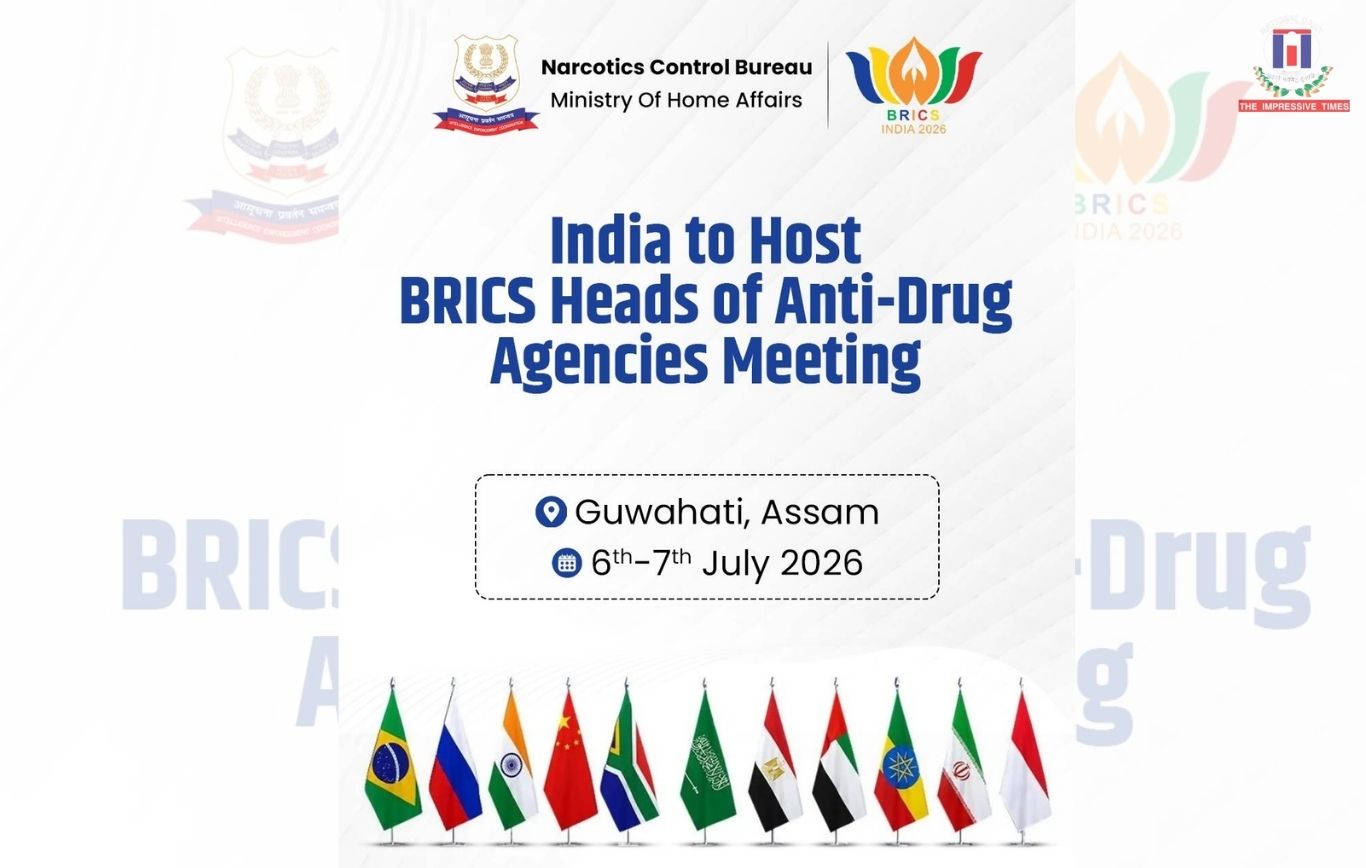
Guwahati, July 5, 2026: India is set to convene the BRICS Heads of Anti-Drug Agencies Meeting in Guwahati, Assam, on July 6–7, bringing together senior narcotics enforcement officials from all 11 BRICS member nations. The two-day gathering aims to deepen collaboration in tackling evolving drug-related crimes through stronger intelligence exchange, operational coordination and institutional partnerships.
Organised by the Narcotics Control Bureau (NCB) under the Ministry of Home Affairs, the meeting comes at a time when international drug trafficking networks are increasingly exploiting synthetic narcotics, new psychoactive substances (NPS), encrypted online platforms and cryptocurrency-based financial systems. These emerging threats have prompted member countries to strengthen collective strategies against organised drug crime.
As the current BRICS Chair, India will encourage member nations to move beyond policy discussions towards practical cooperation. The agenda is expected to prioritise real-time intelligence sharing, coordinated enforcement operations, joint investigations, training initiatives and stronger institutional mechanisms to address cross-border narcotics trafficking.
The discussions will also focus on improving monitoring of precursor chemicals used in the illegal manufacture of drugs, sharing information on clandestine laboratories and exchanging best practices for combating the growing synthetic drug trade.
The Guwahati meeting will centre on three major priorities:
Delegates will participate in six specialised sessions covering major global challenges linked to narcotics control. The discussions will examine the use of digital technologies for real-time interdiction, methods to disrupt darknet-based drug trafficking, strategies to tackle emerging psychoactive substances, measures to secure global supply chains against chemical diversion, initiatives to reduce drug demand through awareness and rehabilitation, and ways to strengthen institutional frameworks for sustained cooperation.
The meeting will also provide India with an opportunity to present its comprehensive approach to combating drug abuse and trafficking. Alongside intensified enforcement against organised criminal syndicates, the government has expanded efforts in public awareness, rehabilitation and community participation to reduce substance abuse.
India has recently introduced its Vision Document on Narcotics Control (2026–2029), outlining a long-term roadmap to reinforce enforcement capabilities, improve inter-agency coordination and strengthen preventive measures against narcotics-related crimes.
The conference is expected to conclude with the adoption of a Joint Declaration, outlining shared commitments to enhance cooperation, improve information exchange and strengthen collective efforts against global drug trafficking networks.
India’s BRICS Presidency in 2026 is being guided by the theme “Building for Resilience, Innovation, Cooperation and Sustainability.” The grouping comprises Brazil, China, Egypt, Ethiopia, India, Indonesia, Iran, Russia, Saudi Arabia, South Africa and the United Arab Emirates, and continues to serve as a key platform for cooperation on global political, economic and security issues, including transnational crime and narcotics control.

























No Comments: