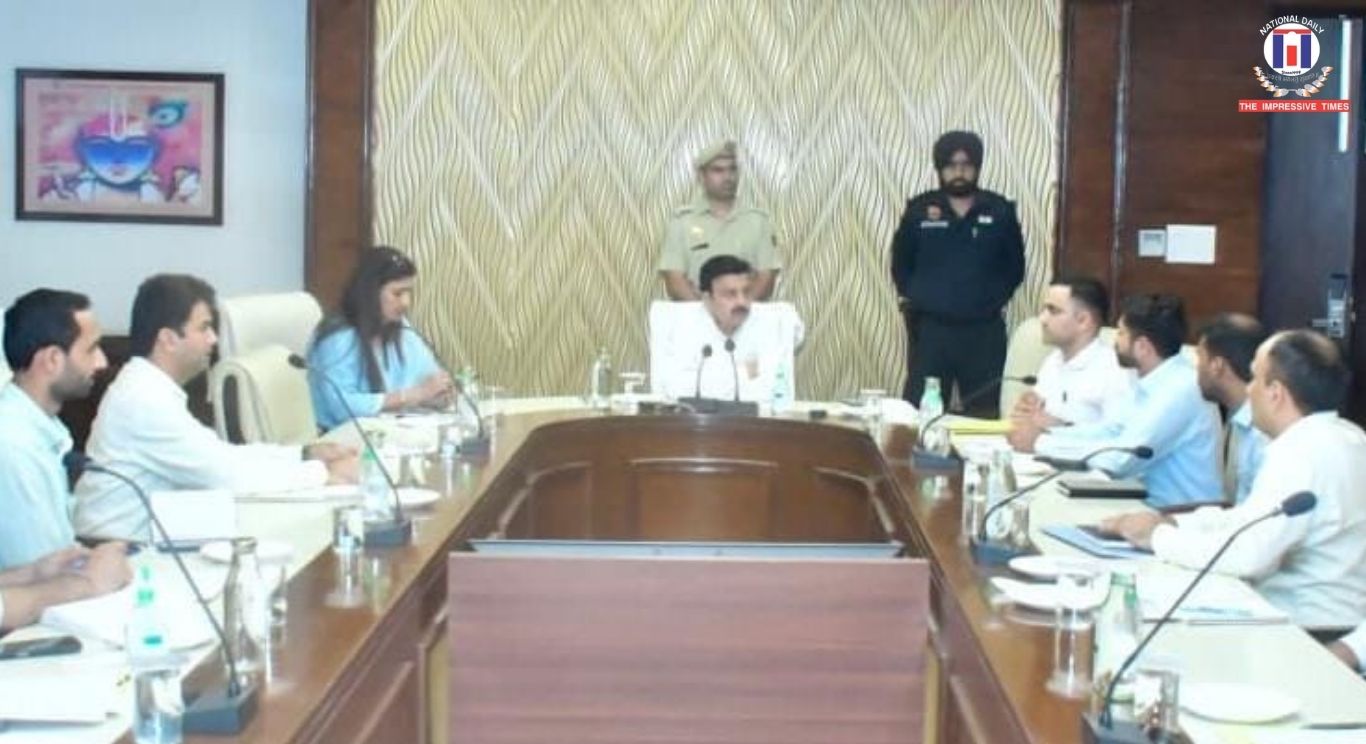
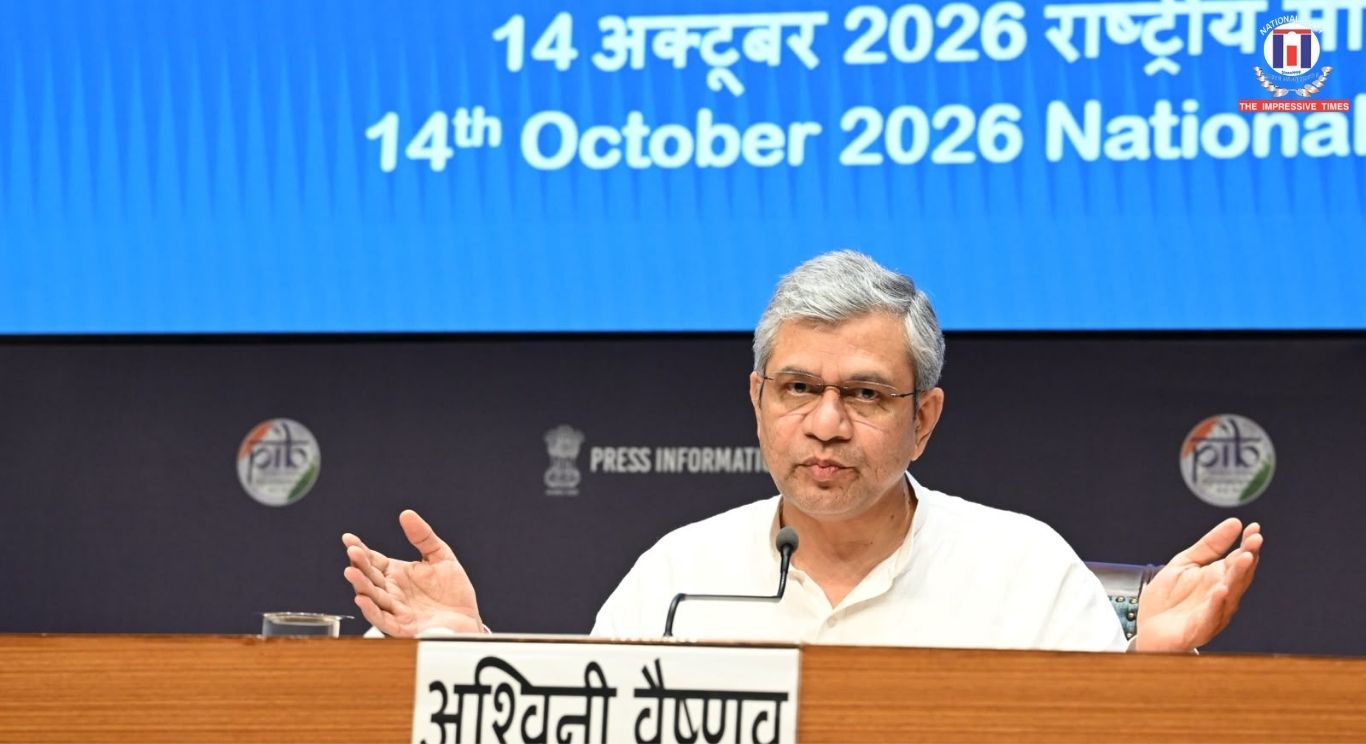
The interaction brought together innovators and senior officials from central and state government agencies to explore ways of converting emerging technologies into solutions that can be implemented on the ground. Union Minister of State for Environment Kirti Vardhan Singh and Delhi Environment Minister Manjinder Singh Sirsa were also present at the meeting.
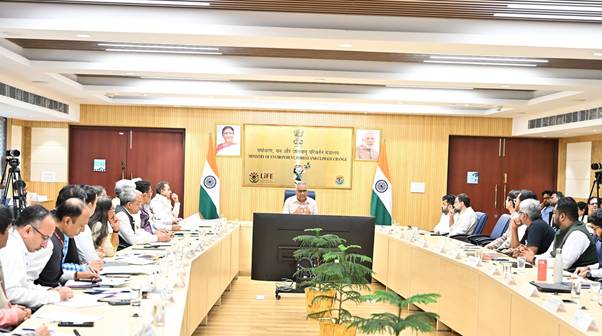
The discussions covered nine key areas of air pollution management, including industrial emissions, vehicular pollution, construction dust, road maintenance, crop-residue burning and waste management. The initiative forms part of the campaign ‘Saaf Hawa Mein Hissedaari, Hum Sabhi Ki Hai Zimmedaari’, which seeks wider participation in improving air quality.
AI and Real-Time Monitoring in Focus
A major focus of the meeting was the use of artificial intelligence, sensors, satellite imagery, drones and data analytics to identify pollution sources and strengthen monitoring systems.
Proposals included AI-based detection of industrial emission violations, real-time monitoring of diesel generator pollution-control systems and improved oversight of Online Continuous Emission Monitoring Systems (OCEMS). The technologies could help authorities identify irregularities more quickly and improve compliance with environmental standards.
The meeting also examined ways to make Pollution Under Control (PUC) testing more reliable through tamper-proof systems. Automated identification of vehicles operating without valid PUC certificates and those exceeding prescribed age limits was among the technologies showcased by participating innovators.
City-wide and hyperlocal air-quality monitoring, pollution hotspot mapping, forecasting systems and AI-assisted identification of pollution sources were also discussed. Predictive traffic management technology could help authorities identify congestion hotspots and take measures to reduce vehicle emissions.
Yadav stressed the importance of connecting industrial emission data with plant-operation records to identify possible manipulation and strengthen enforcement. He also underlined the need for wider air-quality monitoring networks and cleaner vehicles, supported by better traffic management.
Construction Dust and Road Pollution
Road dust and dust generated by construction and demolition activities were among the other major areas discussed during the interaction.
Start-ups presented technologies for detecting and controlling dust at construction sites, monitoring the resuspension of road dust and improving the efficiency of mechanised road sweeping. Portable pothole-repair systems and modular dust-containment solutions were also considered as potential tools for reducing pollution from roads and construction activities.
The minister highlighted the need for faster road maintenance and more effective dust-control measures, noting that technological interventions must address pollution at its source rather than rely solely on general monitoring.
The proposed solutions are intended to complement existing measures, including the Graded Response Action Plan (GRAP), cleaner-fuel initiatives and the promotion of electric mobility.
Crop Residue and Waste Management
Agricultural residue management and the productive use of waste also featured prominently in the discussions.
Technology companies showcased systems for monitoring stubble and open biomass burning around the clock, alongside solutions to collect, transport and utilise paddy straw for bioenergy, biomass fuel and composting. Crop-residue-based materials, biochar and environmentally friendly packaging were highlighted as potential alternatives to burning agricultural waste in the open.
Yadav called for coordinated efforts involving the Ministry of Agriculture and Farmers Welfare, the Commission for Air Quality Management and the Central Pollution Control Board to develop guidelines for storing paddy straw. An in-situ storage model was also discussed to improve residue management at the local level.
The meeting further explored ways to connect recycled construction and demolition waste products with demand from the construction industry, along with technology-enabled approaches to municipal solid waste management.
Government Seeks Scalable Technology Solutions
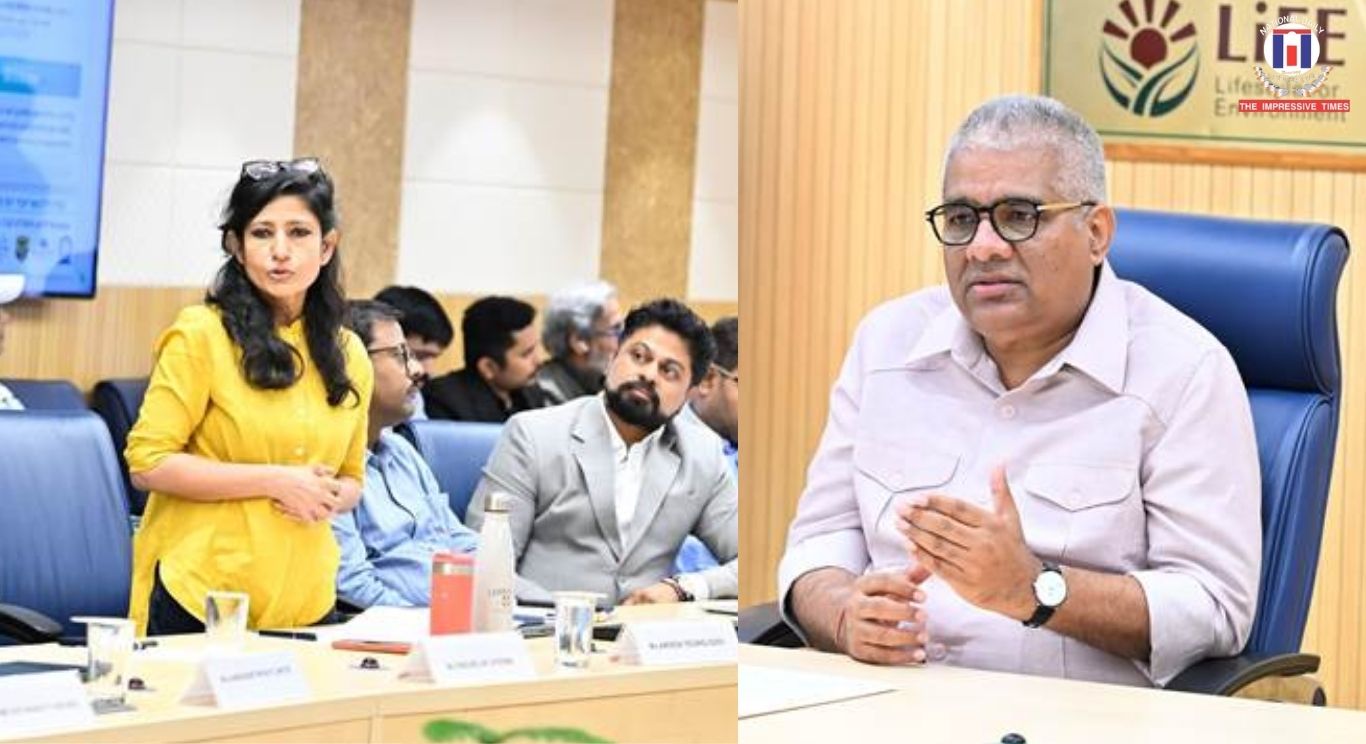
Addressing the participants, Yadav described engagement with start-ups as an effort to strengthen cooperation between policymakers and technology developers. He said such interactions could improve consistency in policy implementation and bring greater transparency to environmental governance.
The minister encouraged innovators to tailor their solutions to clearly identified field-level requirements and focus on technologies that are economically viable, practical and capable of wider deployment across Delhi-NCR.
The discussions highlighted the role of machine learning, Internet of Things-based monitoring, advanced sensors, remote sensing and drone-based mapping in improving pollution detection and enforcement. Officials and innovators also examined how different technologies could be integrated into a coordinated system rather than deployed as isolated interventions.
The initiative seeks to bring government agencies, technology companies and field-level implementers together to develop measurable responses to the region’s air pollution challenges. Its effectiveness will ultimately depend on the deployment of these solutions, their affordability and their ability to deliver verifiable improvements in air quality.






















![UEFA Champions League: 10-men United fall 2-0 to Atleti; Viking hold Bayern to 3-3 draw ANI | Updated: Oct 14, 2026 09:08 IST Madrid [Spain], October 14 (ANI): Manchester United’s 2026/27 season is turning out to be a disaster after the club showed promise following Michael Carrick taking the helm of the club in January, as it faced another loss on Tuesday (local time). In its first away fixture for this season’s UEFA Champions League at the Estadio Metropolitano stadium, the Red Devils were handed a 2-0 defeat by Atletico Madrid, causing the club more misery as it also struggles domestically. Pablo Barrios scored inside the opening minute for Atletico before substitute Ademola Lookman sealed the victory late in the second half. Barrios capitalised on an early lapse in Manchester United’s defence to put Atletico ahead within the first 60 seconds of the match. Despite the initial shock of conceding so early, United pushed for an equaliser, with Bryan Mbeumo leading the attack on most occasions without any significant result. The hosts controlled much of the first half with their high-intensity pressing and possession. Alejandro Grimaldo came close to extending the lead with a free kick that struck the woodwork. Manchester United looked to respond after the break but struggled to create any clear chances against Atletico’s defence. Bruno Fernandes came close to equalising in the 70th minute, rattling the crossbar with an effort from distance. ‹› United’s task became more difficult in the 74th minute when defender Leny Yoro received a red card over a reckless challenge on Jonathan David. Atletico made their numerical advantage count five minutes later. Lookman, who had come on as a substitute, reacted quickest after goalkeeper Senne Lammens parried Jonathan David’s initial shot and found the back of the net in the 79th minute to seal the victory. Both teams have now recorded one win and one defeat in the opening stages of the Champions League league phase. Elsewhere, Norwegian side Viking FK held Bayern Munich to a dramatic 3-3 draw in the league phase. Viking mounted a late comeback to earn a draw after Bayern had overturned a two-goal deficit. At the Viking Stadion in Stavanger, Norwegian side Viking FK held Bayern Munich to a 3-3 draw, scoring a dramatic late equaliser after the German side had overturned a two-goal deficit. Gianni Stensness gave Viking an early lead in the second minute with a header from a corner before Peter Christiansen doubled their advantage in the 38th minute. Bayern responded after the break, with Harry Kane scoring twice in the 54th and 60th minutes to level the score. Luis Diaz put the visitors ahead in the 71st minute. However, Bayern were reduced to 10 men three minutes later after Michael Olise received his second yellow card. Viking capitalised on the advantage as Herman Haugen scored in the 90th minute to secure a 3-3 draw. With one win and one draw, Bayern are placed fourth with four points, while Viking are 26th with a draw and a loss. (ANI)](https://impressivetimes.com/wp-content/uploads/2026/10/TIT-Website-Image-4-5.jpg)



No Comments: