District and Sessions Judge Arvind Kumar Mishra announced the punishment on Wednesday, October 14, after finding both accused guilty of murder and attempting to destroy evidence.
The case had attracted nationwide attention because of the circumstances surrounding the killing and the manner in which the victim’s remains were concealed.
The verdict followed a lengthy judicial process involving more than 100 hearings and testimony from 22 prosecution witnesses.
According to prosecution lawyer K.K. Chaubey, the court considered the gravity of the crime while determining the punishment.
Chaubey said the judge also referred to the Mahabharata while explaining the importance of imposing punishment proportionate to the seriousness of an offence.
Along with the death penalty, the court imposed fines amounting to ₹70,000 on each convict for murder and the destruction of evidence.
Both Rastogi and Shukla attended the proceedings through video conferencing.
Reports indicated that the two became emotional after hearing the sentence.
The detailed written judgment was awaited following the announcement.
Saurabh Rajput, a 35-year-old merchant navy officer, had returned to Meerut from London towards the end of February 2025.
He was subsequently reported missing after his family members were unable to contact or locate him.
Concerned about his disappearance, the family approached the police, prompting an investigation.
During the inquiry, investigators discovered Rajput’s remains inside a blue plastic drum at the residence he shared with his wife.
The discovery became a central element of the investigation and brought the case into the national spotlight.
According to police findings presented during the investigation, Rastogi and Shukla allegedly administered a sedative to Rajput before attacking him with a knife.
Investigators concluded that the victim’s body was subsequently dismembered and placed inside a large plastic container.
The container was then filled with cement and sand in an apparent attempt to conceal the remains and prevent the discovery of the crime.
Police personnel reportedly required industrial equipment to break through the hardened material and retrieve the remains.
Investigators also examined claims that the couple’s young daughter had indicated the location of the container when questioned about her father’s whereabouts.
The details emerging from the investigation intensified public attention on the case.
Police alleged that Rastogi and Shukla travelled to Himachal Pradesh following the killing.
The trip became another important aspect of the investigation as authorities reconstructed the sequence of events surrounding Rajput’s disappearance.
Investigators examined the movements and communications of the accused to establish the circumstances leading up to the murder.
The prosecution subsequently presented evidence intended to demonstrate their involvement in the crime and the efforts made to conceal it.
In May 2025, police submitted an extensive chargesheet running to approximately 1,000 pages.
The document included forensic findings, call detail records, CCTV footage and statements recorded from witnesses.
These materials formed an important part of the prosecution’s case during the trial.
The court examined the evidence and witness testimony before convicting Rastogi and Shukla.
The judicial proceedings continued for several months before the sentencing order was pronounced on October 14.
The Meerut murder case became one of the most widely discussed criminal investigations of 2025.
The discovery of the victim’s remains inside a cement-filled drum generated considerable public reaction.
The case also drew attention because of the relationship between the victim and those accused of his murder.
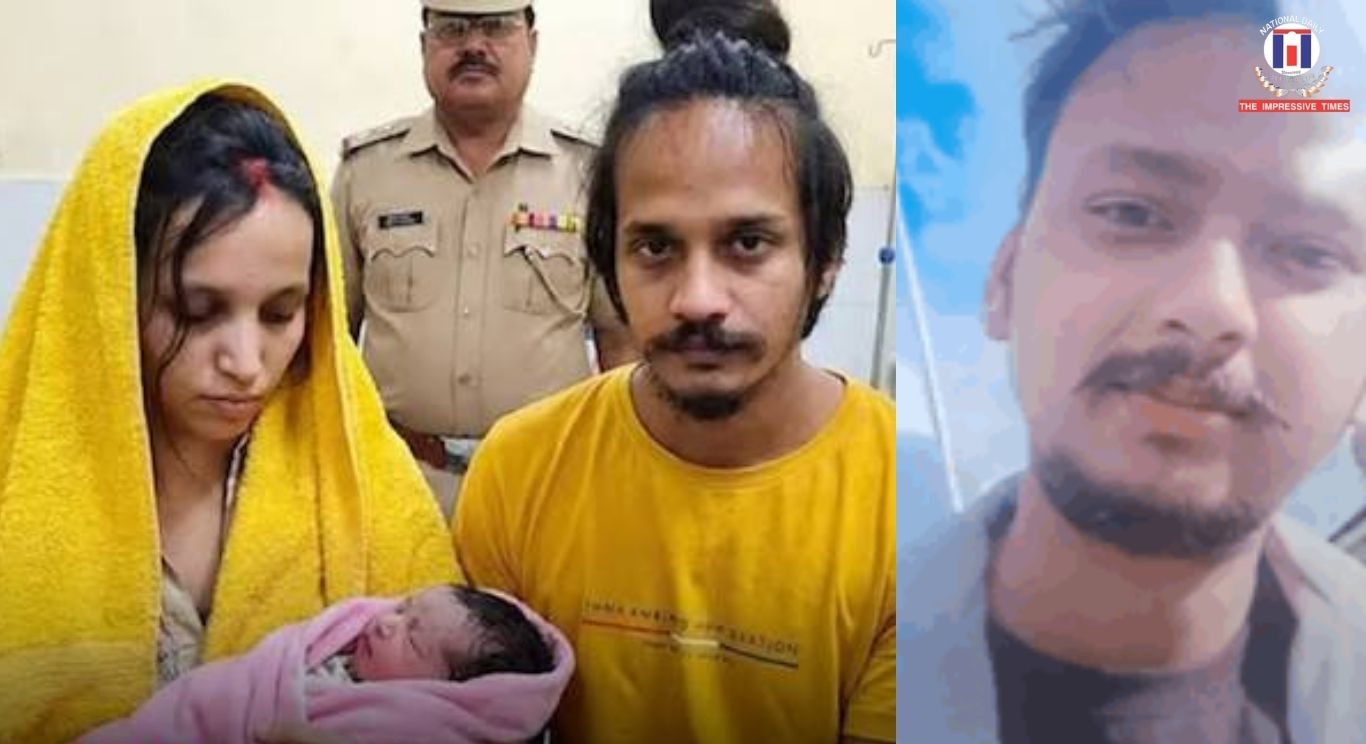
During her imprisonment, Rastogi gave birth to a daughter. According to reports, she had been pregnant at the time of the crime.
The development added another dimension to a case already attracting extensive media coverage.
With the sentencing announcement, the trial court has completed a significant stage of the criminal proceedings.
However, a death sentence awarded by a sessions court must be confirmed by the High Court before it can be carried out. The convicts also have the right to pursue legal appeals.
The detailed judgment is expected to provide further clarity on the court’s reasoning and assessment of the evidence.
The verdict marks an important development in a case that has remained under public scrutiny since the discovery of Saurabh Rajput’s remains in March 2025.

























![UEFA Champions League: 10-men United fall 2-0 to Atleti; Viking hold Bayern to 3-3 draw ANI | Updated: Oct 14, 2026 09:08 IST Madrid [Spain], October 14 (ANI): Manchester United’s 2026/27 season is turning out to be a disaster after the club showed promise following Michael Carrick taking the helm of the club in January, as it faced another loss on Tuesday (local time). In its first away fixture for this season’s UEFA Champions League at the Estadio Metropolitano stadium, the Red Devils were handed a 2-0 defeat by Atletico Madrid, causing the club more misery as it also struggles domestically. Pablo Barrios scored inside the opening minute for Atletico before substitute Ademola Lookman sealed the victory late in the second half. Barrios capitalised on an early lapse in Manchester United’s defence to put Atletico ahead within the first 60 seconds of the match. Despite the initial shock of conceding so early, United pushed for an equaliser, with Bryan Mbeumo leading the attack on most occasions without any significant result. The hosts controlled much of the first half with their high-intensity pressing and possession. Alejandro Grimaldo came close to extending the lead with a free kick that struck the woodwork. Manchester United looked to respond after the break but struggled to create any clear chances against Atletico’s defence. Bruno Fernandes came close to equalising in the 70th minute, rattling the crossbar with an effort from distance. ‹› United’s task became more difficult in the 74th minute when defender Leny Yoro received a red card over a reckless challenge on Jonathan David. Atletico made their numerical advantage count five minutes later. Lookman, who had come on as a substitute, reacted quickest after goalkeeper Senne Lammens parried Jonathan David’s initial shot and found the back of the net in the 79th minute to seal the victory. Both teams have now recorded one win and one defeat in the opening stages of the Champions League league phase. Elsewhere, Norwegian side Viking FK held Bayern Munich to a dramatic 3-3 draw in the league phase. Viking mounted a late comeback to earn a draw after Bayern had overturned a two-goal deficit. At the Viking Stadion in Stavanger, Norwegian side Viking FK held Bayern Munich to a 3-3 draw, scoring a dramatic late equaliser after the German side had overturned a two-goal deficit. Gianni Stensness gave Viking an early lead in the second minute with a header from a corner before Peter Christiansen doubled their advantage in the 38th minute. Bayern responded after the break, with Harry Kane scoring twice in the 54th and 60th minutes to level the score. Luis Diaz put the visitors ahead in the 71st minute. However, Bayern were reduced to 10 men three minutes later after Michael Olise received his second yellow card. Viking capitalised on the advantage as Herman Haugen scored in the 90th minute to secure a 3-3 draw. With one win and one draw, Bayern are placed fourth with four points, while Viking are 26th with a draw and a loss. (ANI)](https://impressivetimes.com/wp-content/uploads/2026/10/TIT-Website-Image-4-5.jpg)










No Comments: