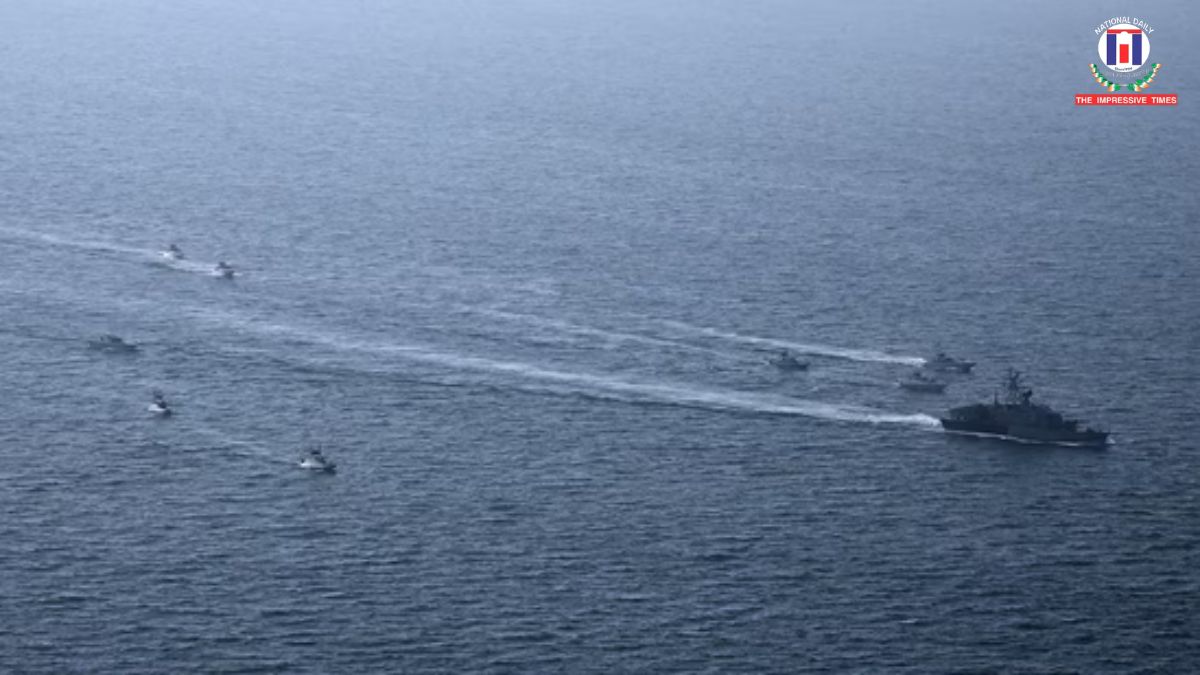
Iran’s so-called “mosquito fleet” has come under renewed focus amid rising tensions over the Strait of Hormuz, with analysts pointing to the small, fast attack boats as a key component of Tehran’s strategy to threaten or disrupt maritime traffic through one of the world’s most important energy chokepoints.
The term refers to a flotilla associated with the naval wing of the Islamic Revolutionary Guard Corps, built around speed, agility and swarm-style tactics rather than conventional naval power. Unlike traditional warships, the fleet is designed for asymmetric warfare, relying on hit-and-run attacks, rapid deployment and the ability to challenge larger naval forces through numbers and unpredictability.
Security analysts say the strategy centers on using small, heavily armed boats capable of high speeds, often supported by missiles, drones and other assets positioned along Iran’s coastline. This combination has fueled concern that the fleet could play a major role in any effort to restrict movement through the Strait of Hormuz.
Part of the concern stems from how difficult the boats can be to track and target. Their small size, alleged concealment in fortified coastal locations and ability to deploy quickly have contributed to perceptions that they remain a disruptive threat despite pressure on Iran’s broader naval assets.
The issue has gained greater attention during heightened conflict in the region, where the security of commercial shipping has become a central concern. Because many merchant vessels lack defensive capabilities, analysts say they could be especially vulnerable in scenarios involving harassment or coordinated swarm attacks.
Supporters of the threat assessment argue the fleet gives Iran leverage disproportionate to its size, particularly in narrow waters where maneuverability and surprise can complicate conventional military responses.
Whether the fleet could enforce a sustained blockade remains debated, but its role in shaping calculations around maritime security in the Gulf has become increasingly difficult to ignore. For global markets and regional security planners, the focus is less on the size of the boats than on the disruption they may be capable of causing.

















































No Comments: