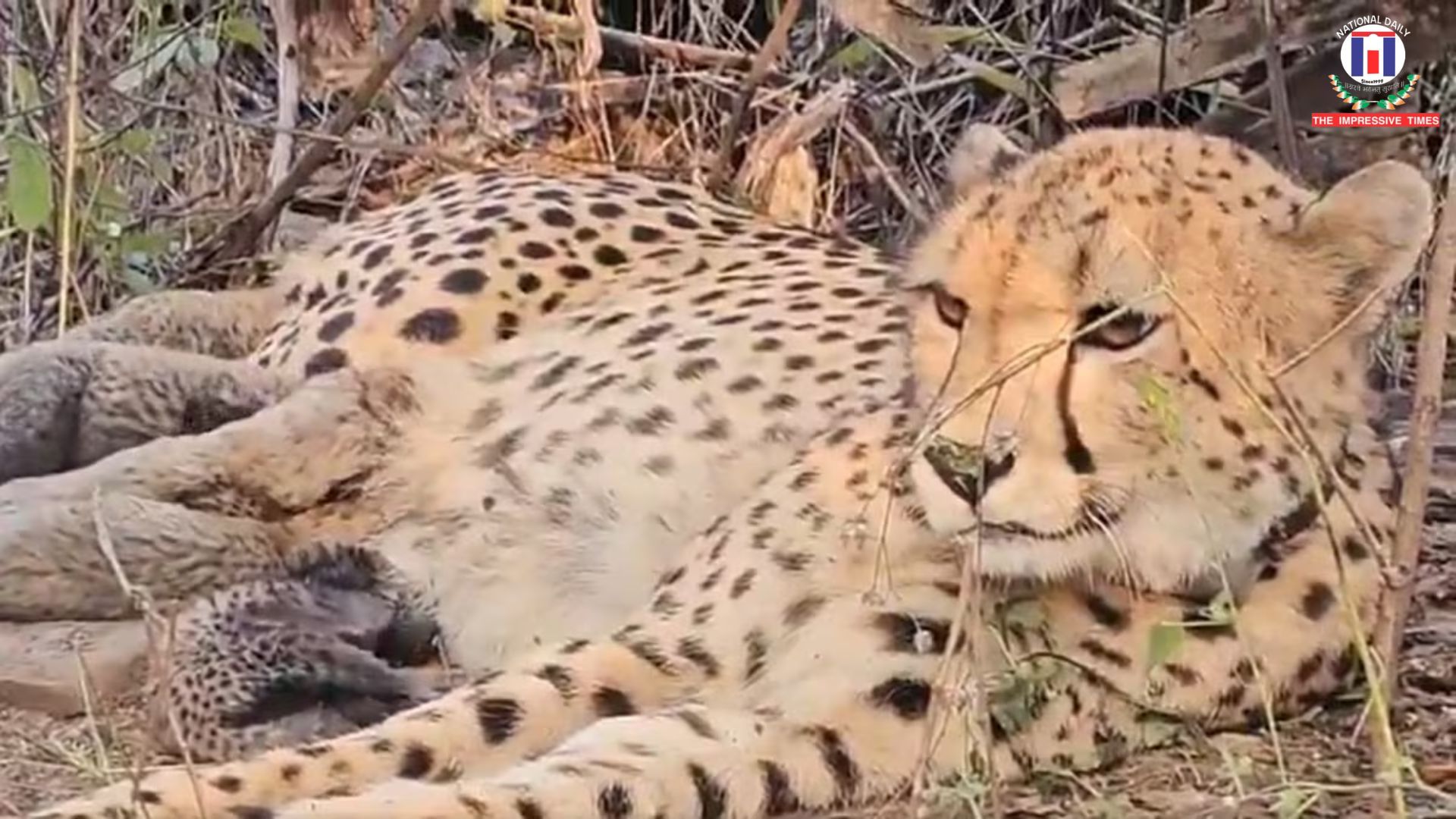
Bhopal, March 9: India’s ambitious effort to restore cheetahs to the wild has achieved another encouraging breakthrough with the birth of five cubs at Kuno National Park, taking the country’s total cheetah population to 53.
Wildlife authorities confirmed that the newborn cubs were delivered by one of the relocated female cheetahs that were introduced as part of the national cheetah restoration initiative. Forest officials and veterinarians are keeping a close watch on the mother and her young to ensure their health and safety during the early stages of development.
The cheetahs currently living in Kuno are part of Project Cheetah, a landmark programme launched to bring the species back to India decades after it disappeared from the country. Cheetahs had been declared extinct in India in the early 1950s, making this project one of the most significant wildlife restoration efforts in the nation’s history.
To rebuild the population, India relocated cheetahs from African nations including Namibia and South Africa. Since their arrival, wildlife teams have been closely tracking the animals through satellite collars and continuous field monitoring to help them adjust to the new habitat.
Conservation experts consider the birth of cubs a critical indicator that the animals are adapting successfully to the environment. Natural breeding in the wild is viewed as an important step toward establishing a stable and self-sustaining population in the region.
The growing numbers have boosted confidence among conservationists and forest officials who believe that with continued protection, monitoring, and habitat management, the cheetah population could steadily expand in the coming years.
The development has also generated excitement among wildlife enthusiasts and environmentalists across the country, who see the arrival of the new cubs as a hopeful sign for the future of large carnivore conservation in India.





































No Comments: