Indian Railways Records Sharp Drop in Train Accidents as Kavach Safety System Expands Across Key Routes

Railway Ministry Says Only Two Consequential Train Accidents Reported Till June 2026; Safety Investments and Technology Drive Operational Improvements
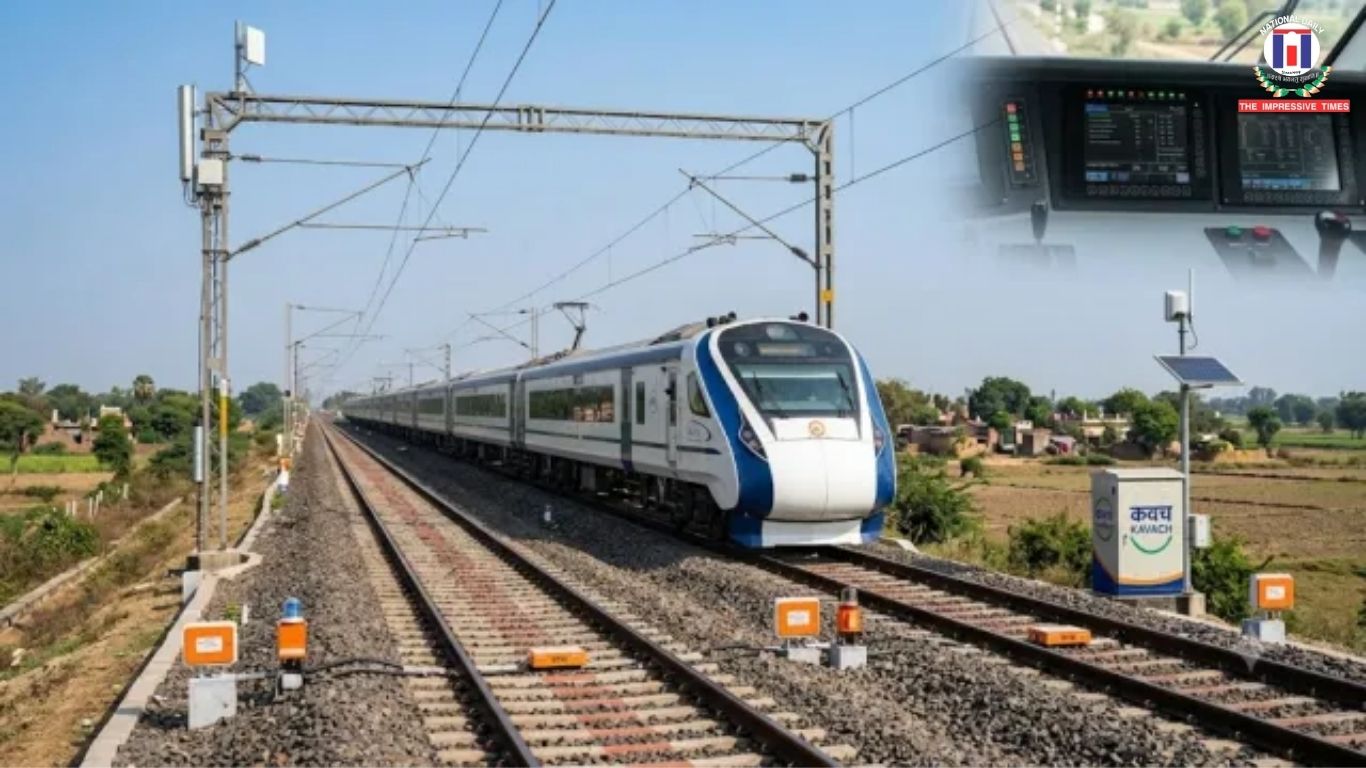
Indian Railways strengthens rail safety with Kavach 4.0 across the Delhi-Mumbai and Delhi-Howrah routes in 2026.

New Delhi, July 29:

Indian Railways has reported a significant improvement in rail safety, with only two consequential train accidents recorded during the first three months of the 2026-27 financial year (up to June 2026). The Ministry of Railways attributed the decline to sustained investments in modern infrastructure, advanced safety technology, and stricter maintenance practices implemented across the national rail network.
According to information shared by Union Railway Minister Ashwini Vaishnaw in the Lok Sabha on Tuesday, consequential train accidents have fallen dramatically over the past decade. While 135 such accidents were recorded in 2014-15, the number declined to 16 in 2025-26 and further reduced to just two in the current financial year up to June.

The ministry also highlighted a substantial improvement in the railway accident index, which measures accidents against total train kilometres operated. The index has fallen by more than 90 per cent over the past decade, indicating safer train operations despite increasing traffic.
Indian Railways has steadily increased spending on safety-related projects, with the allocation rising from ₹39,200 crore in 2013-14 to ₹1.20 lakh crore for 2026-27. The funds have been used for upgrading signalling systems, strengthening track infrastructure, replacing old rolling stock, and introducing modern monitoring technologies.

As part of signalling improvements, thousands of stations are now equipped with electronic interlocking systems and complete track circuiting to reduce the possibility of human error. Safety measures at level crossings have also been strengthened through interlocking of railway gates, while all unmanned broad-gauge level crossings had already been eliminated in 2019.

The ministry said Indian Railways continues to modernise its tracks by installing heavier rails, longer welded rail panels, advanced concrete sleepers, and mechanised track maintenance equipment. Regular ultrasonic testing, continuous track monitoring, and preventive inspections have also helped reduce rail fractures and weld failures significantly over the years.

Passenger safety has also been enhanced through the replacement of conventional ICF coaches with safer LHB coaches, installation of fire detection and suppression systems in coaches and pantry cars, and regular awareness campaigns on fire prevention.

A major focus remains the nationwide rollout of Kavach, India’s indigenous Automatic Train Protection (ATP) system. Kavach automatically applies brakes if a loco pilot fails to respond and helps trains operate safely, especially during poor visibility and adverse weather conditions.

The latest Kavach Version 4.0, approved in 2024 after extensive trials, has now been commissioned over 2,569 route kilometres. The system currently covers major sections of the high-density DelhiMumbai and Delhi-Howrah corridors, two of the busiest railway routes in the country.

Railway officials said Kavach Version 4.0 offers improved train location accuracy, enhanced signalling integration in large stations, and better communication between railway stations through optical fibre networks, making it suitable for large-scale deployment across India’s diverse rail network.

Beyond the commissioned sections, Kavach installation work is underway across more than 21,800 route kilometres covering major trunk routes and other identified sections. Supporting infrastructure such as optical fibre cables, telecom towers, station data centres and trackside equipment is also being installed alongside the expansion.

The ministry informed Parliament that more than 6,100 locomotives have already been equipped with Kavach, while installation work has begun on over 7,300 additional locomotives and around 1,200 EMU and MEMU train sets.

To support the technology rollout, Indian Railways has trained over 94,000 personnel, including nearly 57,000 loco pilots and assistant loco pilots, through specialised programmes conducted at railway training institutes.

According to the Railway Ministry, approximately ₹3,874 crore has been spent on Kavach implementation up to June 2026, while ₹2,066 crore has been earmarked for the project during the current financial year as the nationwide expansion continues.

No Comments:

Leave a Reply

Your email address will not be published. Required fields are marked *

National News

Education

More News