
 The Impressive Times
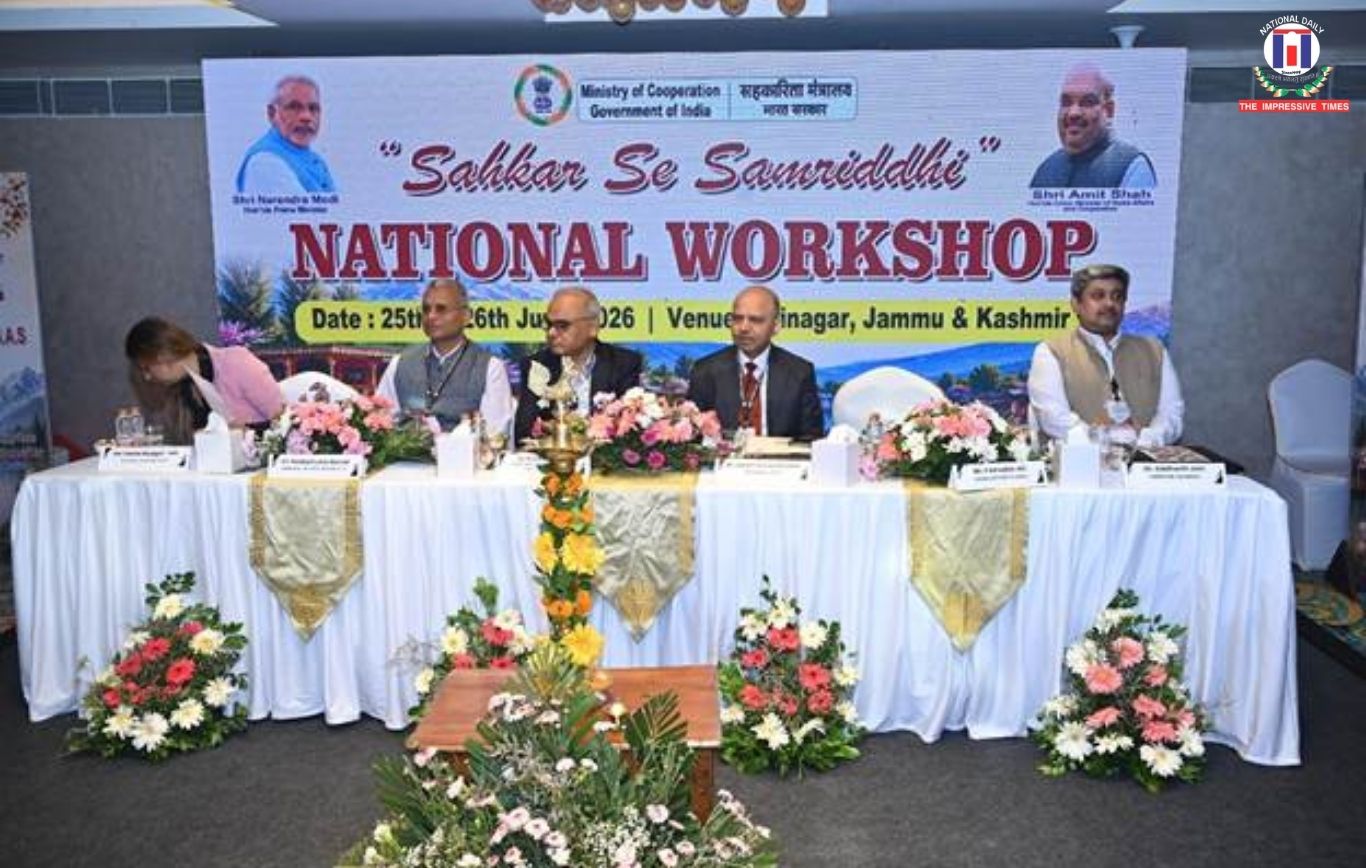
SRINAGAR: Ground-level experiences, practical challenges, and successful grassroots models took center stage at the 8th National Conference on ‘Sahkar se Samriddhi — From Vision to Ground Reality’, held in Srinagar, Jammu & Kashmir. The conference focused on shaping the future roadmap of India’s cooperative sector and accelerating the implementation of reforms aimed at strengthening rural prosperity and inclusive growth.
Organized under the vision of Prime Minister Narendra Modi’s “Sahkar se Samriddhi” initiative and guided by Union Home Minister and Minister of Cooperation Amit Shah, the conference brought together senior officials from States and Union Territories, Registrars of Cooperative Societies, national federations, cooperative institutions, and key stakeholders from across the cooperative ecosystem.
Addressing the gathering, Secretary, Ministry of Cooperation, Dr. Ashish Kumar Bhutani, described the creation of the Ministry of Cooperation as a landmark step in the history of India’s cooperative movement. He said the ministry has shifted from a regulatory approach to a development-oriented and result-driven framework aimed at making cooperatives powerful engines of rural development and economic inclusion.
Dr. Bhutani highlighted several major reforms undertaken during the past five years, including the computerization of Primary Agricultural Credit Societies (PACS), implementation of model bye-laws, formation of new multipurpose PACS, dairy and fishery cooperatives, and the establishment of national-level cooperative institutions focused on exports, organic products, and seeds.
He emphasized that the next phase of cooperative development must focus on quality, accountability, professional management, and measurable impact at the grassroots level. While policy reforms and institutional frameworks have been strengthened, the priority now is effective implementation and delivery.
Technology adoption emerged as a key theme during the conference. Dr. Bhutani stressed the need for cooperative banks to embrace modern digital platforms and data-driven governance systems to remain competitive in an era dominated by UPI and digital financial services. He advocated for common technology solutions, improved governance, and enhanced financial discipline across cooperative institutions.
The conference also highlighted the role of cooperatives in sustainability and clean energy initiatives. Discussions explored opportunities in dairy waste management, compressed biogas production, sugar by-products, and organic farming, with participants noting that cooperatives can play a significant role in generating additional income for rural communities while promoting environmental sustainability.
A major focus was placed on strengthening PACS, considered the backbone of India’s cooperative structure. States and UTs were encouraged to accelerate the formation of new cooperatives and expand business diversification opportunities to make PACS vibrant economic centers in rural areas.
The event featured a state-led format, enabling participants to share best practices, innovations, challenges, and success stories. Special sessions examined cooperative development in the Northeast and discussed strategies for region-specific growth and improved market access.
National institutions including NABARD, NDDB, IFFCO, KRIBHCO, NAFED, NCCF, and NCDC contributed insights on financing, capacity building, and market support. The conference also emphasized digital transformation, AI-driven governance, and the development of national value chains through new-age cooperative institutions.
The deliberations concluded with actionable recommendations and six-month targets for states and union territories, reinforcing the commitment to strengthening India’s cooperative movement and realizing the vision of “Sahkar se Samriddhi” through effective grassroots implementation.






































No Comments: