India’s Samriddh Gram Initiative Wins Prestigious WSIS Prize 2026
DoT initiative powered by BharatNet earns global recognition for delivering healthcare, education, banking and governance services to villages

 The Impressive Times
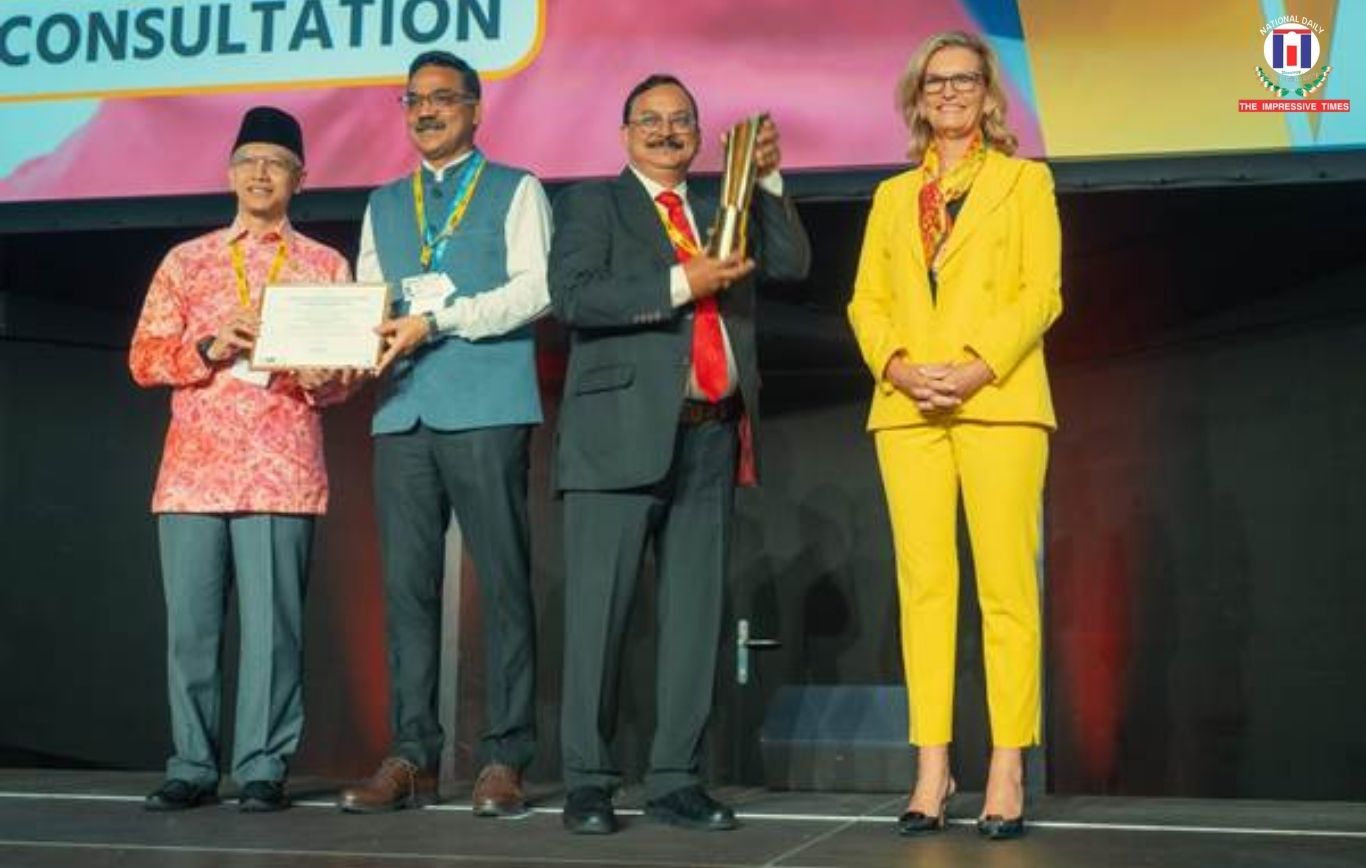
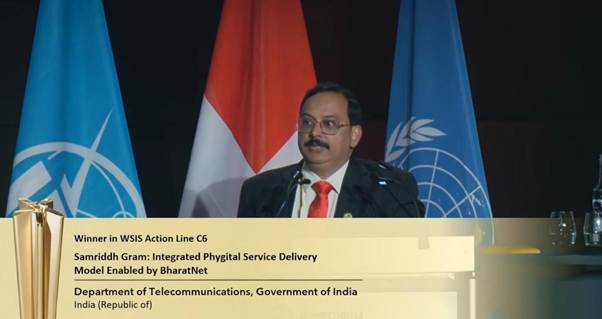
NEW DELHI: India’s efforts to bridge the digital divide received a major international endorsement on Thursday as the Department of Telecommunications’ (DoT) flagship Samriddh Gram initiative secured the World Summit on the Information Society (WSIS) Prize 2026 in the Action Line C6 – Enabling Environment category. The award was presented during the WSIS Forum 2026 in Geneva, recognising the project’s innovative model of delivering digital public services to rural communities through BharatNet-enabled connectivity.

Organised under the International Telecommunication Union (ITU), the WSIS Prizes honour outstanding digital initiatives that use information and communication technologies to accelerate sustainable development. The annual forum brings together governments, global organisations, industry leaders and civil society to showcase successful digital transformation models from across the world.
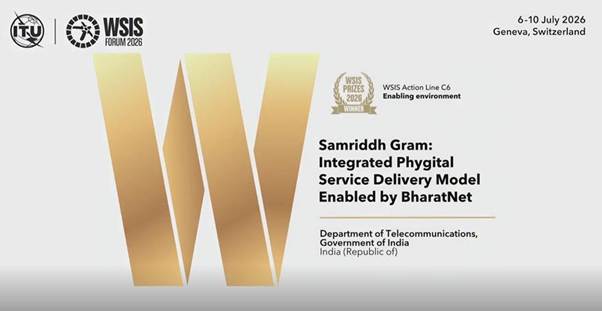
Celebrating the achievement, Union Communications Minister Jyotiraditya M. Scindia said the recognition reflects India’s growing leadership in building inclusive digital infrastructure. He described the award as a significant milestone for the country’s Digital India mission, stating that technology-driven governance is reaching even the most remote villages. According to the minister, the success of Samriddh Gram demonstrates how robust telecom networks can become catalysts for social and economic progress.
The initiative is built on the BharatNet broadband network and revolves around Samriddhi Kendras, village-level centres that combine digital platforms with assisted physical services. Designed as integrated service hubs, these centres provide residents with easy access to healthcare, education, financial services, government schemes and livelihood opportunities without requiring them to travel to urban areas.

Among the key services available are telemedicine consultations, Health ATM facilities, affordable medicines through Jan Aushadhi Kendras, digital classrooms, skill development programmes using immersive technologies, agricultural advisory services, soil testing, drone-assisted farming solutions, banking correspondents, Common Service Centre (CSC) facilities, e-commerce support for rural entrepreneurs and high-speed broadband connectivity. The initiative also promotes public Wi-Fi, digital governance, village surveillance systems and community-based digital assistance.
Officials said the project illustrates how telecom infrastructure can move beyond providing internet access to generating measurable improvements in healthcare delivery, education, financial inclusion and rural entrepreneurship. The model places equal emphasis on technology, local participation and last-mile service delivery.
Samriddh Gram emerged as the global winner after progressing through multiple stages of evaluation, including international scrutiny, public online voting involving over 2.2 million votes, and final assessment by a panel of WSIS experts. It was one of only two Indian projects selected as Champion Projects across the 18 award categories before ultimately winning its category.
The award also highlights the expanding impact of BharatNet, one of the world’s largest rural broadband programmes, which has already connected more than 2.17 lakh Gram Panchayats. By integrating digital infrastructure with citizen-focused services, the initiative supports several Sustainable Development Goals, including quality education, healthcare access, financial inclusion, innovation and reduced inequalities.
The international recognition reinforces India’s position as a global leader in digital public infrastructure and showcases how scalable, technology-driven solutions can transform rural communities while promoting inclusive and sustainable development.



























No Comments: