
 The Impressive Times
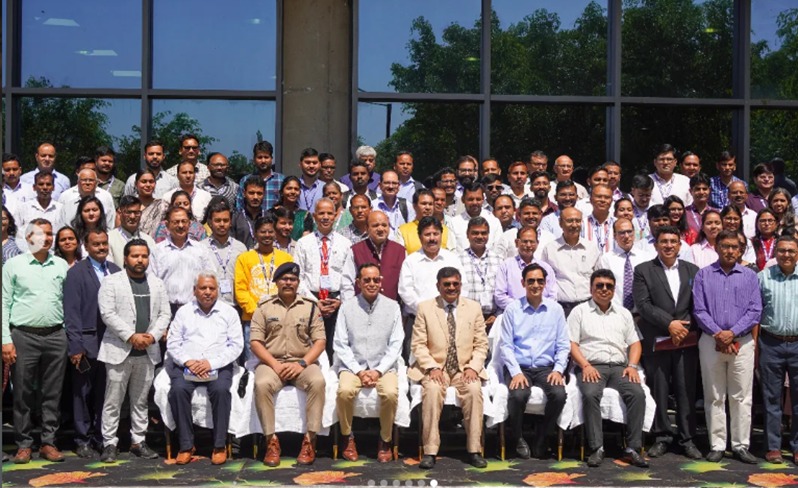
The Indian Institute of Management (IIM) Kashipur formally inaugurated the 9th International Conference on Asian Libraries (ICAL 2026) on its campus last week. This three-day international conference, was held from 16-18 April and was organised in collaboration with the Asian Library Association, New Delhi, under the theme “The Evolving Information Landscape: Preparing Libraries for the Future.”
The inaugural session was graced by Shri Anand Bardhan, IAS, Hon’ble Chief Secretary, Government of Uttarakhand, along with other eminent dignitaries. Their insightful addresses highlighted the evolving role of libraries as dynamic, technology-enabled knowledge hubs that foster inclusive, accessible, and future-ready learning ecosystems.
Referring to India’s rich intellectual heritage, such as Takshashila and Nalanda, he emphasised the need to develop libraries as dynamic, accessible, and technology-enabled knowledge centres. He also mentioned the Uttarakhand government’s efforts to strengthen library infrastructure and promote inclusive education.
Prof Neeraj Dwivedi, Director, IIM Kashipur; Kumaon Division Commissioner Deepak Rawat, Udham Singh Nagar District Magistrate Nitin Singh Bhadauria, Senior Superintendent of Police Ajay Ganpati, President of the Asian Library Association Mr. R.K. Sharma, and Chairman of the Library Committee of IIM Kashipur, Professor A.V. Raman were also present.
The information landscape is undergoing a relentless and profound transformation, characterised by the exponential growth of digital content, the rise of artificial intelligence and machine-generated data, and the decentralisation of authority.
Users are now inundated with information from a myriad of sources, from scholarly databases and open-access repositories to social media and misinformation, creating a complex ecosystem where discernment and digital literacy are paramount. This shift moves the central challenge from one of information scarcity to one of information overload, where the critical need is no longer simply access to information, but the ability to navigate, evaluate, synthesize, and ethically use it.
Libraries, therefore, can no longer define their value primarily as storehouses of physical collections but must reimagine their role as dynamic hubs for knowledge curation and critical thinking.
To become future-ready, libraries must proactively evolve from passive repositories into active, collaborative, and technology-integrated learning centers. This requires strategic investment in robust digital infrastructure and discovery tools, while simultaneously expanding expert services to include data management, digital citizenship, and media literacy instruction.
The physical space itself must be adaptable, fostering creativity through makerspaces, collaborative work areas, and environments conducive to both production and contemplation. Ultimately, the future-ready library is not defined by its walls but by its connections curating quality resources, empowering users with critical skills, and serving as an essential, agile partner in the lifelong learning and research needs of its community within an ever-changing information universe.
The ICAL-2026 intended to deliberate on all these issues and the future challenges facing LIS Professionals.


































No Comments: