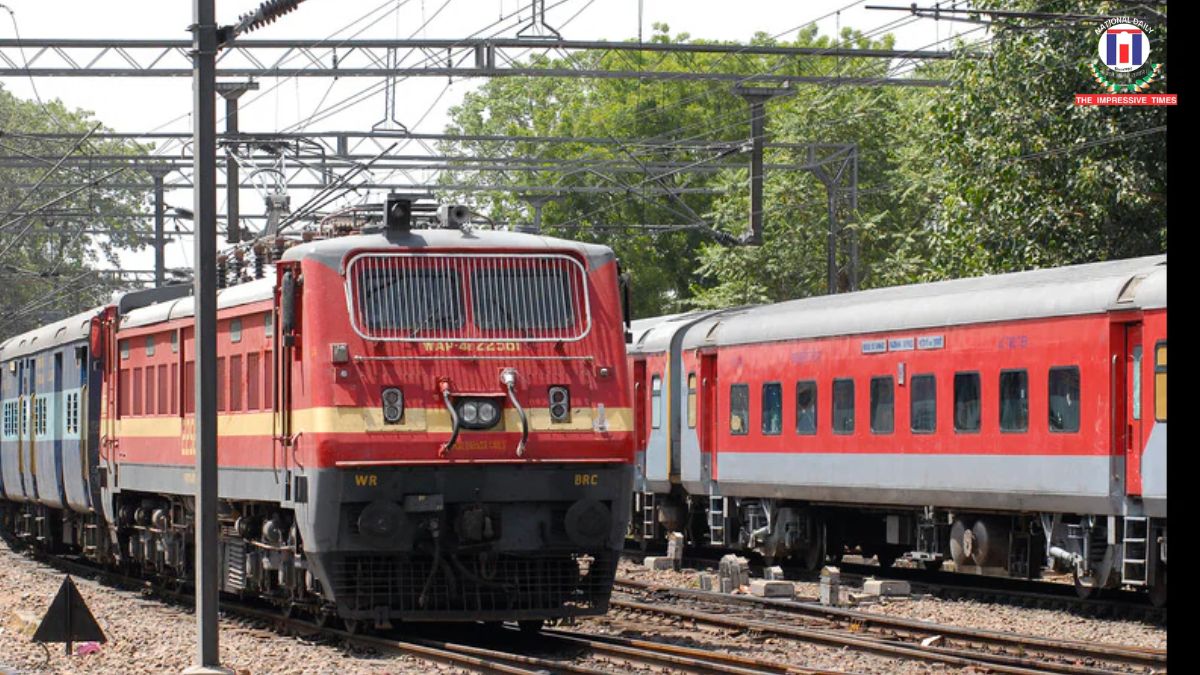
New Delhi : In a significant push towards financial sustainability and improved passenger experience, Indian Railways has reported robust earnings from scrap monetisation and non-fare revenue streams in FY 2025–26—achieved without increasing passenger ticket fares.
The Railways recorded ₹6,813.86 crore from scrap sales, surpassing its target of ₹6,000 crore. This follows a similarly strong performance in FY 2024–25, when it exceeded its ₹5,400 crore target by generating ₹6,641.78 crore. The continued success reflects a focused approach toward efficient asset utilisation, where unserviceable materials are systematically cleared and monetised. This not only unlocks value from idle assets but also frees up critical space across depots, yards, and workshops, contributing to smoother operations and greener practices through recycling and reduced waste accumulation.
Parallel to this, non-fare revenue (NFR) has emerged as a key pillar in strengthening the Railways’ financial base. Earnings from NFR have grown sharply from around ₹290 crore in FY 2021–22 to ₹777.76 crore in FY 2025–26, marking an impressive growth of approximately 168% over five years. Notably, the Railways exceeded its FY 2025–26 NFR target of ₹720.85 crore, achieving nearly 108% of the projected figure.
These revenues are being reinvested into improving passenger facilities and modernising infrastructure. Enhanced cleanliness, upgraded stations, better safety systems, and improved digital services are some of the visible outcomes of this strategy. The focus remains on delivering a more comfortable, reliable, and efficient travel experience while maintaining affordability.
Several innovative initiatives have contributed to this growth. The introduction of premium brand outlets at stations has opened new commercial avenues, with 22 such outlets already operational. Additionally, the expansion of Pradhan Mantri Bhartiya Janaushadhi Kendras (PMBJKs) has strengthened both passenger welfare and revenue generation. So far, 120 PMBJKs have been set up across railway stations, offering affordable medicines while enhancing station utility.
Zonal Railways have also played a proactive role by introducing diverse passenger-centric services such as multi-level car parking, medical centres, nursing pods, e-wheelchair services, health kiosks, and gaming zones. The utilisation of vacant spaces for public amenities and branding has further contributed to revenue streams.
A notable innovation is the development of premium co-working spaces and digital lounges, particularly by Western Railway. These facilities offer high-speed Wi-Fi, workstations, charging points, and conference amenities, transforming stations into modern, functional spaces for travellers.
Overall, the dual strategy of monetising scrap and expanding non-fare revenue streams reflects a balanced and forward-looking approach. By reducing dependence on fares while simultaneously enhancing services, Indian Railways is positioning itself as a more resilient, efficient, and passenger-friendly transport system.























No Comments: