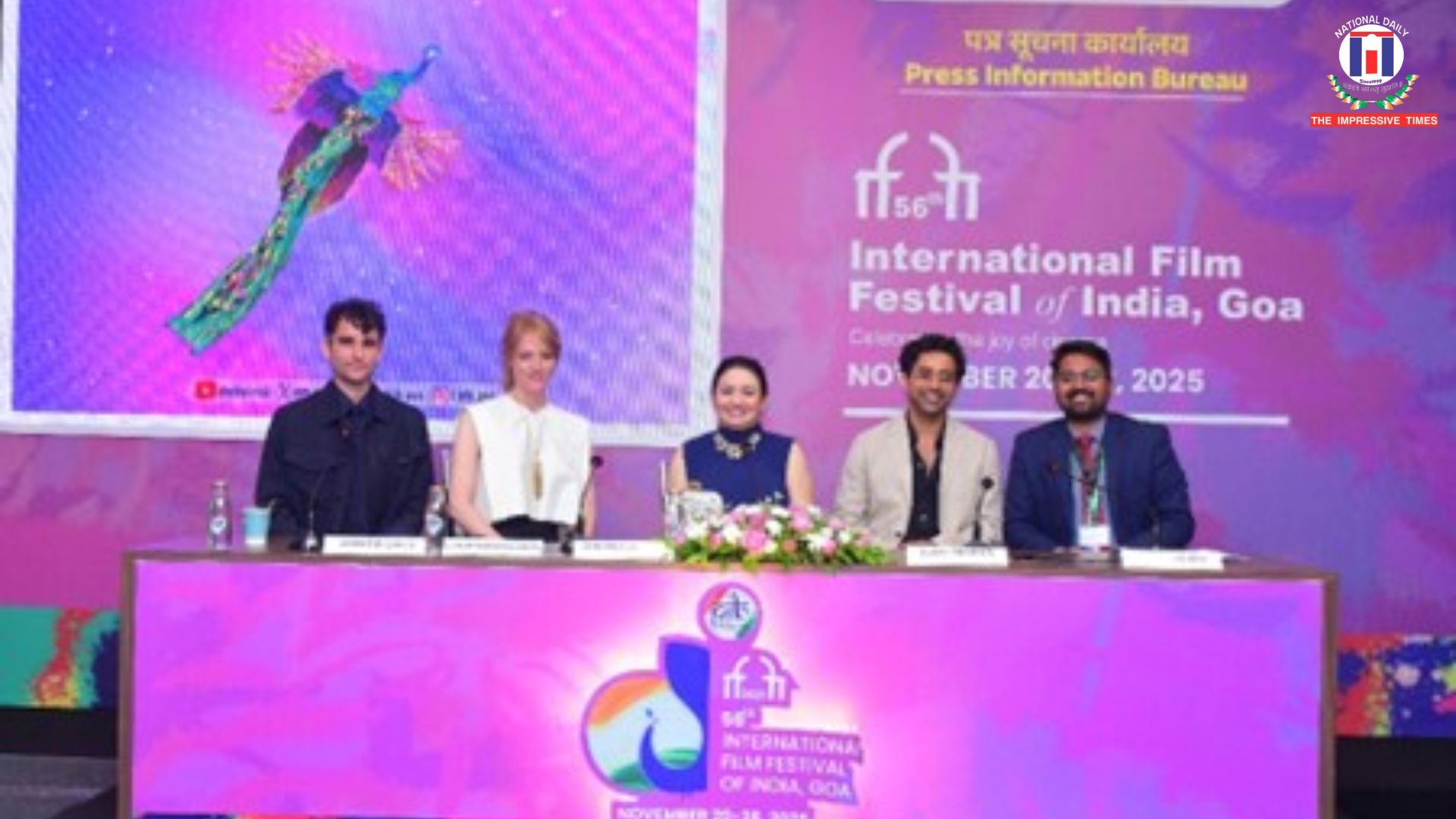
The press conference for This Tempting Madness at the International Film Festival of India (IFFI) was as emotionally charged as the film itself—tense, intimate, and filled with truths that echo long after they’re spoken. Director Jennifer Montgomery, producer Andrew Davis, and actors Suraj Sharma and Zenobia Shroff came together to discuss the delicate process of adapting a painful true story—one that blurs memory, trauma, and the fragile line between perception and reality.
Jennifer Montgomery set the tone by acknowledging the weight of the narrative. The film, she said, “is inspired by a true story and an unfortunate one,” adding that cinema often offers a depth of context that words alone cannot. “We wanted to give the audience a space to understand the weight of what happened.”
Producer Andrew Davis echoed her sentiment, emphasising the responsibility that comes with adapting real-life trauma. “As storytellers, we’re not just retelling an event,” he said. “We’re trying to find meaning, interpretation, and the questions that linger. That’s the real work.”
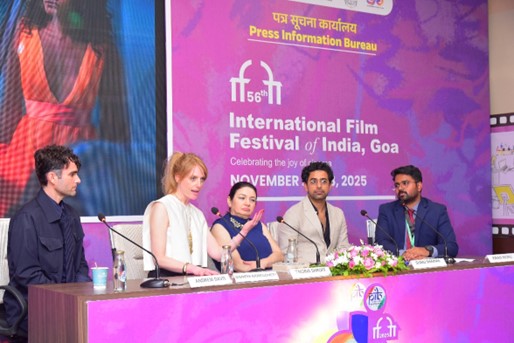
For actor Suraj Sharma, the film struck a deeply personal chord. Calling the experience “universal to a lot of people,” he highlighted the alarming prevalence of emotional and mental abuse across societies. “Eleven percent of women go through it, even higher in India,” he noted. He shared a moment from his own life—helping a friend’s sister leave an abusive situation—which shaped his understanding of the film’s emotional landscape. “This film is a tribute to the people who’ve actually suffered,” he said.
Zenobia Shroff brought powerful nuance to her portrayal of an Indian mother caught between cultural expectations and maternal instinct. “We all know the mother-daughter equation in this country,” she said. “There’s always that ‘don’t tell anyone’ layer. A hidden misogyny that even mothers internalise.” Her performance aimed to confront these patterns. “We need to stop telling our women to be smaller, and start telling our men to be better.”
Jennifer emphasised that while the characters are Indian, the story’s emotional resonance is universal. Casting Simone Ashley felt natural, she said: “We cast the best person for the role, and she happened to be of Indian origin.” The rest of the cast supported her in navigating cultural nuances unfamiliar to her.
On the technical front, the team revealed their use of intercut memories to mirror Mia’s amnesia and emotional disorientation. “When you’re suffering memory loss, nothing is accurate,” Jennifer explained. “So we built a visual structure that constantly moves between present reality and fractured memory.”
During the session, a journalist asked whether she drew inspiration from Virginia Woolf. Jennifer hadn’t—but said with a smile that she now wants to explore that perspective.
Reflecting on the film’s beating heart, she added, “It’s my role as a writer-director to find humanity in every character. All of us feel tempted by madness at some point.”
Andrew closed the discussion on a note of resilience: “This film, inspired by true events, is also a testament to strength. That people can change, and they can become stronger.”
With themes of trauma, love, self-doubt and survival, This Tempting Madness gave the IFFI audience more than a cinematic conversation—it offered reflection, empathy, and a deeper understanding of the unseen battles so many carry.
About IFFI:
Established in 1952, the International Film Festival of India is South Asia’s oldest and largest celebration of cinema. Hosted jointly by NFDC (Ministry of Information and Broadcasting) and the Government of Goa’s Entertainment Society, IFFI has evolved into a global cinematic powerhouse where restored classics meet bold new voices. From international competitions to cultural showcases, masterclasses, tributes, and the vibrant WAVES Film Bazaar, the festival thrives on diversity and creative synergy. Held from November 20–28 against Goa’s scenic coastline, the 56th edition promises a kaleidoscope of languages, genres, and innovations—an immersive celebration of India’s creative brilliance on the world stage.

































No Comments: