India Takes Co-Chairmanship of Global Coalition for Social Justice as Mandaviya Calls for Collective Action
Economic Growth and Social Progress Must Move Together: Dr. Mansukh Mandaviya at the Global Coalition for Social Justice Annual Forum 2026

 The Impressive Times
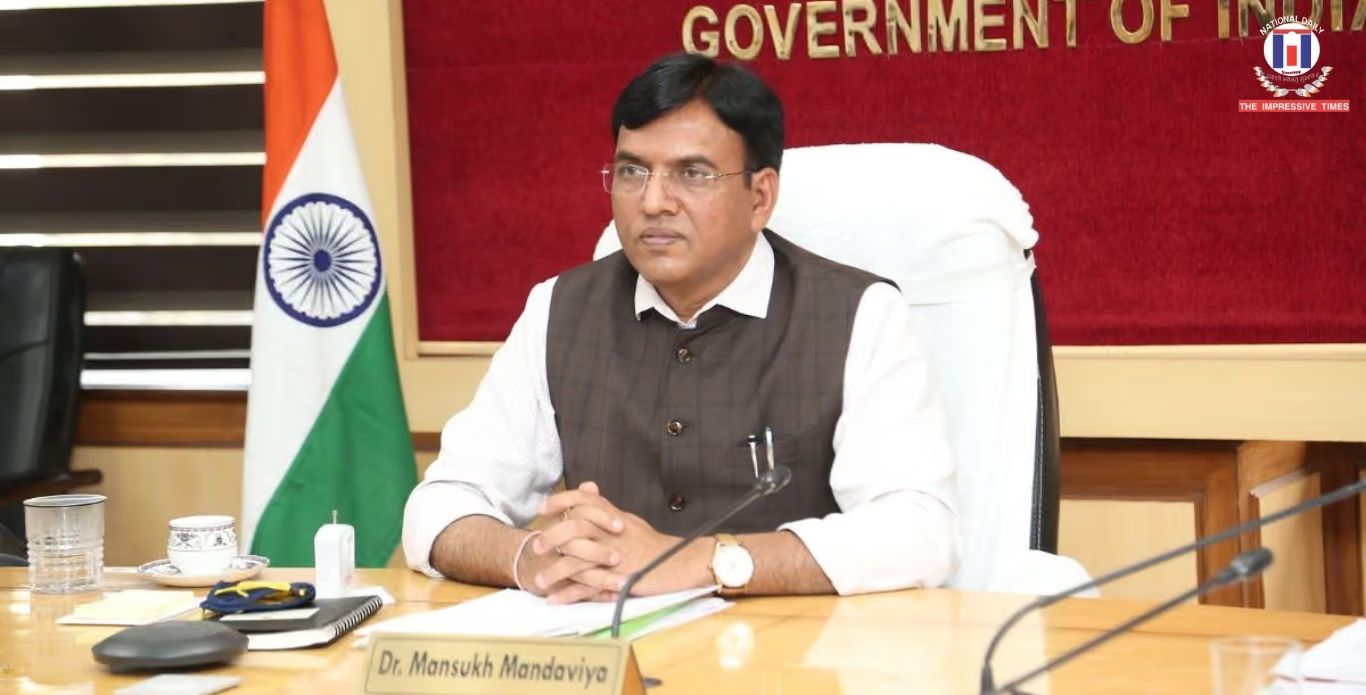
New Delhi: India has taken over the Co-Chairmanship of the Coordinating Group of the Global Coalition for Social Justice, with Union Labour and Employment Minister Mansukh Mandaviya calling for stronger international cooperation to advance social justice and decent work.
Addressing the Global Coalition for Social Justice Annual Forum 2026, being held virtually on September 16 and 17, Mandaviya said economic growth and social progress must move together to create a more inclusive, resilient and sustainable future.
The forum brings together governments, employers’ and workers’ organisations, international institutions, development bodies, businesses, academia and civil society to discuss ways to strengthen social justice and promote decent work.
As India assumes the Co-Chairmanship, Mandaviya outlined three priorities for the coalition.
First, he called for translating global commitments into action at the country level while taking into account national priorities and circumstances.
Second, he stressed the need for greater sharing of knowledge and experience, stronger cooperation and increased participation of enterprises in the social justice agenda.
Third, he called for ensuring that social justice remains central to development decisions beyond 2030.
Mandaviya said the coalition, with more than 400 partners, has significant collective strength and should focus on supporting countries rather than prescribing a single development pathway.
The Union Minister highlighted India’s approach to preparing for the future of work through technology, skills and international cooperation. He stressed the growing importance of employability, labour mobility and skills development in a rapidly changing global employment landscape.
He referred to India’s collaboration with the International Labour Organization (ILO) to pilot an International Reference Classification of Occupations across India, Brazil and Germany. The initiative is aimed at supporting smoother international labour mobility.
Mandaviya also highlighted the New Delhi Declaration 2026 adopted during India’s BRICS Presidency and the BRICS CONNECT initiative. He said consensus on an International Digital Platform for Remote Employment could help create new virtual employment opportunities for young people across the Global South.
Highlighting India’s labour reforms, Mandaviya said 29 central labour laws have been consolidated into four Labour Codes, aimed at strengthening worker protection while creating an enabling environment for businesses.
He also pointed to India’s legal recognition of gig and platform workers and the expansion of social protection through digital delivery.
According to figures cited by the Minister, India’s social protection coverage has increased from 19 per cent in 2015 to 68.4 per cent in 2026, bringing more than one billion people within the social protection framework.
The e-Shram portal, with nearly 320 million registered unorganised workers, was highlighted as a major digital platform connecting workers with welfare schemes of the Central and State governments.
Mandaviya also highlighted the National Career Service, which connects jobseekers with employment opportunities in India and abroad. He said India has also shared the NCS framework with Mauritius.
Mandaviya said India is ready to deepen partnerships with countries of the Global South in areas such as digital public infrastructure, social protection, skills and employment services.
He stressed that sharing successful experiences could help convert national achievements into broader international progress and strengthen South-South cooperation in shaping the future of work.
The Global Coalition for Social Justice, established by the ILO in 2023, is a multistakeholder platform aimed at strengthening cooperation and accelerating action for decent work and social justice.
The 2026 Annual Forum is being held virtually on September 16-17, ahead of the high-level General Debate of the 81st session of the United Nations General Assembly. The forum is providing partners an opportunity to review progress, share experiences and identify areas for future collaboration.



























No Comments: