AI Must Serve Humanity, Not Control It: Thai Senator Dr. Nophadol In-na at BRICS Parliamentary Forum
Dr. Nophadol In-na calls for ethical AI governance, stronger parliamentary oversight and global cooperation to bridge the digital divide at the 12th BRICS Parliamentary Forum in New Delhi.
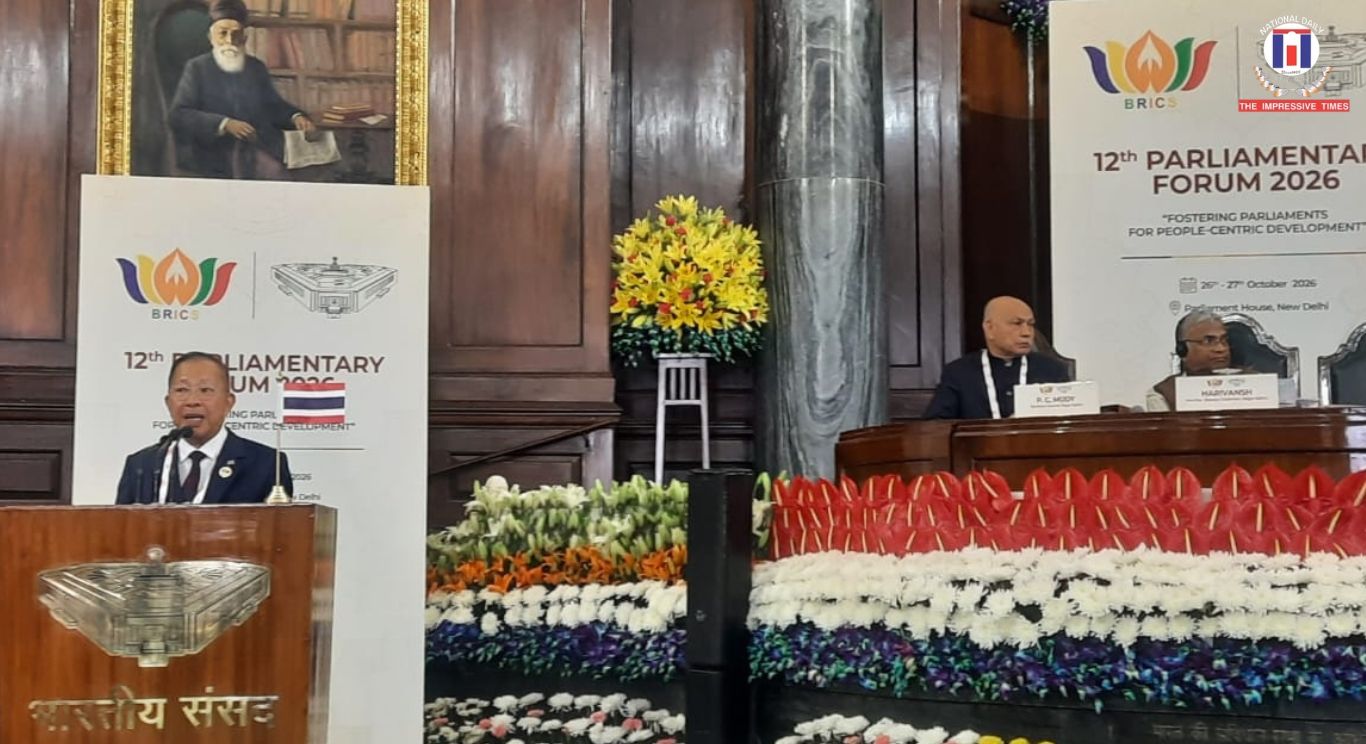
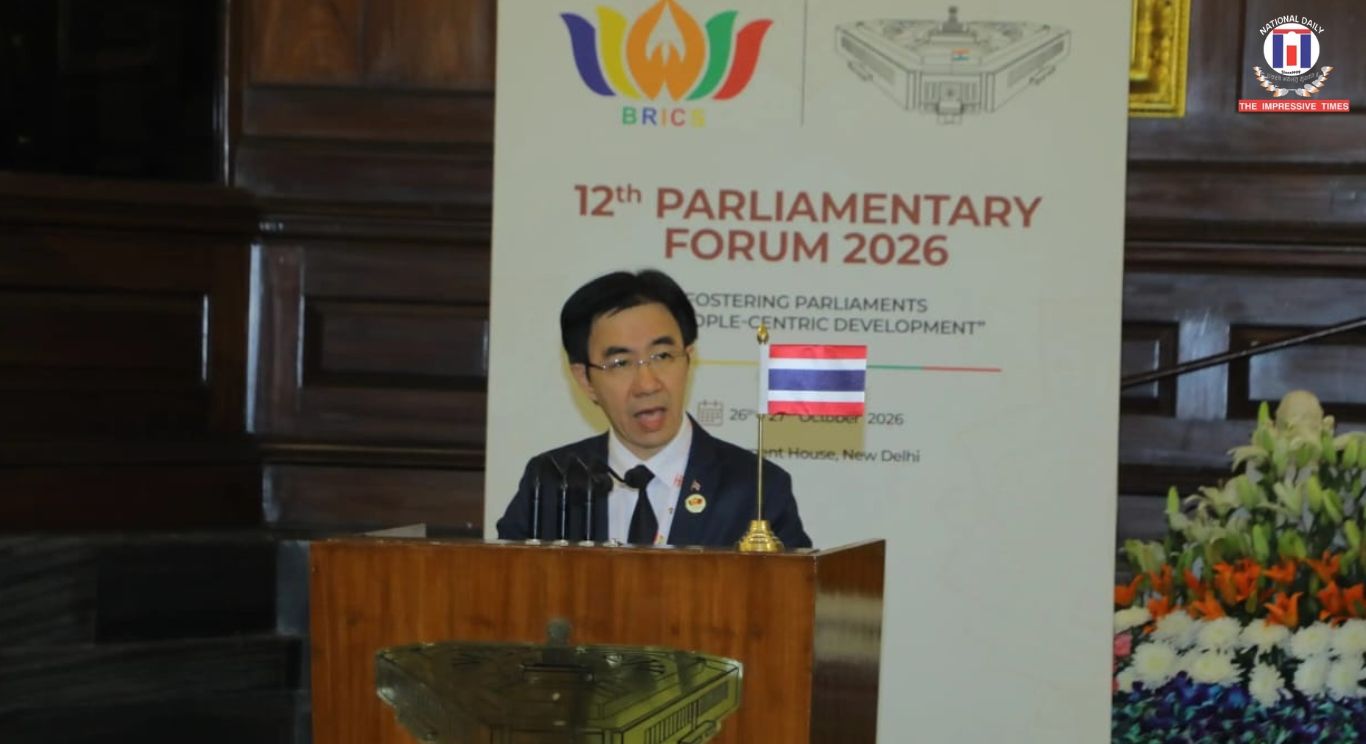
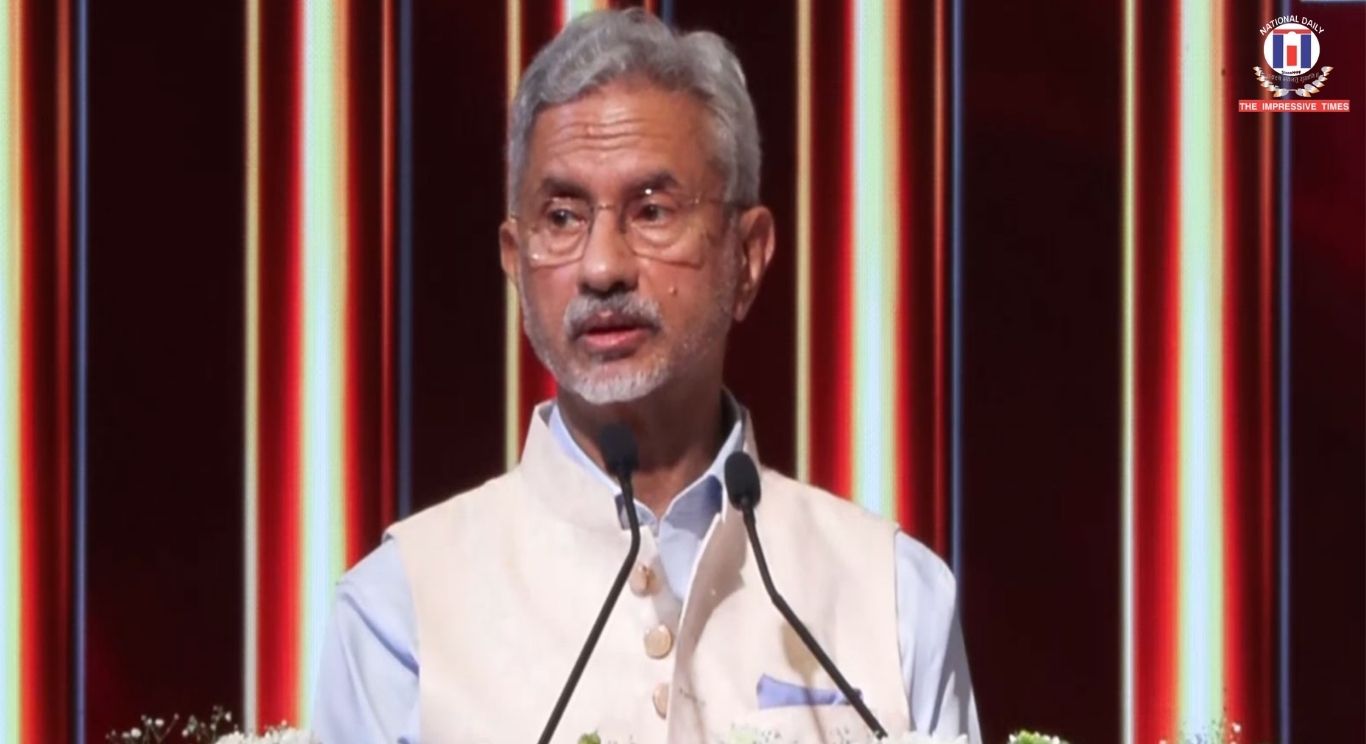
New Delhi, October 27, 2026: Emphasising the urgent need for responsible artificial intelligence governance, Dr. Nophadol In-na, Chairperson of the Senate Advisory Committee on Foreign Affairs of Thailand and Chairperson of the Inter-Parliamentary Union (IPU) Working Group on Science and Technology, called upon global lawmakers to ensure that emerging technologies serve humanity while safeguarding fundamental rights and democratic values.
Addressing the second plenary session of the 12th BRICS Parliamentary Forum in New Delhi, Dr. In-na highlighted the growing gap between rapid technological advancement and the ability of legislative institutions to establish effective regulatory frameworks.
Speaking on the theme “Innovation: Harnessing Parliaments for Promoting Human-Centric Innovation in Artificial Intelligence and Digital Technologies,” he stressed that parliaments must take a proactive role in shaping the ethical development and responsible deployment of AI.
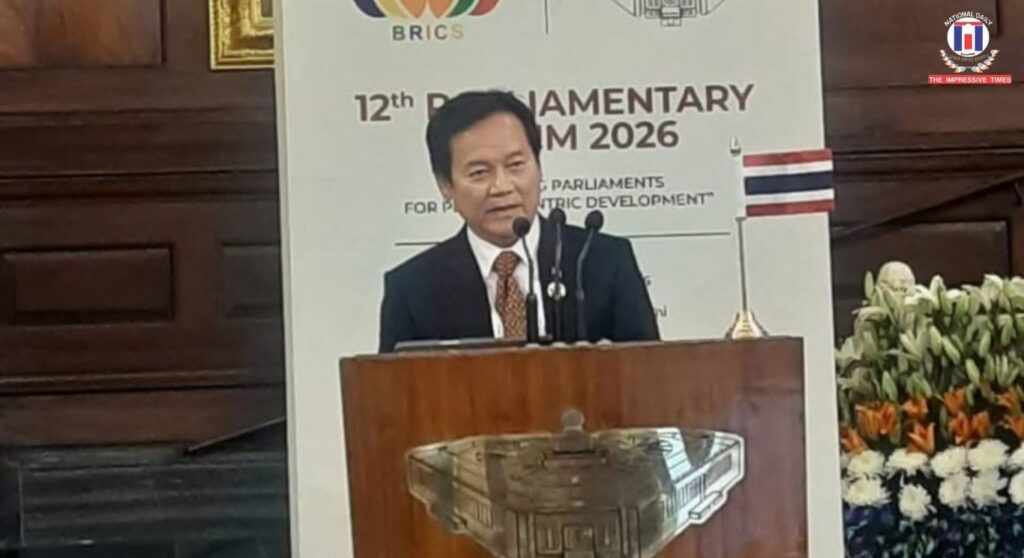
Dr. In-na warned that artificial intelligence is transforming economies, institutions and social structures at an unprecedented pace, making it essential for governments to establish safeguards that protect individuals and communities.
He emphasised that technological advancement should empower people rather than undermine human autonomy.
“Technology is advancing far faster than our parliamentary legislation,” he observed, cautioning that failure to respond effectively could widen the gap between innovation and ethical governance.
According to the Thai parliamentarian, inadequate oversight could increase risks associated with privacy violations, misinformation and widening inequalities, particularly in developing countries.
He stressed that the responsibility of parliaments is not to restrict technological progress but to create effective connections between scientific innovation, public policy and societal needs.
Highlighting the initiatives of the Inter-Parliamentary Union, Dr. In-na said the organisation has placed significant emphasis on integrating artificial intelligence into parliamentary processes while ensuring responsible governance.
As Chairperson of the IPU Working Group on Science and Technology, he drew attention to ongoing efforts to establish ethical standards for AI applications in legislative institutions.
He announced that the World e-Parliament Conference 2026 will take place in Belgium on November 17–18, providing a platform for parliamentary representatives to discuss digital transformation and emerging technologies.
Dr. In-na also highlighted his role in spearheading the AI Ethics Annex to the IPU Charter, which has completed its review process.
He suggested that the framework could serve as a practical reference for BRICS member nations seeking to develop responsible AI governance mechanisms.
Discussing Thailand’s approach to technological development, Dr. In-na outlined the country’s efforts to strengthen personal data protection, promote ethical AI practices and expand digital skills.
He noted that Thailand has introduced personal data protection legislation and prioritised digital education to ensure that vulnerable communities can participate in and benefit from technological progress.
The Thai representative also referred to the IMF–World Bank Group Annual Meetings 2026, hosted by Thailand from October 12 to 18, where artificial intelligence and digital transformation featured prominently in discussions.
Building on these international engagements, he reaffirmed Thailand’s willingness to act as a “trusted connector” between global policymakers, technology experts and parliamentary institutions.
He said stronger cooperation could help countries develop effective regulatory approaches while encouraging innovation and ensuring equitable access to emerging technologies.
Dr. In-na presented three key proposals aimed at strengthening international parliamentary cooperation on artificial intelligence and digital technologies.
Ethical AI Governance: He called for the joint development of AI governance frameworks that prioritise transparency, impartiality and respect for human rights. Such frameworks, he suggested, would help ensure that technological advancements remain accountable and aligned with public interests.
Science and Technology Cooperation: The Thai parliamentarian advocated stronger exchanges of knowledge and best practices through international science and technology networks. He emphasised the importance of providing lawmakers with timely, expert-led and evidence-based recommendations to support informed legislative decisions.
Bridging the Digital Divide: Dr. In-na stressed the need to reduce technological inequalities through technology transfer, stronger Digital Public Infrastructure (DPI) and greater investment in digital skills.
He highlighted that expanding access to technology and technical education would be essential for ensuring that developing countries and vulnerable populations are not excluded from the benefits of AI-driven growth.
Concluding his address, Dr. In-na urged lawmakers from BRICS member and partner countries to strengthen cooperation in developing ethical and inclusive technological policies.
He emphasised that legislative institutions have a crucial responsibility to guide artificial intelligence towards outcomes that protect human dignity, encourage innovation and promote sustainable development.
The Thai parliamentarian called for collective legislative action to build a secure, equitable and technologically advanced future.
His remarks at the 12th BRICS Parliamentary Forum underscored the growing importance of parliamentary diplomacy in addressing the challenges and opportunities presented by artificial intelligence.
With AI increasingly influencing economic growth, governance and public services, Dr. In-na’s proposals highlighted the need for international collaboration to ensure that technological progress remains transparent, accountable and accessible to all.







































No Comments: