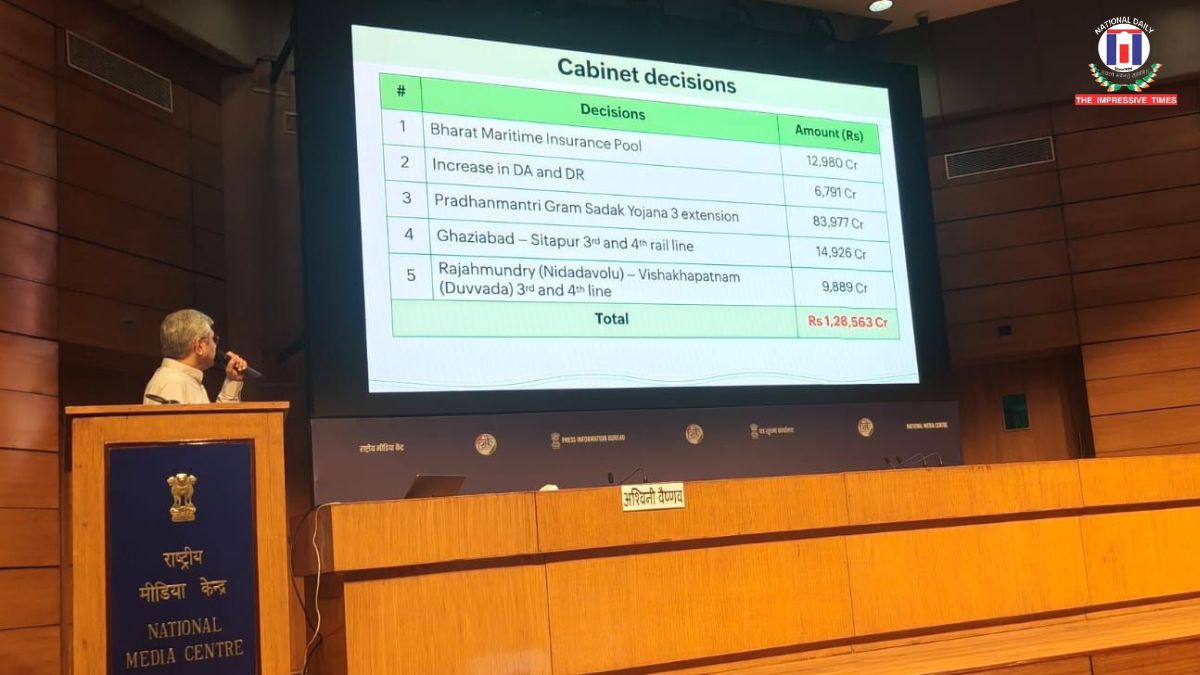
New Delhi: The Cabinet Committee on Economic Affairs (CCEA), chaired by Prime Minister Narendra Modi, has approved two major multitracking projects of the Indian Railways with a total estimated cost of ₹24,815 crore.
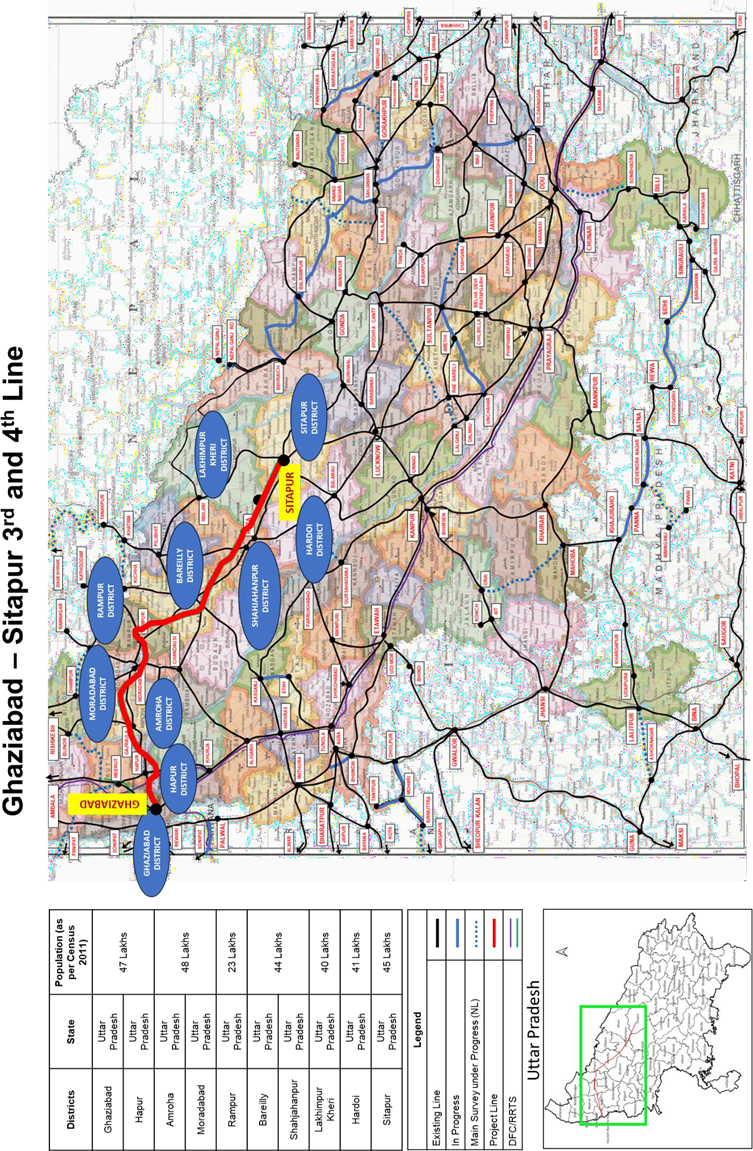
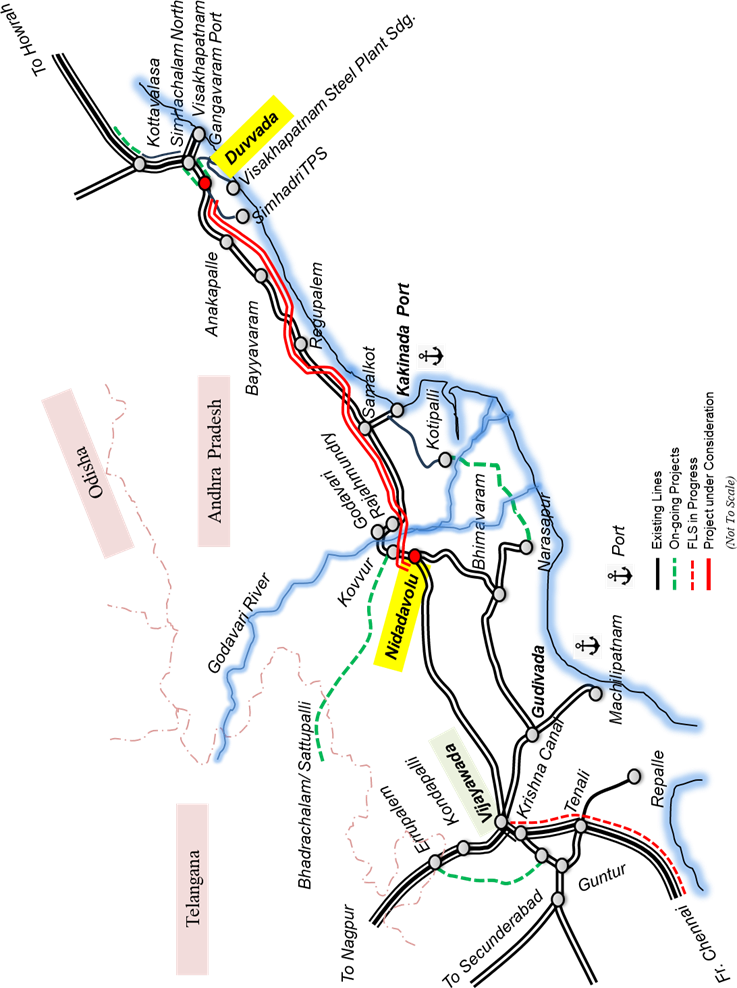
The projects—Ghaziabad–Sitapur 3rd and 4th Line (403 km) and Rajahmundry (Nidadavolu)–Visakhapatnam (Duvvada) 3rd and 4th Line (198 km)—will together add about 601 km to the existing railway network, with a total track length of 1,317 km. Both projects are targeted for completion by 2030–31.
The capacity augmentation is expected to significantly enhance operational efficiency, reduce congestion on high-density routes, and improve service reliability. The projects align with the PM Gati Shakti National Master Plan, focusing on integrated infrastructure development and seamless multimodal connectivity.
Strengthening Key Corridors
The Ghaziabad–Sitapur route, part of the Delhi–Guwahati high-density network, currently operates at capacity levels as high as 168%, projected to rise further. The additional lines will ease pressure on this vital corridor, improving connectivity between northern and eastern India. The route passes through major industrial hubs such as Ghaziabad, Moradabad and Bareilly, and will support increased freight movement of coal, foodgrains and industrial goods.
The Rajahmundry–Visakhapatnam corridor, part of the Howrah–Chennai high-density network, serves one of the busiest freight routes along the eastern coast. With existing capacity utilisation already around 130%, the project will support growing port and industrial activity in Andhra Pradesh, improving connectivity to key ports such as Visakhapatnam, Gangavaram and Kakinada.
Economic and Social Impact
The projects will cover 15 districts across Uttar Pradesh and Andhra Pradesh, boosting regional development and creating substantial employment—over 400 lakh human-days combined. They are expected to reduce logistics costs significantly and facilitate faster movement of goods and passengers.
Enhanced rail connectivity will also improve access to key religious and tourist destinations such as Dudheshwarnath Temple, Garhmukteshwar Ganga Ghat, Naimisharanya, Annavaram and Draksharamam, giving a boost to tourism.
Environmental Benefits
Rail transport, being energy-efficient, will contribute to lowering carbon emissions. The projects are expected to reduce CO₂ emissions by over 180 crore kg, equivalent to planting more than 7 crore trees, while also cutting dependence on road transport.
Overall, the approval underscores the government’s continued focus on expanding railway infrastructure as a driver of economic growth, improved logistics and sustainable development in line with the vision of a self-reliant India.



























No Comments: