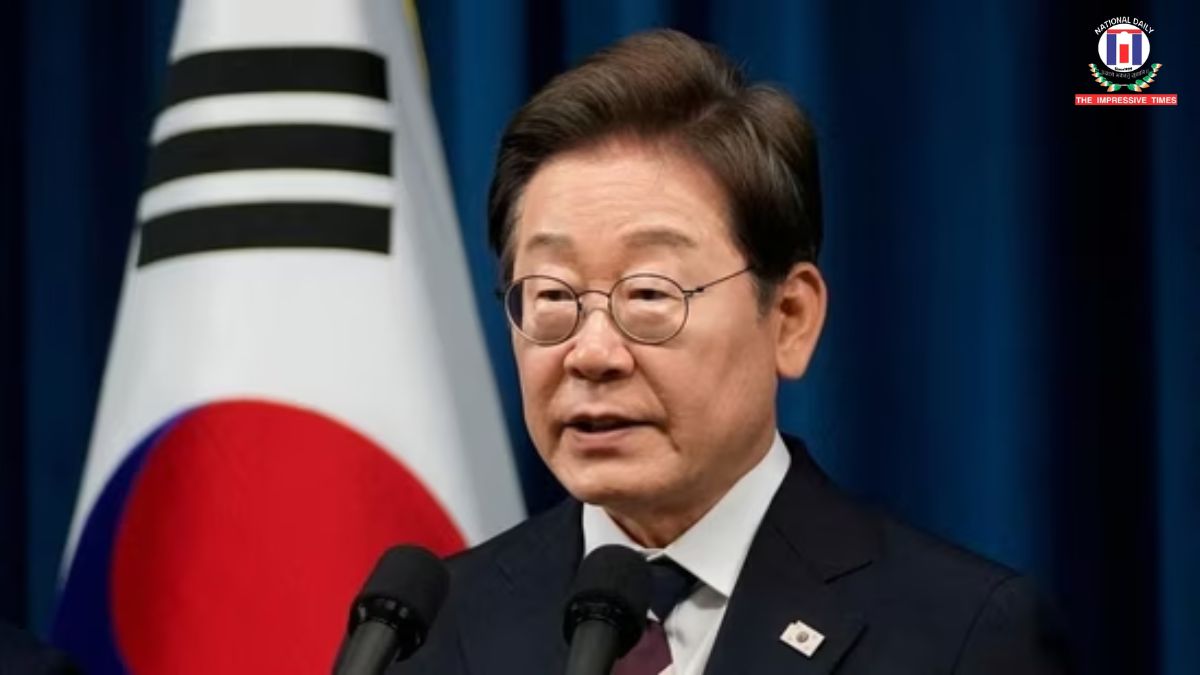
South Korean President Lee Jae Myung’s visit to India is being viewed as a potentially significant moment for bilateral ties, with the trip expected to reopen political momentum in a relationship that has seen limited high-level engagement in recent years.
The visit, the first at the presidential or prime ministerial level in seven years, comes at a time when both countries are reassessing strategic partnerships amid geopolitical uncertainty, supply chain disruptions and shifting economic alignments. Analysts see the timing as important not only for symbolism, but for the possibility of repositioning India-South Korea relations in more strategic terms.
Discussions during the visit are expected to cover a wide range of sectors, including maritime cooperation, shipbuilding, semiconductors, artificial intelligence, defense, critical technologies, clean energy and trade. The presence of a high-level delegation, including business leaders, has further raised expectations that the visit could produce both diplomatic and commercial outcomes.
The trip also comes against the backdrop of concerns that India-South Korea relations have underperformed relative to their potential. Negotiations to upgrade the Comprehensive Economic Partnership Agreement have remained unresolved despite years of talks, bilateral trade remains below long-term targets and defense cooperation has often struggled to move beyond isolated successes.
Analysts believe the visit could help address some of that drift by injecting political direction into stalled areas of cooperation. Strategic sectors such as shipbuilding have emerged as a major area of interest, particularly as both countries seek to reduce vulnerabilities in supply chains and expand industrial collaboration.
Clean energy is also expected to feature prominently, especially as recent commercial agreements involving green ammonia and broader energy cooperation signal expanding opportunities beyond traditional areas such as automobiles and electronics.
The visit is also being closely watched through a geopolitical lens. With both countries affected by economic uncertainty and shifting trade dynamics, there is growing interest in building partnerships that reduce dependence on any single major power. In that context, stronger India-South Korea coordination could carry significance beyond bilateral ties and extend into the broader Indo-Pacific framework.
Observers say the real test, however, will be whether the visit leads to sustained follow-through. While the current global environment may create momentum for deeper engagement, the long-term strength of the partnership may depend on whether both sides can convert short-term opportunity into durable strategic cooperation.
Beyond economics and security, experts also argue that deeper people-to-people engagement and stronger cultural ties will be critical if the relationship is to maintain momentum beyond periods of geopolitical disruption. For that reason, the visit is being seen not just as a diplomatic event, but as a possible turning point in shaping the future direction of India-South Korea relations.














No Comments: