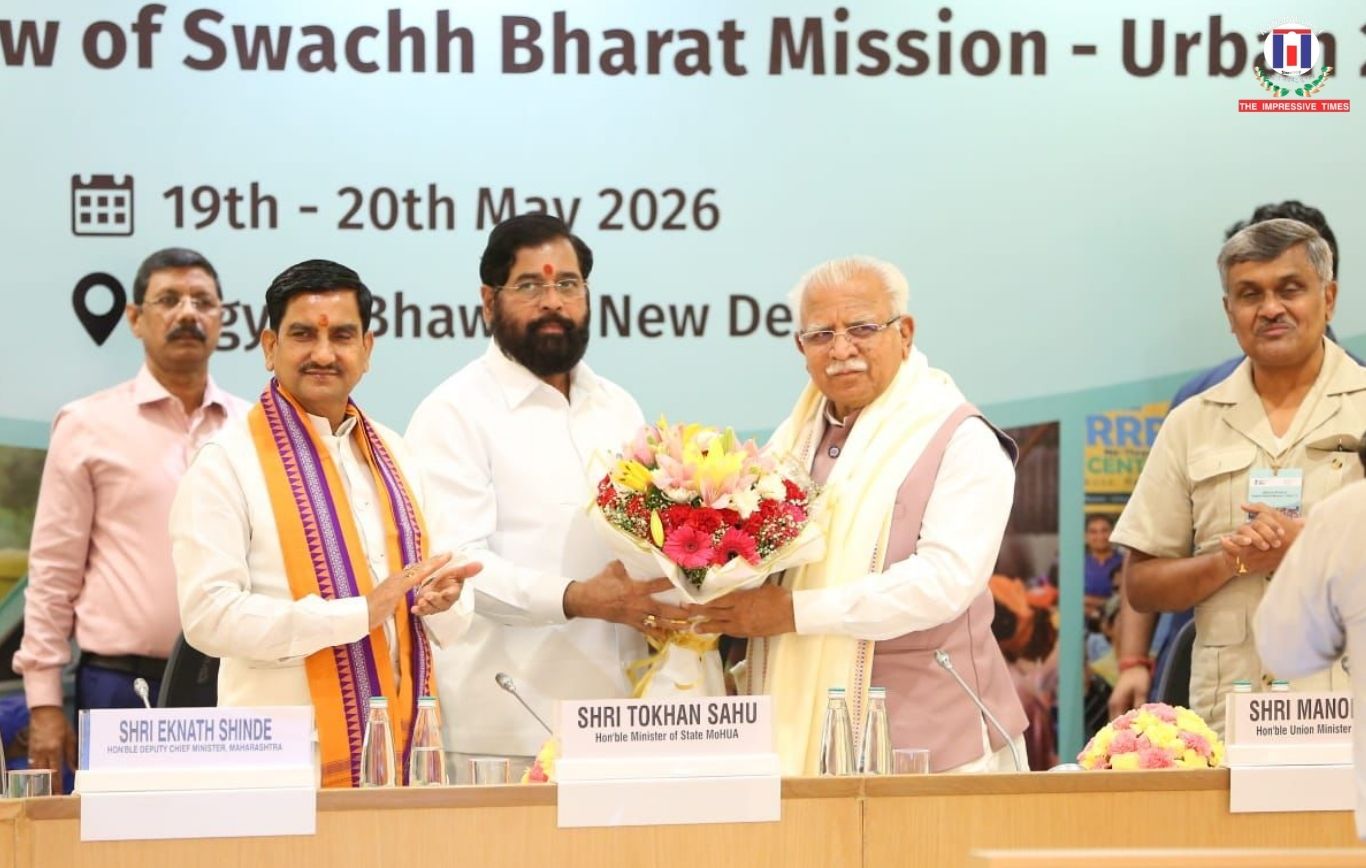
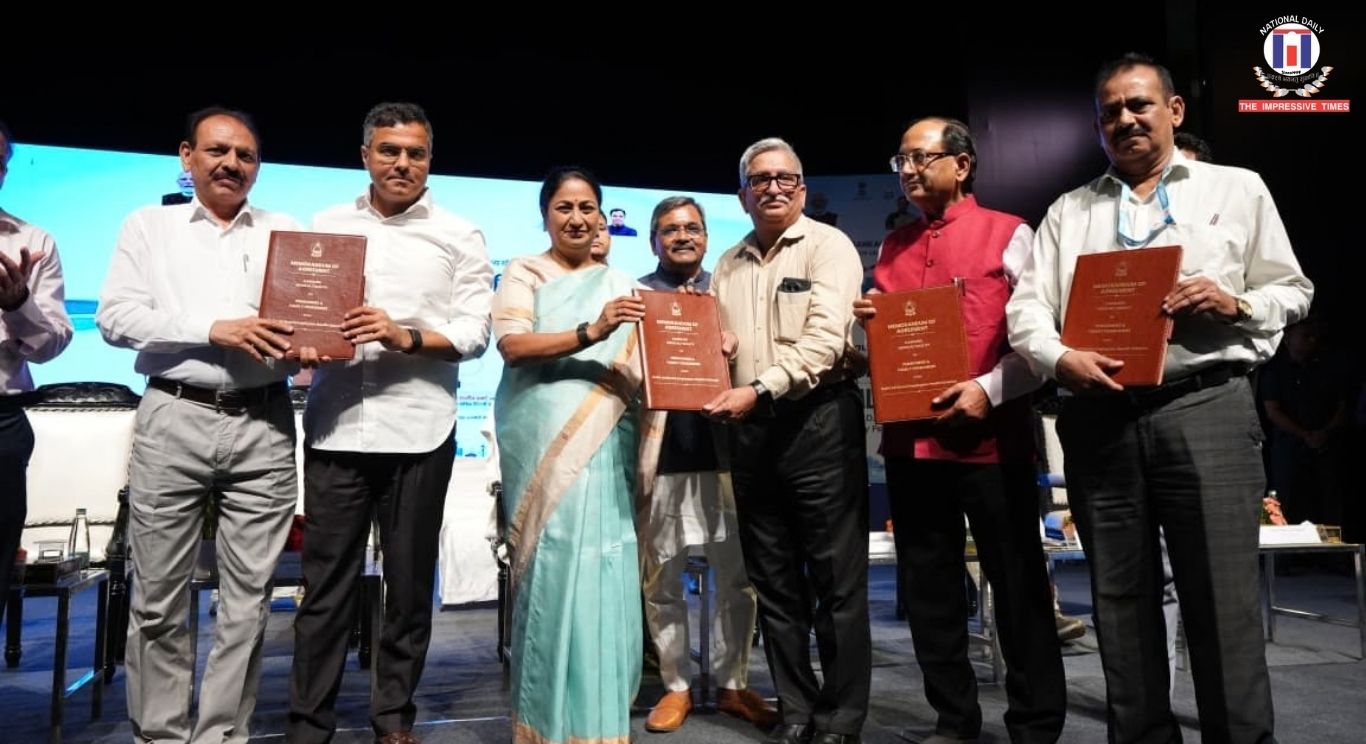
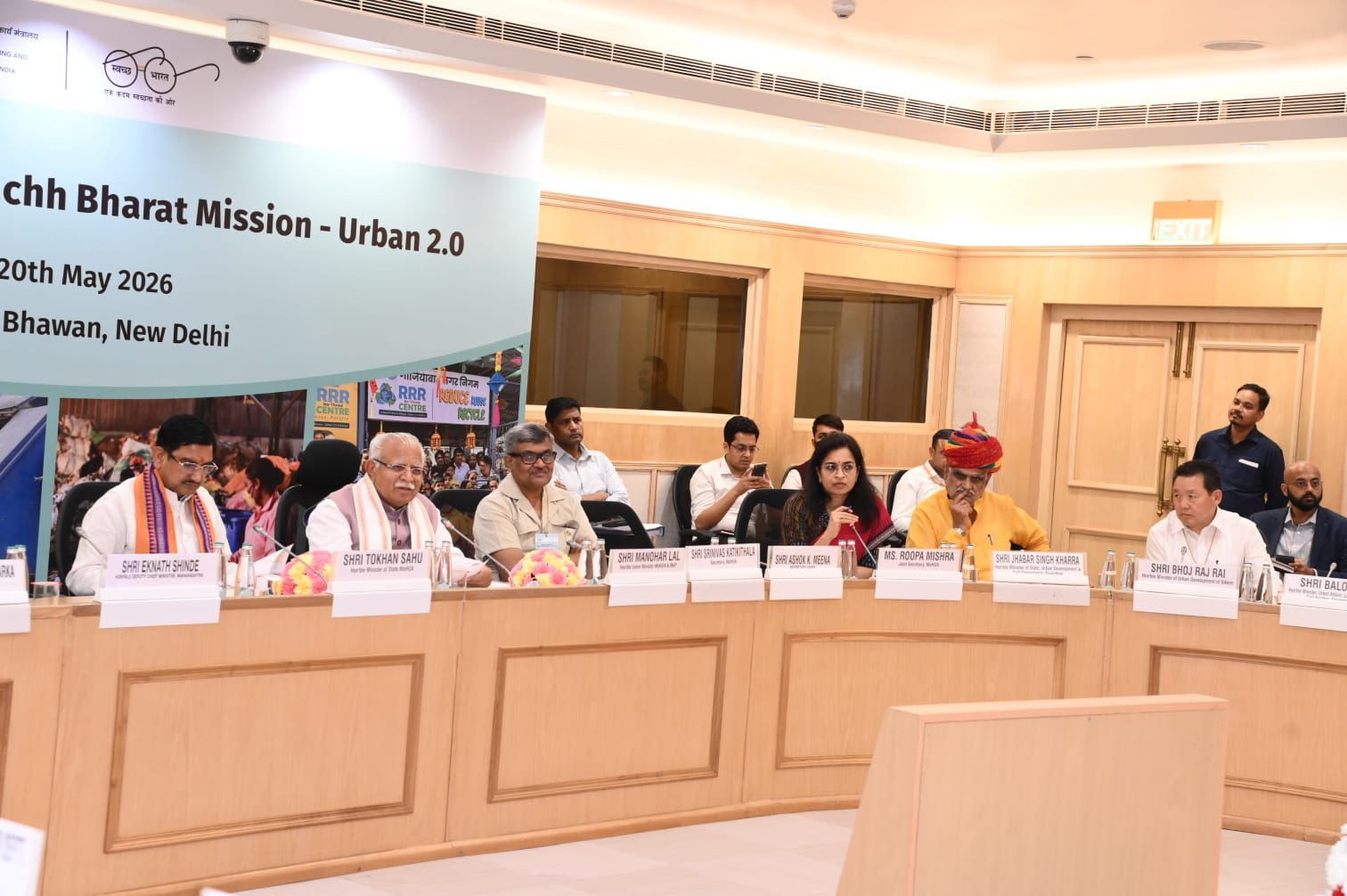
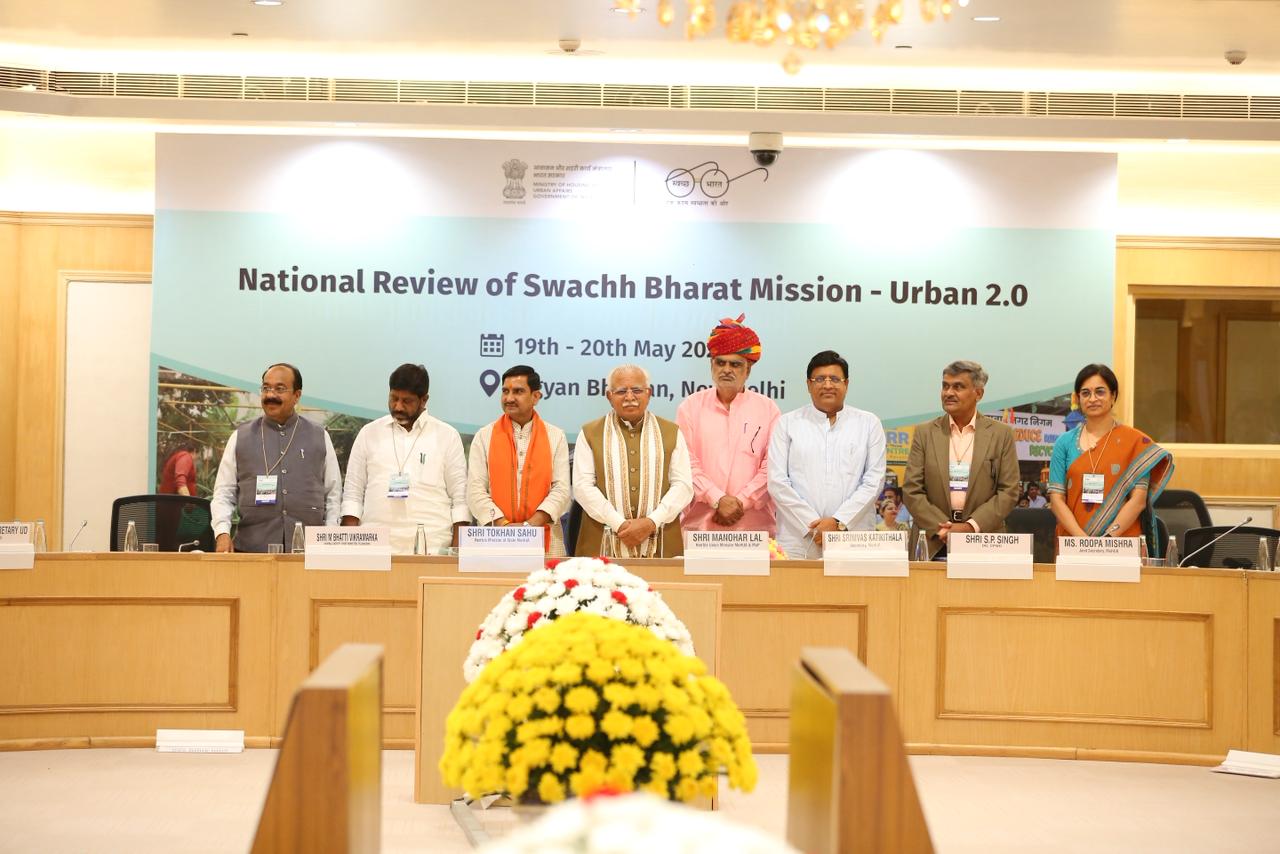
New Delhi, May 20, 2026: The Ministry of Housing and Urban Affairs (MoHUA) concluded a two-day National Review Meeting of Swachh Bharat Mission-Urban (SBM-U) 2.0 at Vigyan Bhawan in New Delhi, with Union Minister for Housing and Urban Affairs Shri Manohar Lal emphasizing the need for strong political ownership and accelerated implementation to achieve sanitation and waste management targets.
The review meeting, held on May 19 and 20, brought together Deputy Chief Ministers, Urban Development Ministers, Principal Secretaries, and senior officials from multiple states and Union Territories, along with representatives from 14 central ministries involved in sanitation and urban development initiatives.
Addressing the gathering, Manohar Lal stated that high-level political ownership, particularly from Chief Ministers, Urban Development Ministers, and public representatives, would be crucial in speeding up implementation and ensuring timely achievement of mission targets. He stressed that coordinated leadership and focused planning are essential for overcoming implementation bottlenecks.
The Union Minister highlighted the significant progress achieved under SBM-U 2.0, noting that 97 percent of urban wards across the country are now covered under door-to-door waste collection systems. He also pointed to the increasing adoption of source segregation practices through two-bin, four-bin and six-bin waste management models.
According to ministry data presented during the review, waste processing capacity has improved substantially from 16 percent in 2014 to 81 percent in 2026. Legacy waste remediation efforts have also gained momentum, with around 65 percent of the 26 crore metric tonnes of accumulated waste across 2,482 dumpsites already processed, reclaiming nearly 9,000 acres of urban land.
Manohar Lal underlined the importance of addressing financial challenges, delays in tendering processes, land allocation issues, and institutional capacity constraints. He directed states and Union Territories to prepare focused action plans over the next ten months to achieve the remaining mission goals.
The Minister also stressed the role of behavioural transformation in sustaining cleanliness initiatives, advocating the integration of the concept of “Swabhav Swachhata, Sanskar Swachhata” into educational curricula to build long-term public awareness and civic responsibility.
The conference featured 11 thematic sessions covering areas such as institutional strengthening, visible cleanliness, scientific waste processing, waste-to-energy systems, sanitation management, used water treatment, worker safety, and waste management strategies for geographically challenging regions.
Discussions during the meeting highlighted the need for faster on-ground execution, smart monitoring systems through Integrated Command and Control Centres, cluster-based waste management models, and stronger financial frameworks to ensure sustainability of sanitation projects.
Senior dignitaries attending the review included Deputy Chief Ministers from Telangana, Maharashtra and Chhattisgarh, along with Urban Development Ministers from states including Andhra Pradesh, Bihar, Haryana, Madhya Pradesh, Rajasthan, Uttar Pradesh, Delhi, West Bengal, Uttarakhand, and Jammu and Kashmir.
Representatives from central ministries such as the Ministry of Environment, Forest and Climate Change, Ministry of Rural Development, Ministry of Panchayati Raj, Ministry of Road Transport and Highways, and Ministry of Electronics and Information Technology also participated in the deliberations to strengthen inter-ministerial coordination and convergence.
Officials stated that the review meeting served as an important platform for assessing progress, sharing best practices and identifying strategies to further strengthen India’s urban sanitation and waste management ecosystem under the Swachh Bharat Mission-Urban 2.0 framework.























No Comments: