Lucknow’s Solar Boom Turns Consumers into ‘Prosumers’, Reshaping Power Supply
Rooftop solar adoption surges as households generate nearly one-fifth of city’s electricity demand

 The Impressive Times
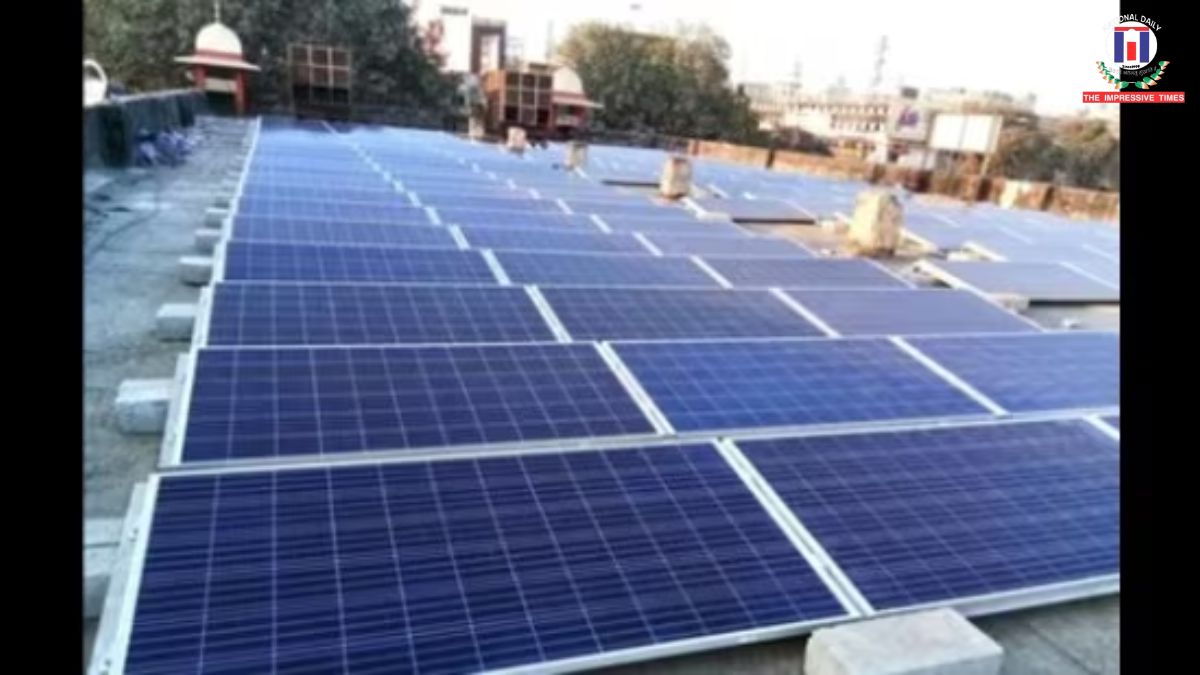
Lucknow- A quiet energy revolution is underway in Lucknow, where a growing number of households are transitioning from electricity consumers to “prosumers” by generating their own solar power.
According to officials from the Uttar Pradesh New and Renewable Energy Development Agency, rooftop solar systems are now producing around 328 MW of electricity—nearly 20% of the city’s total demand of approximately 1,500 MW.
This shift has been largely driven by the PM Surya Ghar: Muft Bijli Yojana, under which more than 92,000 rooftop installations have been completed across the city. The scheme has enabled households to not only meet their own energy needs but also feed surplus electricity back into the grid.
Officials say the transformation is not just about numbers but about a fundamental change in how energy flows. Traditionally, electricity moved in a one-way direction—from power plants to homes. Now, solar-equipped households are contributing power back to the system, creating a decentralised and more resilient grid.
During peak summer months, when electricity demand spikes due to heavy use of cooling appliances, solar-powered homes help reduce pressure on the grid in real time. This has led to improved stability, fewer outages, and better load management.
The rapid increase in installations—from just a few thousand to over 80,000 in a short span—also reflects a shift in consumer mindset. Rooftop solar is increasingly being viewed as a long-term financial investment, supported by subsidies, affordable financing, and predictable savings over decades.
The impact is also extending beyond urban areas. Under the PM KUSUM Scheme, thousands of farmers in and around Lucknow have adopted solar-powered irrigation systems, reducing reliance on diesel and inconsistent electricity supply.
With over 1.29 lakh applications already submitted, officials believe Lucknow is nearing a tipping point where a substantial portion of its electricity could be generated at the point of consumption, paving the way for a hybrid and more sustainable energy model.





































No Comments: