Centre Says E20 Petrol Meets Quality Standards, Rejects Karnataka Claims of Excess Ethanol
All 893 samples tested across 27 States and UTs, including 56 samples from Karnataka, complied with BIS specifications, according to PSU oil marketing companies.
New Delhi, November 7, 2026: The Ministry of Petroleum and Natural Gas has said that E20 petrol supplied by public sector oil marketing companies (OMCs) across the country meets prescribed quality standards, disputing claims by the Karnataka Government that petrol at certain retail outlets contained between 26% and 31% ethanol.
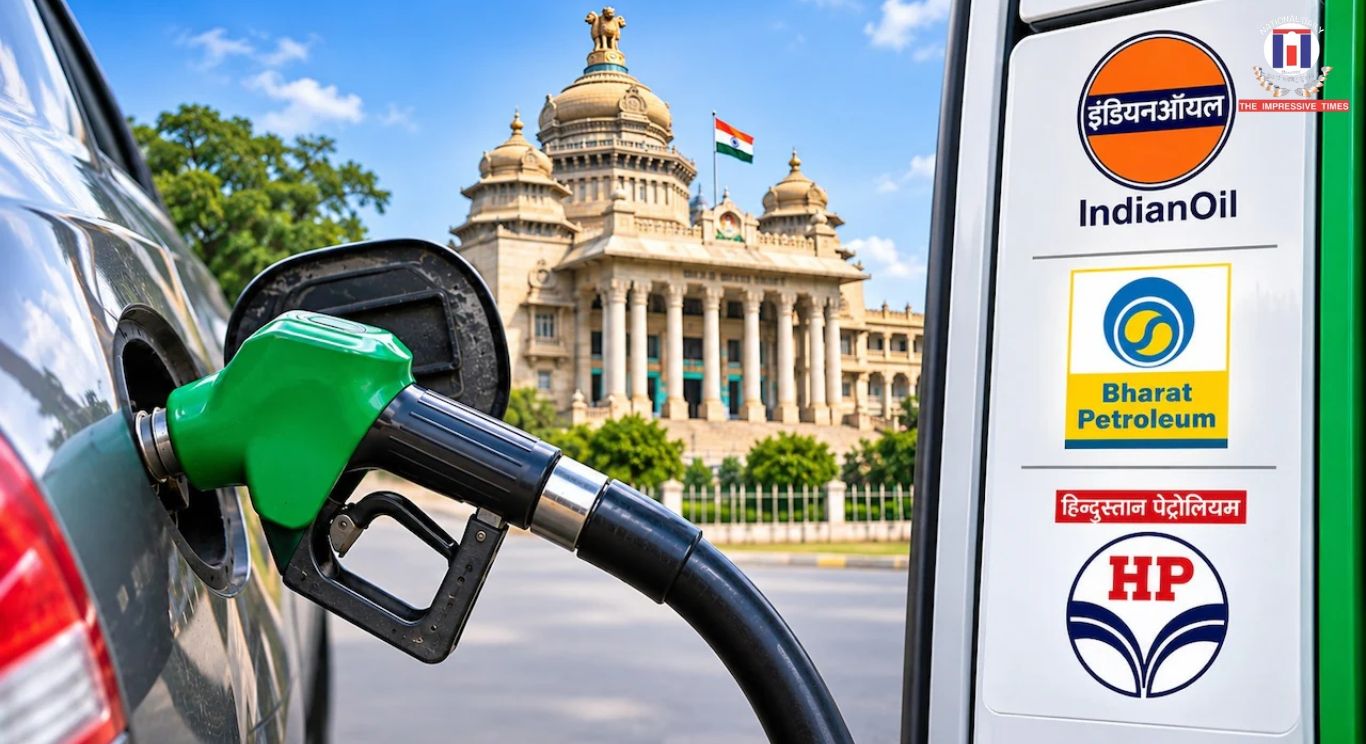
Indian Oil Corporation Limited (IOCL), Bharat Petroleum Corporation Limited (BPCL) and Hindustan Petroleum Corporation Limited (HPCL) stated that testing conducted under the prescribed procedures confirms compliance with the Bureau of Indian Standards’ IS 17021 specifications for ethanol-blended petrol.
The OMCs have raised concerns over the sampling and testing procedures used in Karnataka’s October 2026 exercise, stating that their representatives were not involved in the sampling process. They also said they had not received the corresponding retention samples, complete outlet-wise details or laboratory reports required to independently verify the findings.
OMCs Question Sampling and Testing Procedures
Under the Motor Spirit and High Speed Diesel Control Order, 2005, read with the Marketing Discipline Guidelines (MDG) 2024, a prescribed procedure governs fuel sampling, retention, testing and communication of results. It requires six one-litre samples to be collected, with samples distributed among the dealer, oil company or department, and an authorised laboratory.
The OMCs said the certificates cited in Karnataka’s press release were issued by a third-party laboratory and did not provide sufficient technical details to validate the reported ethanol content. They have also questioned the absence of information on the applicable testing standard, dilution procedure and reference material.
According to the companies, IS 17021:2018 specifies recognised methods for determining ethanol content, including Fourier Transform Infrared Spectroscopy, water extraction and Gas Chromatography. The OMCs said the reported findings cannot be independently verified without details confirming compliance with the prescribed methodology.
893 Samples Found Within Prescribed Limits
The Centre for High Technology (CHT), under the Petroleum Ministry, has been monitoring ethanol blending and fuel quality through the OMC/CHT Quality Coordination Cell exercise.
A total of 893 E20 samples collected from IOCL, BPCL and HPCL depots and retail outlets across 27 States and Union Territories were tested in refinery and OMC quality-control laboratories. The Ministry said all samples recorded ethanol content within the prescribed range of 19% to 21%.
In Karnataka, all 56 samples tested across different locations and all three OMCs were also found compliant, with ethanol content ranging from 19% to 20% and an average of 19.30%.
The OMCs said ethanol blending is carried out through calibrated and automated systems at refineries and depots, supported by established quality-control procedures, rather than through manual or arbitrary addition.
Ministry Questions Estimates of Consumer Losses
The Ministry has also questioned claims of an estimated annual consumer mileage loss of around ₹62,000 crore and vehicle-repair expenses of approximately ₹39,000 crore, taking the combined estimate to nearly ₹1.01 lakh crore.
It said such estimates require scientific assessment based on vehicle categories, fuel compatibility, actual performance data and documented repair costs. According to the Ministry, studies involving the Inter-Ministerial Committee, IOCL, the Automotive Research Association of India (ARAI) and the Society of Indian Automobile Manufacturers (SIAM) have examined the impact of E20 fuel.
Citing its August 12, 2025 response on ethanol blending, the Ministry said vehicles calibrated for E20 may experience a mileage reduction of approximately 1% to 2%, while some other vehicles may see reductions of around 3% to 6%, depending on their category and calibration. It argued that applying a blanket assumption of 10% mileage loss across the entire vehicle population would not constitute a scientifically established assessment.
Ethanol Programme Generates Economic and Environmental Benefits
The Ministry highlighted the wider benefits of the Ethanol Blended Petrol Programme, which aims to reduce crude oil imports, strengthen domestic agricultural value chains and improve energy security.
Since Ethanol Supply Year (ESY) 2014-15, the programme has reportedly generated foreign-exchange savings of more than ₹1.97 lakh crore, substituted approximately 316 lakh metric tonnes of crude oil, reduced around 952 lakh metric tonnes of CO₂ emissions and facilitated payments of more than ₹1.66 lakh crore to farmers.
During ESY 2025-26, ending October 31, 2026, PSU OMCs procured 1,089 crore litres of ethanol and blended 1,134 crore litres against petrol sales of approximately 5,673 crore litres.
OMCs Seek Joint Testing with Karnataka Government
The three OMCs have requested the Karnataka Government to share complete sampling records, outlet-wise laboratory reports and details of the testing methodology. They have also sought access to counterpart samples for independent testing at an authorised laboratory using the prescribed method, in the presence of representatives from both sides.
The companies have expressed their willingness to participate in joint sampling and testing in accordance with the Control Order and MDG 2024. The Ministry said any deviation established through the prescribed procedure would be addressed under applicable guidelines.
It reiterated its commitment to maintaining petroleum product quality, regulatory compliance and consumer protection through established monitoring mechanisms across the country.






















No Comments: