

 The Impressive Times
New Delhi : Guided by the vision of Hon’ble Prime Minister Narendra Modi of “Sahkar se Samriddhi” (Prosperity through Cooperation) and under the leadership of Union Home and Cooperation Minister Shri Amit Shah, the Ministry of Cooperation is steadily advancing a transformative agenda to strengthen the cooperative sector as a key pillar of inclusive growth and rural development.
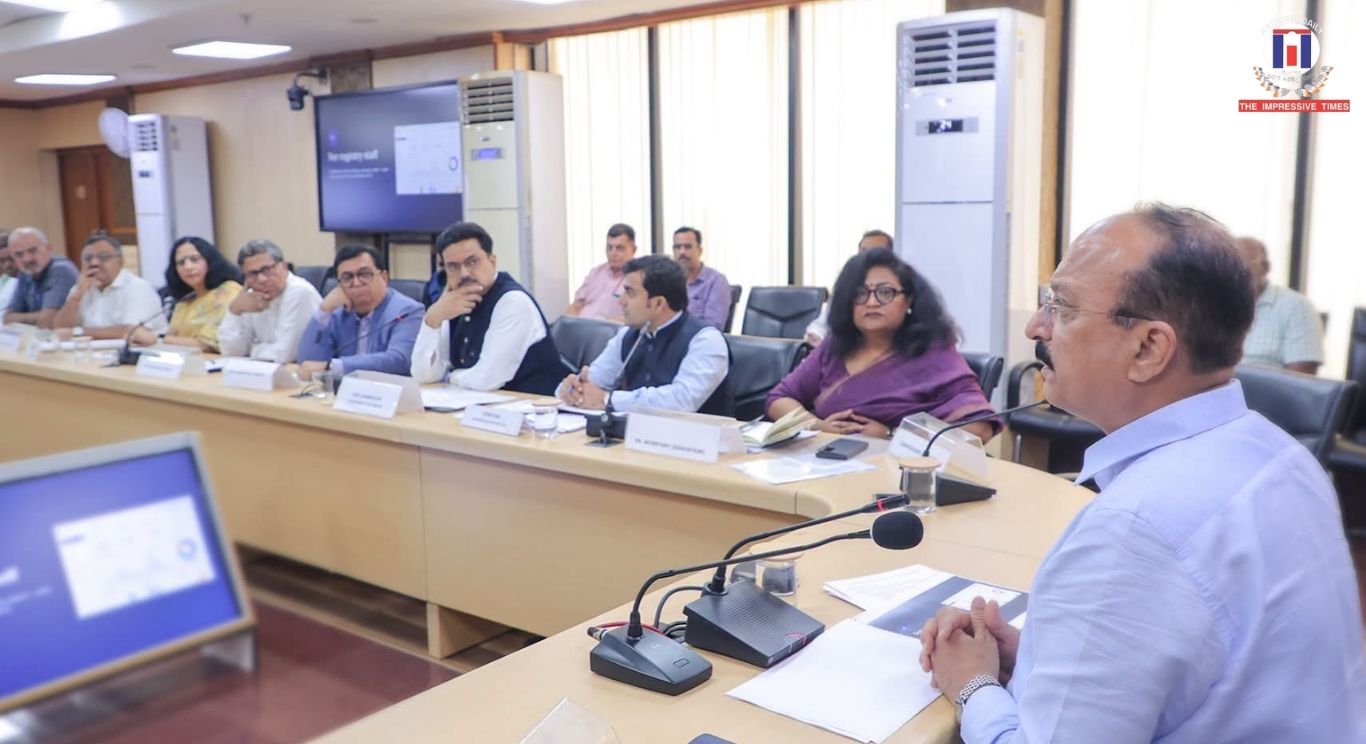
In this direction, a two-day ‘Sahkar se Samriddhi’ National Review Conference is being held in Varanasi, Uttar Pradesh on 9–10 April 2026, bringing together senior officials from the Centre, States/UTs and major cooperative institutions to review progress and accelerate implementation of flagship initiatives.
Addressing the inaugural session, Secretary, Ministry of Cooperation, Government of India Dr. Ashish Kumar Bhutani, stated that this is the seventh in a series of national workshops held across the country since October 2024, reflecting sustained efforts to build coordination, familiarity and shared learning among stakeholders. He noted that these engagements have created a strong platform for collaboration, and it is now time to move decisively towards execution.
Dr. Bhutani said that we have deliberated extensively over the past workshops. The time has now come to ground these initiatives at the district level with clear, time-bound implementation plans. He emphasised that while significant progress has been made across initiatives, there is a need to reassess performance gaps, strengthen coordination with States and ensure that targets translate into tangible outcomes on the ground.
Referring to the target of two lakh PACS, Dr. Bhutani said that we have to sustain the same momentum with which the initiative was started. He called for renewed efforts and convergence among stakeholders to accelerate progress and achieve the desired scale.
On PACS Computerisation, Secretary, Union Ministry of Cooperation acknowledged that considerable movement has taken place in the last 6–9 months, and appreciated the efforts of States. However, he cautioned that the key challenge lies in ensuring that this progress becomes sustainable beyond the scheme period ending in March 2027, and urged States to internalise the benefits and continue the reforms. He further said that the momentum we have achieved must be converted into a sustainable system. States must recognise the long-term value of computerisation and carry it forward beyond the scheme.
Highlighting the importance of cooperative banking reforms, Dr. Bhutani called upon States to expedite loan sanctioning and ensure effective utilisation of funds within the current financial cycle. He further emphasised that strengthening cooperative institutions requires coordinated action, timely decision-making and sustained commitment, particularly in areas where progress has been slower than expected.
During the first day sessions, the conference deliberated extensively on key flagship initiatives of the Ministry. Following the inaugural session, the first review session focused on computerisation of PACS and ARDBs, covering aspects such as quality monitoring, progress tracking, integration with national platforms like Agri Stack, KCC and fertilizer systems, and strengthening linkages with cooperative banking infrastructure.
The subsequent session reviewed the World’s Largest Grain Storage Plan in the Cooperative Sector, with detailed presentations by major implementing agencies including FCI, WDRA, CWC, NABARD, NAFED and NCCF. Discussions covered site selection, storage capacity planning, financing, eNWR-based systems and timelines for implementation, along with strategies to enhance cooperative participation in the storage ecosystem.
The conference also deliberated on revival of defunct PACS, membership drives and diversification of PACS into multi-service centres, including activities such as seed distribution, fertilizer supply, Common Service Centres, Jan Aushadhi Kendras, digital services and e-wallet facilities.
Further discussions focused on strengthening cooperative banking systems, including issues related to credit flow through DCCBs, cyber security, Aadhaar seeding, doorstep banking and technology adoption. The need to align financial systems with the growing role of PACS as grassroots service delivery institutions was also emphasised.
The deliberations during the conference reflect the Ministry’s continued commitment to strengthening the cooperative ecosystem through structured planning, technology integration and grassroots implementation, in line with the vision of building a self-reliant and inclusive economy driven by cooperation.




































No Comments: